

Grubi calls the entire government as witnesses, while 9.7 million euros' worth of machines sit in a warehouse
21.10.2026


21.10.2026

21.10.2026

21.10.2026

21.10.2026

21.10.2026

21.10.2026

21.10.2026

20.10.2026

20.10.2026

21.10.2026
21.10.2026
20.10.2026
21.10.2026

21.10.2026

21.10.2026
21.10.2026
20.10.2026
19.10.2026

21.10.2026

21.10.2026

21.10.2026

21.10.2026

21.10.2026

20.10.2026
21.10.2026

20.10.2026

19.10.2026
20.10.2026

19.10.2026

17.10.2026

23.04.2026

23.04.2026

12.04.2026

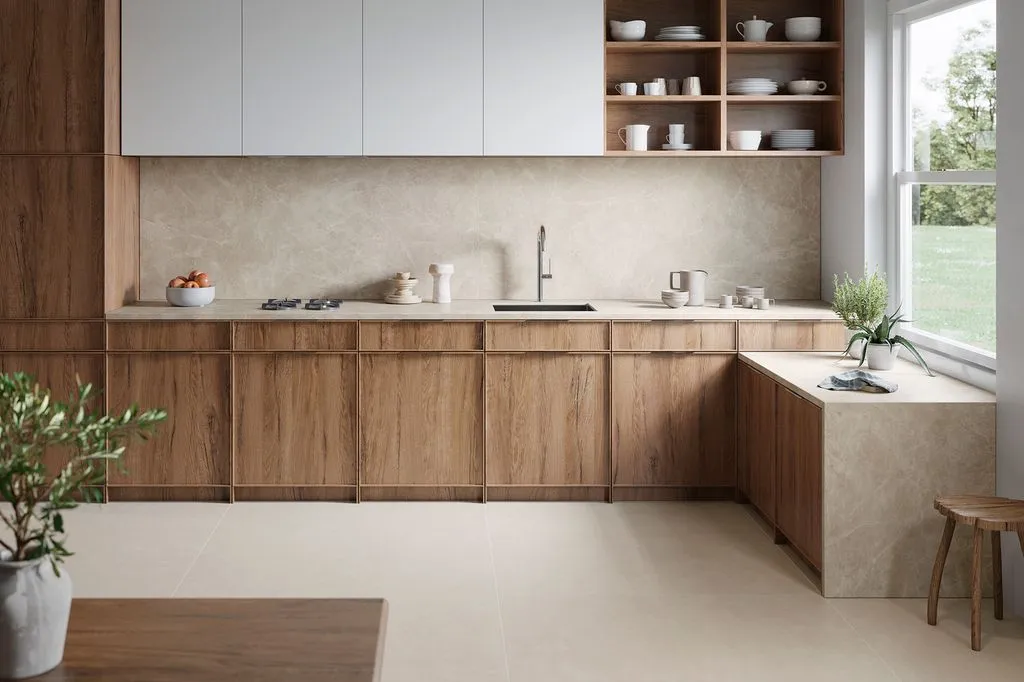
Imagine you're renovating a home you won't touch again until 2046. What do you put on the floor, in the kitchen, in the bathroom? That's the question put to Spanish interior designer Pia Capdevila, of the studio Pia Capdevila Interiorismo, and her answer begins with a sentence that ought to hang in every tile showroom: "I don't believe there are good or bad materials, only choices that are well or badly made for a particular purpose."
The key: materials that age well
Capdevila chooses according to use, maintenance and how the material will look after years, not according to trends. She prefers natural materials, quality porcelain stoneware and simple finishes that can be repaired. Natural materials, she says, gain character over time: "Wood, certain stones or handmade tiles acquire personality." How many times have we picked a tile because it was on sale or because we saw it at the neighbours' - without asking what it will look like in ten years?
The money where it hurts to replace
Her budget advice is simple: more money on floors, joinery, installations, the kitchen and the bathroom - everything used every day and expensive to rip out. And don't skimp on hardware. Hinges, drawer runners and opening mechanisms determine everyday use, and poor quality shows quickly. Savings go on textiles, decorations and secondary furniture, which can refresh a space without a new renovation. The logic is clear: invest in what is expensive to replace, and leave room for what depends on current taste.
Floors that last
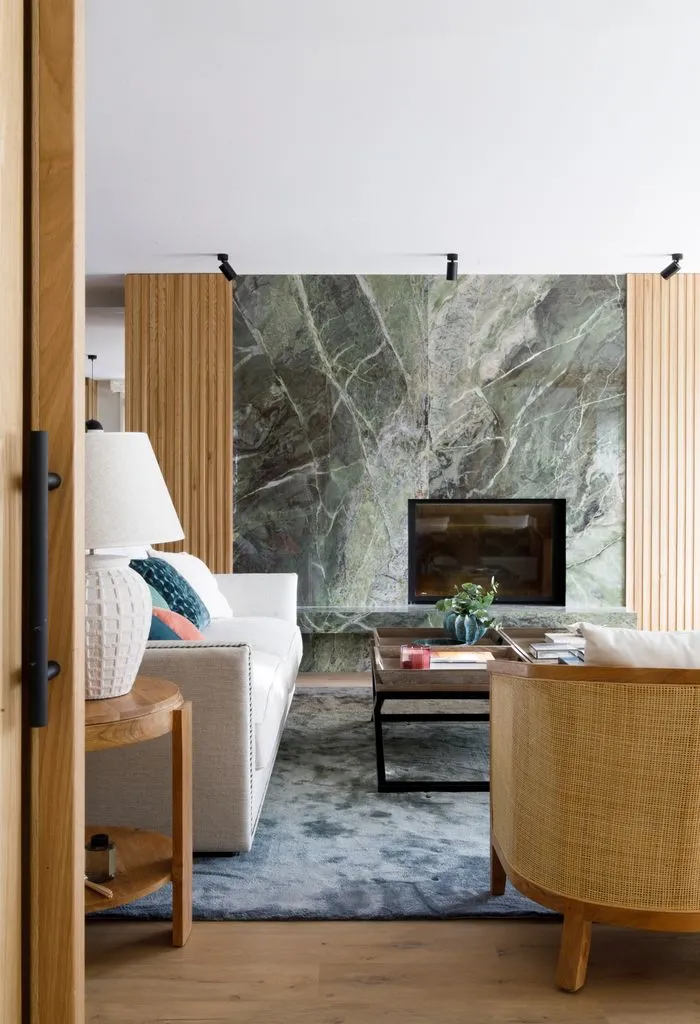
Natural wood is among her favourites, because if the top layer is thick enough it can be sanded and restored. Another strong choice is large-format porcelain stoneware. Tones should be neutral, textures balanced and formats proportionate. What to avoid are patterns and finishes that are instantly recognisable as "from that season".
Worktops and wall cladding for kitchen and bathroom
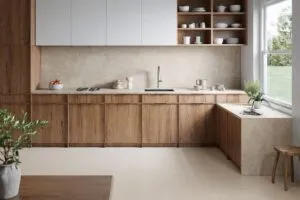
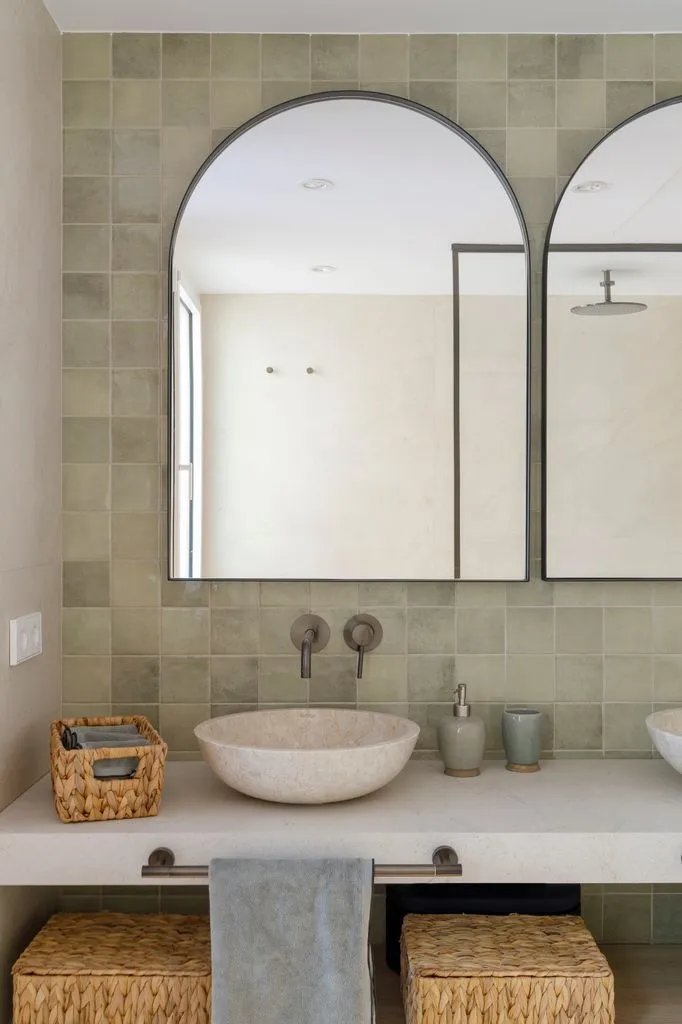
For the kitchen worktop, Capdevila most often recommends porcelain stoneware: resistant to heat and stains and easy to maintain. She likes natural stone too, but warns that each type needs its own care, since some react badly to acids or absorb liquids. The wall behind the work surface should be easy to clean, with few grout lines and well matched to the kitchen units. For kitchen and bathroom walls: discreet textures, stone tones, natural finishes and simple formats you won't tire of.
Finishes that don't make you chase every stain
"A house should be designed to be lived in, not to be constantly careful that nothing gets damaged," says Capdevila. That's why she recommends matt or soft satin finishes, textured surfaces and materials that hide everyday marks. In homes with children or pets, porcelain stoneware and certain technical floors work particularly well. Very glossy finishes, very dark plain surfaces and very porous materials in work areas make stains and wear even more visible.
Walls with character, but without overdoing it
Capdevila doesn't think everything has to be neutral. "A wall with personality can stay appealing even after twenty years," she says, if it fits into the whole. She suggests paint in natural tones combined with textured materials - wood, classic mouldings, fabric coverings or wallpaper. In one project by the studio LC Interiores, classic moulded panels are combined with textured wallpaper.
Tried and tested forever
Solid wood is a noble and versatile material, not only for floors but also for made-to-measure, built-in furniture. Other proven choices include terrazzo, terracotta, mineral paints and lime-based coatings. "Very often we don't need to invent anything new, just make good use of what we already know," says the designer. In the Balkans, terracotta and lime have been familiar for generations - now they're coming back as a "timeless" choice.
Restore or replace?
Before you replace a surface, check whether it can be restored. Wood is the clearest example: if the type of floor allows it, it can be sanded and treated without being taken up, which extends its life and gives it a new look. But restoration isn't always the best choice. Floors that take heavy use, or homes with special needs, may call for a tougher material with less maintenance. Capdevila doesn't believe a material that can be restored is automatically better than one that is almost indestructible.
A timeless home doesn't mean a frozen home
Planning for the long term doesn't mean giving up your taste or keeping your home the same for twenty years. The decor changes along with you. Materials should be chosen looking at the whole home, not each room separately - continuity between elements makes it easier later to change furniture or colours, or to add new pieces. Before choosing a finish, think about how it will work with the rest of the house: a material that limits future choices is hard to fit in. The goal is a flexible base that accepts change and still makes sense years later.
The latest 10 news from this category
The designer removed an entire bedroom so the kitchen could reach the dining table. Sometimes a small flat is saved...
Bare walls, glass, an open kitchen and too much empty space: a home can look perfect and sound like an...
The dark wood wall unit is back in fashion, but the rule is clear: borrow the decade's warmth, don't reconstruct...
Dark colours supposedly make a room smaller. Designer Juancho González proved the opposite - with white walls, a mirror in...
An estate bought the year he became a matador, century-old olive trees and a kitchen with velvet armchairs. How El...

The lower cost of living in the countryside, she says, gives them "ten times more things". A home assembled over...
Bleeding the air, a pressure of 1 to 1.5 bar, 19 to 21 degrees during the day and a reflective...
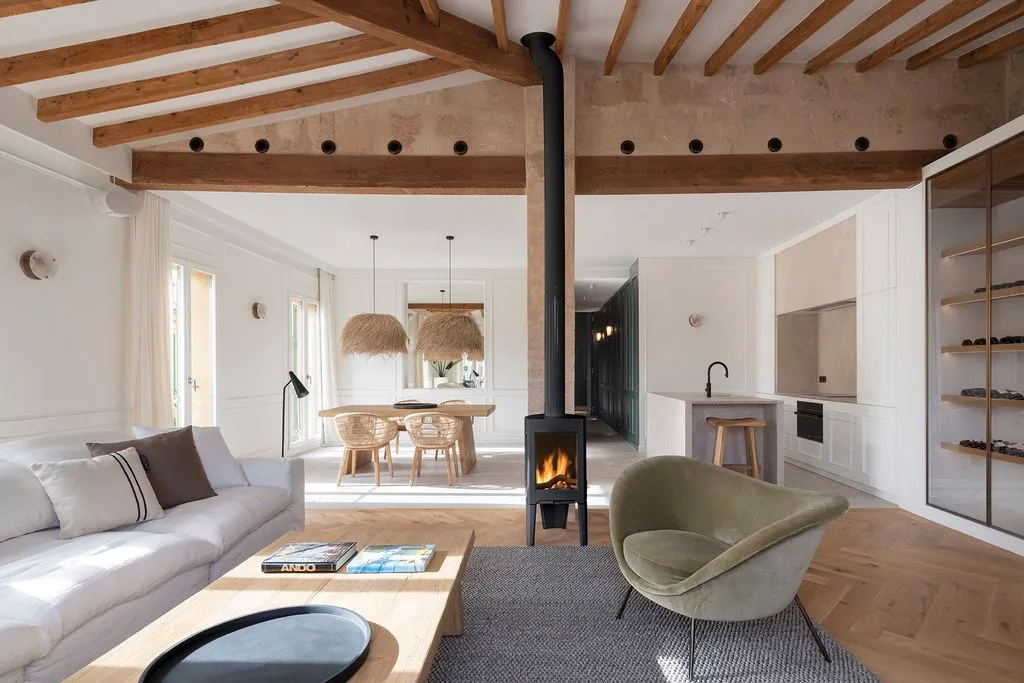
The design, the insulation and the installations - not the tiles. A Spanish architect explains how to plan a home...
Over a thousand rooms, a Velázquez in a small cabinet, and a museum the princess once wanted to close to...

Messi has said goodbye to Argentina's national team, and four addresses tell the story of his life. The one that...
This site uses cookies - is that okay? Learn more
Be the first to know when Metla launches something new
Leave your email and we will write when there is a new guide or something new on Metla.


