


Grubi calls the entire government as witnesses, while 9.7 million euros' worth of machines sit in a warehouse
21.10.2026


21.10.2026

21.10.2026

21.10.2026

21.10.2026
21.10.2026

21.10.2026
21.10.2026

20.10.2026
20.10.2026

21.10.2026

21.10.2026

20.10.2026

21.10.2026

21.10.2026
21.10.2026

21.10.2026

20.10.2026

19.10.2026

21.10.2026

21.10.2026

21.10.2026
21.10.2026

21.10.2026

20.10.2026

21.10.2026
20.10.2026

19.10.2026
20.10.2026

19.10.2026

17.10.2026

23.04.2026

23.04.2026

12.04.2026

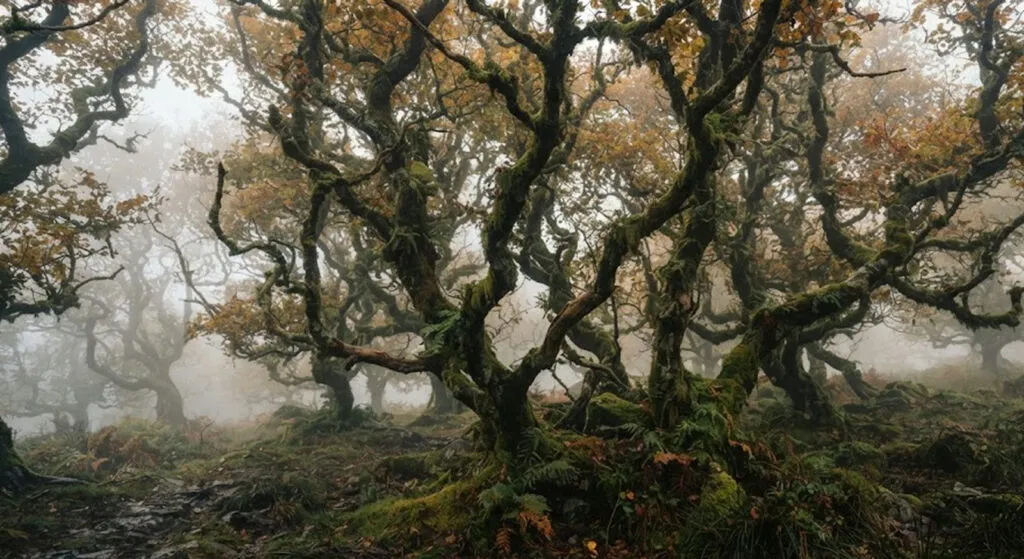
When someone mentions a "European primeval forest", the mind goes to Scandinavia or the Carpathians. Yet one of the continent's last true primeval forests is in the Balkans, at the heart of Sutjeska National Park in Bosnia and Herzegovina. It and six other forests across Europe look like stage sets in autumn - some strictly protected, some that inspired painters and writers, and some that carry legends nobody has ever managed to prove.
Perućica, Bosnia and Herzegovina
Perućica lies beneath the Maglić massif. Foresters declared it a reserve back in 1938, and since then not a single tree has been taken out - not even the fallen ones. The forest regulates itself. Beech, silver fir and spruce dominate, and together more than 170 species of trees and shrubs and over 1,000 herbaceous species grow there. The trees exceed 50 metres in height and 300 years in age, and the park claims the forest is around 20,000 years old and is seeking a place on UNESCO's World Heritage List. Visits are guided only: the official tour sets off by off-road vehicle from the "Mladost" hotel and takes about three hours to Dragoš Sedlo, from where you can see the Skakavac waterfall, over 70 metres high. Bears, wolves, lynx, chamois and wildcats live in the forest, and the park counts nine species of woodpecker. A little further on, already on the Montenegrin side, is Trnovačko Lake - a heart-shaped glacial lake at 1,517 metres above sea level. How many of us know that one of Europe's wildest forests is right next door?
Wistman's Wood, England
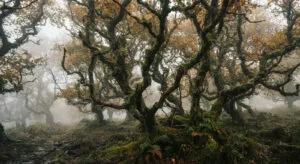
On Dartmoor, in the valley of the West Dart river, at around 400 metres above sea level, three hectares of oaks grow - low and twisted among huge granite boulders. Some are 400 to 500 years old. Mosses, ferns and around 120 species of lichen cover the trunks, branches and stones. The wood is a national nature reserve and one of the last remnants of temperate rainforest in south-west England. It is owned by the Duchy of Cornwall, which plans to double its area by around 2040, with hundreds of saplings grown from its own acorns. The name may come from a Devon dialect word for "haunted". Legend says a pack of hellhounds lives here, and some believe Arthur Conan Doyle drew inspiration from it when he stayed in Princetown in 1901 and was writing "The Hound of the Baskervilles". The walk is about 4 kilometres there and back, and the authorities ask visitors not to go in among the trees or climb the boulders - every step destroys the mosses.
Hoia-Baciu, Romania
In the hills west of Cluj-Napoca, in Transylvania, around 300 hectares of forest grow bent and twisted - some trees in spirals, some with branches in arches. The most common explanation is the wind. But the forest is known as the "Bermuda Triangle of Transylvania": stories of a shepherd who vanished along with 200 sheep, of a girl who came back years later without having aged, of nausea, anxiety, the feeling of being watched and batteries that drain within minutes. None of those stories is documented - but the forest regularly makes Halloween lists, and guides have been running night walks with electromagnetic field meters for more than a decade. Where there is no proof, there is a guided tour. The marked 6.6-kilometre trail is easy, suitable for mountain biking too, and passes the Poiana Rotundă meadow, associated with the "strange phenomena". Beech, hornbeam, ash and elm grow in the forest, and 12 hectares of downy oak are part of the Natura 2000 network.
Trollskogen, Sweden
At the north-eastern tip of the island of Öland, in a reserve founded in 1998 covering 266 hectares along the coast, Baltic winds have twisted the pines into strange shapes. Further in grow old, gnarled oaks, and ivy covers the ground and climbs the trunks. Here too is the "troll oak", between 800 and 900 years old - the oldest tree on the island. In autumn, when the ivy flowers, around 300 species of fungi have been recorded in the forest. Among the trees are around 15 Iron Age graves and a stone wall 230 metres long, which according to new research is much older than previously thought. A story of its own is the schooner "Swiks", which ran aground on 21 December 1926 - all seven crew members survived, and a storm broke it in two in 1954. The authorities describe it as the only known wreck of its type stranded on land.
Fanal, Madeira
In the north-west of Madeira, at around 1,100 metres above sea level, Fanal is part of the laurel forest under UNESCO protection covering around 15,000 hectares - the largest surviving forest of its kind and a remnant of the forests that 15 to 40 million years ago covered much of southern Europe. Centuries-old til trees grow here, some older than the arrival of the Portuguese on the island in 1419. Fog is frequent, especially early in the morning, and the trees appear as silhouettes above pastures where cows graze. Scenes from "The Acolyte", a series from the "Star Wars" franchise, were also filmed here, although the giant trees on screen were added digitally. Popularity has its price: in November 2025 the authorities introduced a limit of 3,000 visits a day and fenced off some of the trees. The marked trails are 11 kilometres (about four hours) and 7.2 kilometres (about three hours) long.
Białowieża, Poland and Belarus
On the border between Poland and Belarus lies a UNESCO-protected forest that for centuries was the hunting ground of Polish kings and Russian tsars - and that is exactly what saved the European bison. After the First World War not a single one was left in the wild, but captive breeding succeeded, and at the end of 2025 there were 1,176 bison roaming freely in the Polish part. The forest has around 3,000 monumental oaks, some taller than 40 metres, 59 species of mammals and over 250 species of birds. The national park is Poland's oldest, and its strictly protected core has been left without human intervention since the 1920s. Entry there is only with an authorised guide, in groups of up to ten people, on a 7-kilometre route.
Uttewalder Grund, Germany
In Saxon Switzerland, about half an hour from Dresden, a narrow forested gorge winds between the small town of Stadt Wehlen and the village of Uttewalde. In the summer of 1800 the young Caspar David Friedrich spent a week here without meeting a living soul, and later wrote that he had lived "among rocks and firs". The symbol of the gorge is the Felsentor rock gate, where the walls almost touch. Before the railway reached the Elbe valley in 1851, the gorge was part of the main route to the Bastei, the region's best-known viewpoint. The easiest walk is about 5 kilometres there and back, from the market square in Stadt Wehlen, and an inn built in 1790 still operates next to the gate.
What is most surprising is that one of the wildest forests on this list is precisely the one closest to us. Before we set off to look for wonders in Sweden or Madeira, it might be worth checking what grows just across the first border.
The latest 10 news from this category
Galleries in former factories, the pope as a pop icon and Keith Haring in a palazzo. Entry is free, and...

Deposed kings, a future queen who said "yes" on the third try and Kate Moss's party that staff still won't...
An Alpine lake with no concrete on its shores, a 15th-century castle that starred in the Sissi films, and a...
The film was booed at Cannes, and now it has an exhibition in the palace where the queen escaped protocol....
In Marche, families bought boxes at the theatre and left them in their wills like a field or a flat....
Beneath Robin Hood's city lies a whole underground world - caves that served as cellars, workshops and bomb shelters. Harry...
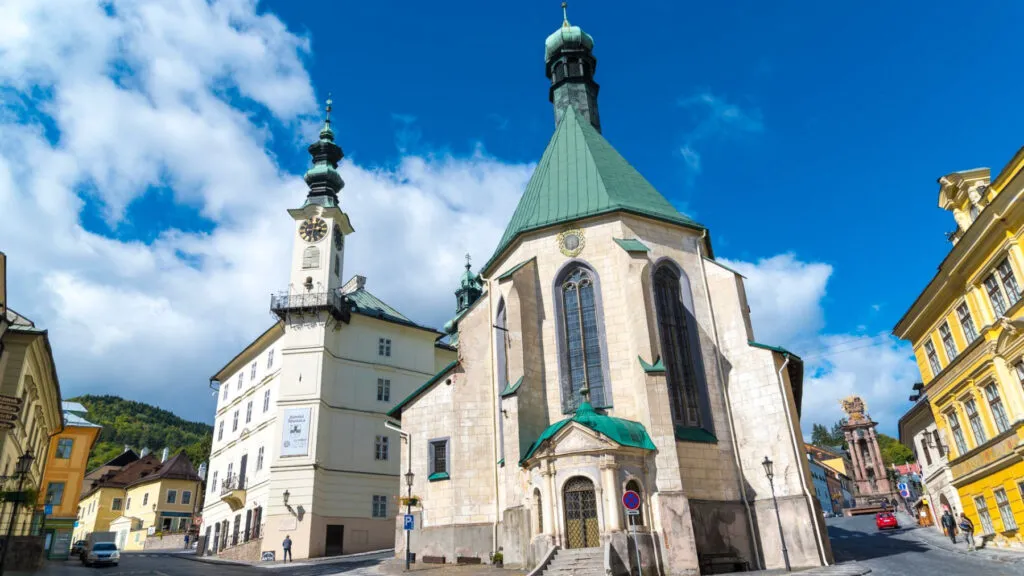
Once the third-largest town in the Kingdom of Hungary, today around 9,200 inhabitants, mining tunnels under the houses and the...
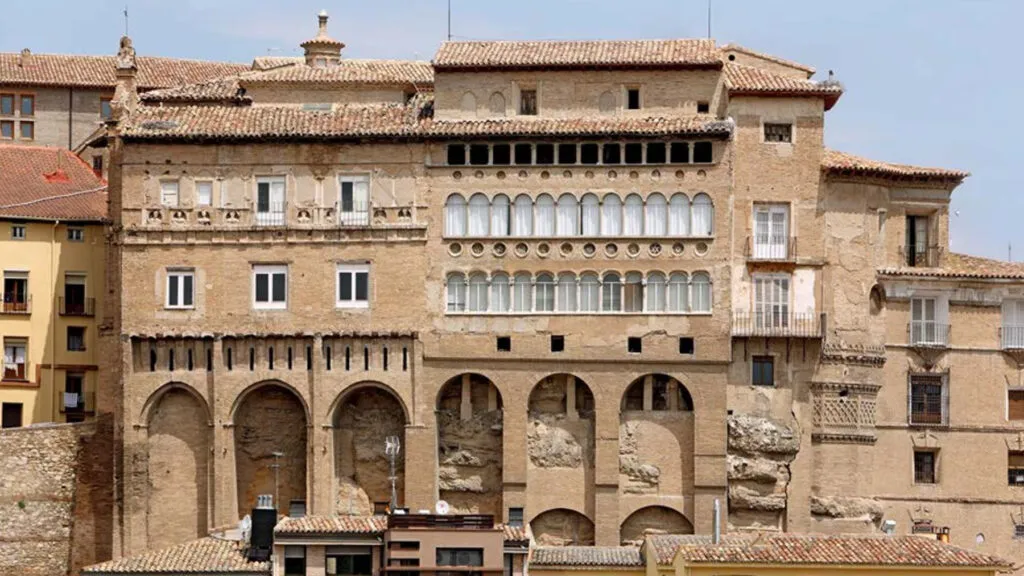
The town on the border of four Spanish regions re-enacted the royal wedding of 1170, when the groom was 14...
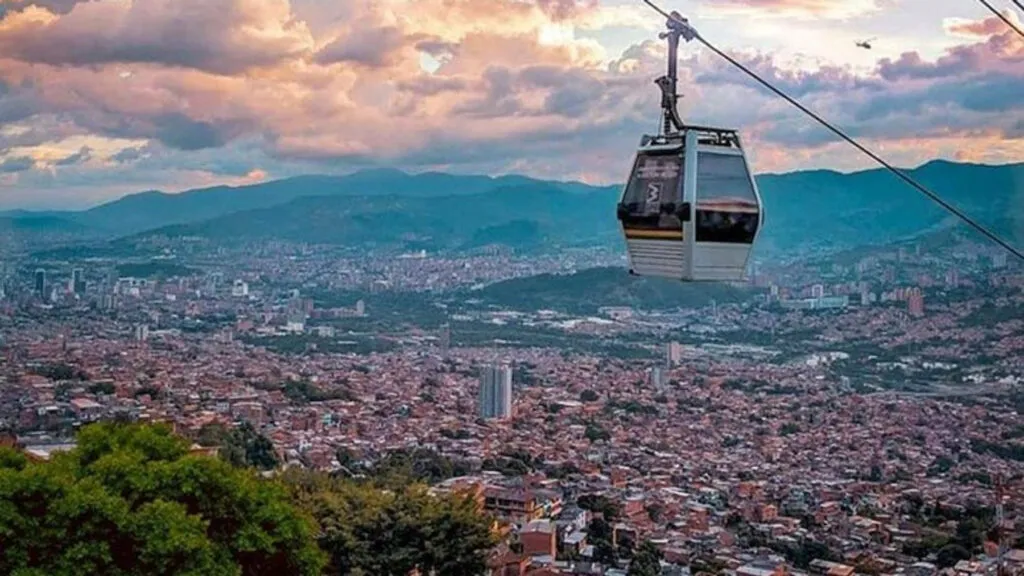
Before Maluma and Shakira perform "Agua" live for the first time tonight in Madrid, we travel to the city Maluma...
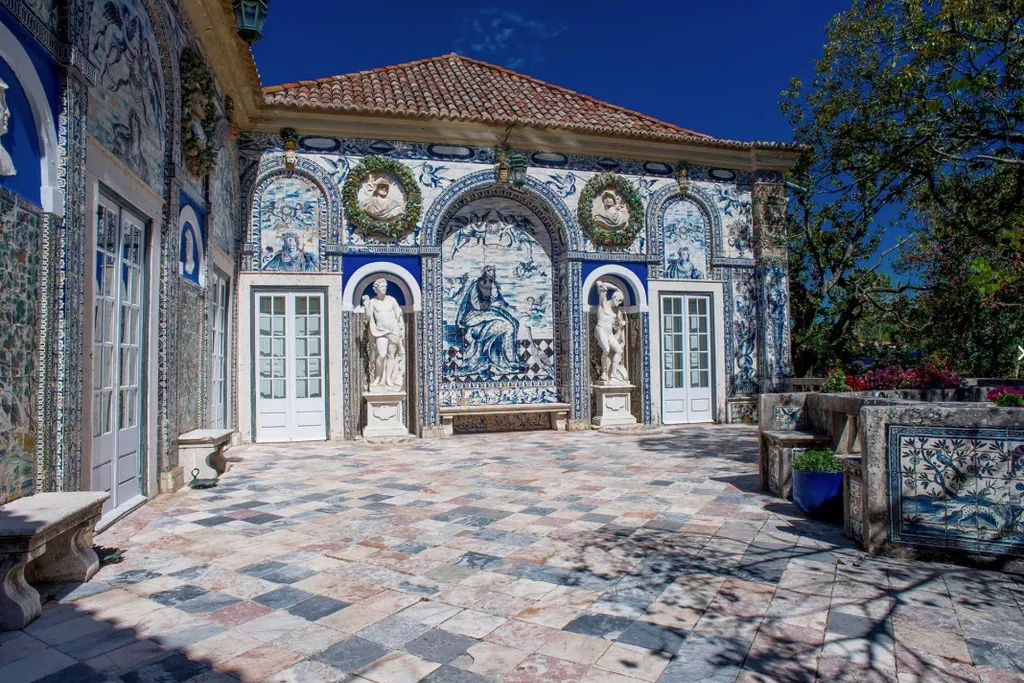
Built around 1670, expanded after the earthquake that flattened Lisbon, and the marquises' descendants still live in it. About fifteen...
This site uses cookies - is that okay? Learn more
Be the first to know when Metla launches something new
Leave your email and we will write when there is a new guide or something new on Metla.


