

Cancer Drug in a First Aid Kit at Bogorodica: Why Was the Driver Also Carrying 30 Labels?
22.10.2026


22.10.2026

22.10.2026

22.10.2026

22.10.2026

22.10.2026

22.10.2026

22.10.2026

21.10.2026

20.10.2026

22.10.2026

22.10.2026

21.10.2026

22.10.2026

22.10.2026

22.10.2026

22.10.2026

21.10.2026

20.10.2026

22.10.2026

22.10.2026

21.10.2026

22.10.2026

21.10.2026

20.10.2026
20.10.2026

19.10.2026

17.10.2026

23.04.2026

23.04.2026

12.04.2026


The days are getting shorter, we spend more time indoors, and the skin - the main factory for vitamin D - gets less and less UVB radiation. In autumn and winter, at certain latitudes, the sun simply isn't strong enough for the skin to produce it. And that's the moment many people reach for the box at the pharmacy without knowing whether they need it at all.
Vitamin D is involved in the metabolism of calcium and phosphorus, in the health of bones and teeth, and in how muscles and the immune system work. Andrea de la Puente, a specialist in integrative medicine, advises people at higher risk to check their levels in time rather than wait for symptoms.
Fatigue isn't a diagnosis. "It's important not to automatically attribute fatigue to a vitamin D deficiency," she says. Tiredness has many causes: poor sleep, stress, anaemia, the thyroid, lifestyle. Low vitamin D can produce vague symptoms - muscle weakness, pain in the muscles and bones - but many people with a deficiency have no complaints at all. If the fatigue persists, you look for the cause and do a blood test, instead of taking supplements blindly.
After 50, the bones. Around and after menopause, the drop in oestrogen speeds up bone loss and raises the risk of osteopenia and osteoporosis. Vitamin D helps the absorption of calcium and phosphorus and the normal function of muscles, but the expert is clear: strength training, a varied diet and enough protein are just as important, and a pill doesn't replace them.
Which test. The most reliable test is serum 25-hydroxyvitamin D, 25(OH)D. Not everyone needs it, but it's worth it for people who are rarely in the sun, for older people, for those with intestinal absorption problems, with certain diseases or treatments, and with a higher risk of bone loss. Anyone with good levels and no risk gets little benefit from high doses "just in case." "Not everyone needs a supplement, and not everyone needs the same dose," says de la Puente.
More doesn't mean better. Vitamin D is fat-soluble and builds up in the body. "Just because it's a vitamin doesn't mean high amounts are harmless," the expert warns. Overdosing leads to hypercalcaemia: nausea, vomiting, weakness, loss of appetite, thirst, frequent urination, neurological changes. In severe and prolonged cases come kidney stones, kidney damage and calcium deposits in tissues.
In practice: take it with a meal that contains some fat, because it's absorbed better that way, and regularity matters more than the time of day. The dose and duration depend on your starting level and don't have to last forever. Movement, daylight when possible, oily fish, eggs and fortified foods on the plate. So, are we taking it because we need it, or because it's October?
The latest 10 news from this category

The seeds burst between your teeth, the sweet-sour taste tames the salty, and the juice is a ready-made dressing. In...
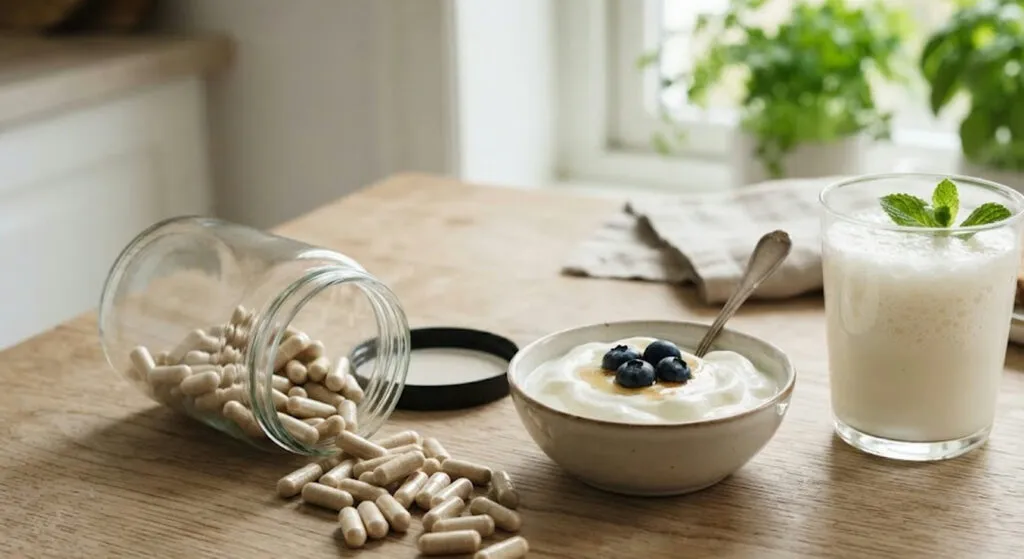
Bloating, gas, disrupted bowel movements, new stomach pain. The capsules are sold as harmless for everyone, and experts say that...

The persimmons that have gone too soft to eat are exactly the ones you need. A recipe for a 22-centimetre...

The body waits for darkness and cooling before it falls asleep. Instead, it gets a glowing screen a hand's width...

The most tender stew is not made from the leanest meat, but from the cuts that demand patience. And it...

From "I got lucky" to "it was nothing": a psychologist explains why we reject compliments on autopilot and how to...

Two ripe bananas, a little dark chocolate and a fridge instead of an oven: the Olympic canoeist's dessert for evenings...

"It's your age" is not a diagnosis. Visceral fat doesn't show in the mirror, and new or persistent bloating shouldn't...

Lean meat that never goes above 65 degrees inside, a night in the fridge and a mayonnaise with tuna, anchovies...

Every group has someone who organises everything and someone who has only been reading for months. Psychology says neither is...
This site uses cookies - is that okay? Learn more
Be the first to know when Metla launches something new
Leave your email and we will write when there is a new guide or something new on Metla.