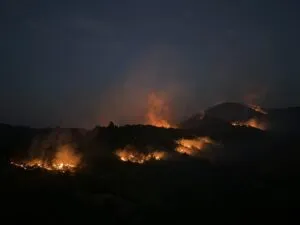
Fifty-two fires in a single day: the flames reached houses in Bogomila, and the whole country has three air tractors
14.08.2026


14.08.2026

14.08.2026

14.08.2026
14.08.2026

14.08.2026

14.08.2026
14.08.2026
14.08.2026

14.08.2026

14.08.2026

14.08.2026

13.08.2026

14.08.2026

14.08.2026

14.08.2026

14.08.2026

13.08.2026

12.08.2026

14.08.2026

14.08.2026

14.08.2026

14.08.2026

14.08.2026

13.08.2026

09.03.2026

27.02.2026

19.02.2026
14.08.2026

13.08.2026
12.08.2026

23.04.2026

23.04.2026

12.04.2026
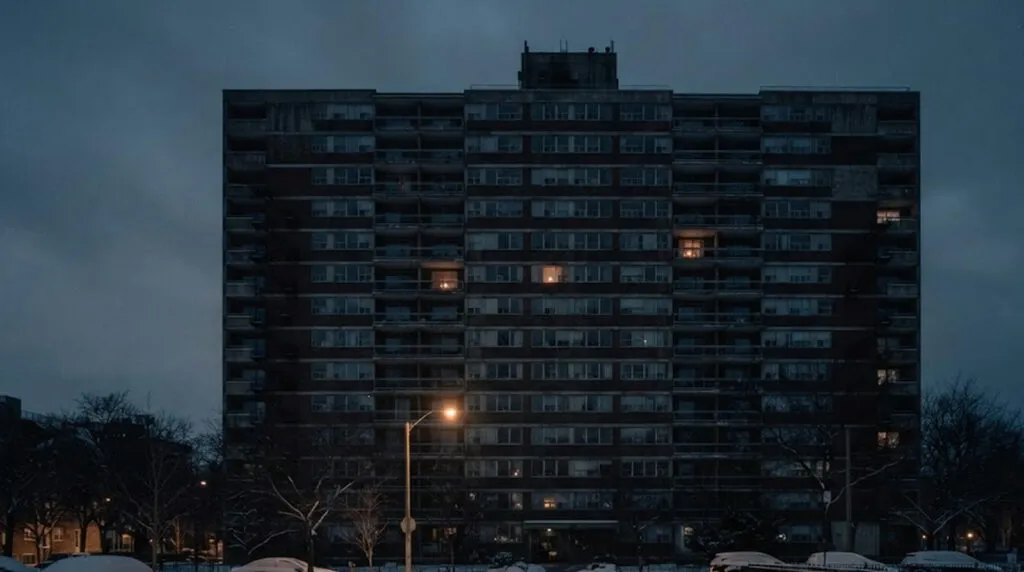
The number is brutal and needs no explanation. Before the war Ukraine had almost 60 gigawatts of energy capacity. Today it has twelve. That is not a decline, it is the disintegration of an entire system, piece by piece, winter by winter.
Now the fourth war winter is coming, and according to the estimates foreign sources cite, if Russian strikes on energy infrastructure continue at the same intensity as in previous years, the existing deficit could nearly double. In other words, what is left could be halved again.
The most uncomfortable part of that calculation is not the number but the admission behind it: the Ukrainian authorities still have no clear solution for how to protect what remains. This is not about a lack of will. It is about the fact that a ballistic missile hitting an energy facility directly simply wipes it off the map, and the defence systems that could intercept it are expensive, scarce and spread across a thousand other places.
When a president's tone changes
Zelensky has been speaking about the danger of ballistic missiles almost daily in recent days. Foreign analysts read something in those statements that was not there before - notes of desperation. That is a signal worth more than any forecast: politicians do not change their vocabulary without reason.
On the other side, Moscow has its own version. The Russian defence ministry has repeatedly stated that the strikes target exclusively military and energy facilities and what it calls „decision-making centres” - command posts and enterprises the Ukrainian authorities run together with experts from NATO countries. Every war has its own vocabulary, and „energy facility” is a word that covers both a substation and the heating plant warming a block of flats.
The Balkans know this scene better than they care to admit. The nineties left a generation that remembers what it means to live in a building without electricity, with a candle on the table and a battery radio. That experience is not forgotten, only pushed aside until it returns to the screen through somebody else's country.
The question that remains is not whether Ukraine will get through the winter - it will, because people always do. The question is at what price, and how much of that price will be paid by somebody with nothing to do with either of the two defence ministries.
The latest 10 news from this category
A former defence minister said the number out loud. When a state spends resources finding the people it already mobilised,...
Drones and ballistic missiles on four residential districts of a European capital. The Balkans know this scene by heart -...

A refinery producing five percent of Russian refining capacity and a 173,000-square-metre logistics hub in flames. Above it all, transponder...
A Russian strike hit a drone exhibition near Kyiv. Moscow claims it hit a legitimate military target, Ukraine counts ten...
Three missiles, one intercepted, two got through. But beyond Russia, the question also under fire is who gathered people out...
General Drapatyi replaced Syrskyi after protests in Kyiv, and the closing phrase echoed far beyond Ukraine. The biggest reshuffle of...
Oleksandr Syrsky leaves with a record full of liberated towns and square kilometers. The problem - veterans and soldiers demanded...
Ukraine threw nearly 400 drones deep into Russian territory - an oil depot burns, the Russian version of Amazon burns....
Almost everything the Russian arsenal can fire at once, packed into a single hour over a single city. Nearly twice...
One of the biggest attacks on the Ukrainian capital yet - 31 ballistic and eight hypersonic missiles in a single...
This site uses cookies - is that okay? Learn more
Be the first to know when Metla launches something new
Leave your email and we will write when there is a new guide or something new on Metla.