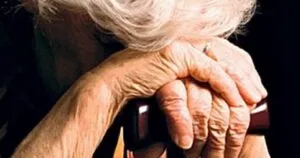
Two Reports in One Day: an 80-Year-Old Beaten in Her Own Yard in Tearce, an 82-Year-Old from Veles Detained for Years of Beating His Wife
22.08.2026


22.08.2026

22.08.2026

22.08.2026

22.08.2026

22.08.2026

22.08.2026
22.08.2026

22.08.2026

21.08.2026

22.08.2026

22.08.2026

21.08.2026
22.08.2026
22.08.2026
22.08.2026

22.08.2026

21.08.2026

20.08.2026
22.08.2026

22.08.2026
22.08.2026
22.08.2026

22.08.2026

21.08.2026

09.03.2026

27.02.2026

19.02.2026

22.08.2026

21.08.2026

20.08.2026

23.04.2026

23.04.2026

12.04.2026
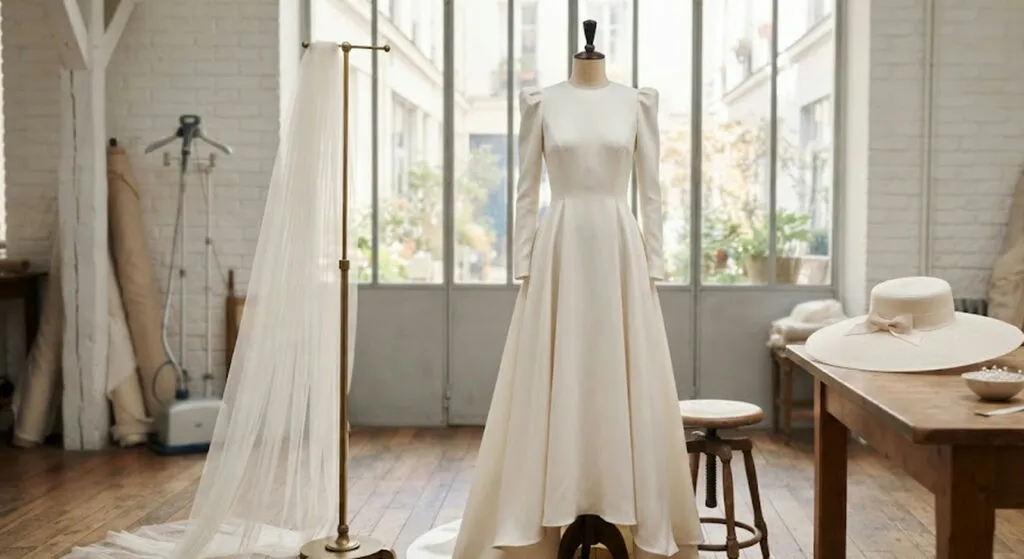
At the start of 2026, when wedding planners and designers listed the year's trends, they all pointed the same way: romantic sleeves. And indeed, a distinctive sleeve remained the most sought-after detail among brides. But it does not convince everyone - and where the sleeve does not work, attention moved elsewhere. To the shoulders.
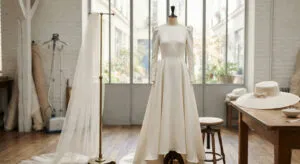
Shoulder pads carry a past tied to the eighties, which for many is reason enough to fear them. Unjustifiably. In a bridal context they do two things: they narrow the silhouette and introduce a retro note that asks for nothing else around it. They work with a minimalist cut just as well as with an opulent one, and that is exactly why they came back.
The most requested is the sleeveless version. Victoria Carlota Terceno, founder of Manech Studio, married recently on Ibiza in a column-silhouette dress with a round back neckline and striking shoulder pads, decorated with jewellery-like details. With it - a long classic veil, an ornament around the bun and a large cascading bouquet of peach orchids and white amaranth.
The second variant leans on a hat. A large picture hat can transform even the calmest dress, and that is exactly what happened with Andrea: a voluminous Eliurpi hat over a straight minimalist Gina Madi dress - sleeveless, open-backed, with shoulder pads and a light ethereal cape that brings movement. The wedding was on the Costa Brava, in a fifties setting.
With Sofia, at the church of San Fermin de los Navarros in Madrid, the story is more romantic: a made-to-measure dress from Valenzuela Atelier, a layered pleated skirt, sections in crepe, an embroidered fabric bodice, French sleeves and pronounced shoulder pads. A classic veil, earrings, a wildflower bouquet.
Clara showed what shoulder pads do combined with a play of textures. Her dress from the Cordoban house Lola Martin had a light silhouette, a belt at the waist and fluid sleeves, lightly crumpled and finished in a knot with a gather at the wrist. Over the bun - a family tiara, set at the back, and a veil. Emerald earrings.
Irene wanted a dress that would change through the day, and she got it: a sleeveless crepe base with a V neckline and shoulder pads for the party, and an overdress of silk bambula with embroidered cuffs, draped back and a long train for the ceremony. Two functions in one piece - a solution as practical as it is striking.
Similar logic applies to Marta, who married in February in Valencia: her Cherubina dress was detachable. "It had a long cape, perfect for a winter note, and a long elegant train, which at the party I could remove and stay in a dress with buttons open to the knee, to give it everything on the dance floor," she says.
The remaining three variants show how broad the genre is. Helena, at the church of Santa Barbara in Madrid, chose a simple dress by Alejandra Svarc - square neckline, straight silhouette, long sleeves and shoulder pads - over which she placed a silk gauze cape. Another bride opted for a sculptural cut by Isabel Nunez and Toussette with a short winter cape and a picture hat. And Almudena reduced it all to a minimum: tweed and crepe, long sleeves, a high neck and an elegant waistcoat with a long train, signed by Navascues.
The most interesting, though, is Marina, whose dress from Anaika by Piluca Cobreros became a reference for autumn weddings years later: long sleeves, structured shoulders, a closed neckline, a detachable train and a trapezoid back neckline. A simple dress that highlighted the figure without taking attention from the face.
And there lies the lesson rarely stated this directly: out of all ten brides, the ones still serving as a reference several seasons later are precisely the most pared-back. Not the ones with the most ornament, but the ones where a single decision - a structured shoulder - carries the whole dress. Here a wedding is a serious matter and the dress is remembered for decades. Which is why the question is not what is trending this season, but what will still hold up in photographs in twenty years.
The latest 10 news from this category
They show you the cheap part and photograph you with the expensive one. One linen blazer, three looks and one...
The technically perfect wave is not the one that looks best. The whole secret is that the eye must not...
Grace Kelly travelled to Monaco with 80 suitcases, and Bardot broke the wedding convention with a pink gingham dress in...
Nicole Kidman refused for a year because it sounded like shaving. The skin really does end up smoother - but...
RSVPs arrive in the week before the event because everyone is on holiday. And half the budget depends on the...
The fashion industry lives off selling you something new. This is the opposite - what to do with the white...
Keratin, collagen, hydrolysed fragments - and one caveat no advert will ever put on a label. Plus the reason overdoing...
Rainier brought her a band in Monaco's colours made from family stones. He replaced it only once he learned she...
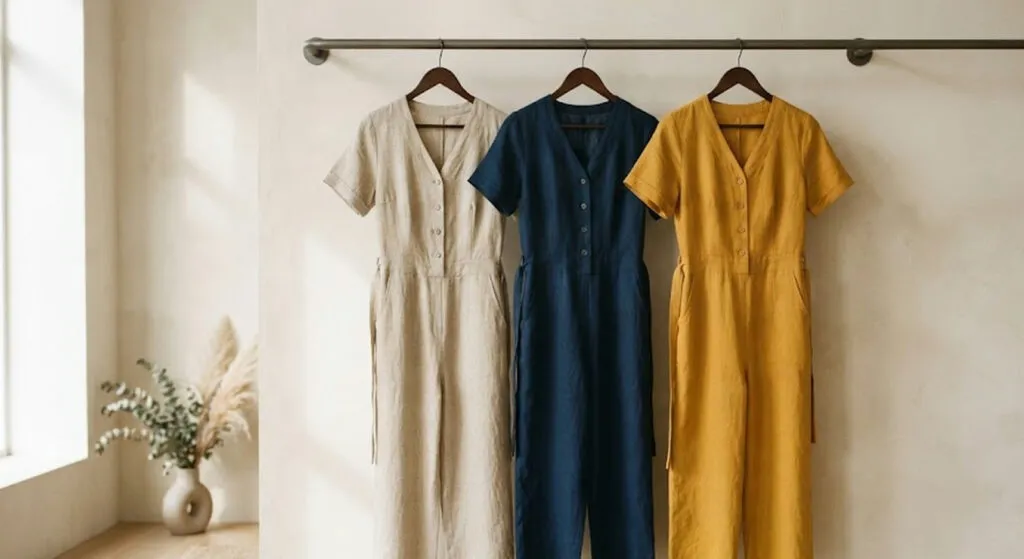
Wide leg, cinched waist and a fabric that breathes - the same cut in almost every model. Here, the same...

Four to eight weeks for the first effect, two to three months for a visible one. Plus a list of...
This site uses cookies - is that okay? Learn more
Be the first to know when Metla launches something new
Leave your email and we will write when there is a new guide or something new on Metla.