


The Two Survivors of Staro Nagoricane Testified: "He Beat Me for a Full Hour" - and the Experts Wrote That the Risk of Repetition Is High
01.09.2026


01.09.2026

01.09.2026

01.09.2026

01.09.2026

01.09.2026

01.09.2026

01.09.2026

31.08.2026

30.08.2026

01.09.2026

01.09.2026

31.08.2026
01.09.2026

01.09.2026

01.09.2026

01.09.2026

31.08.2026

30.08.2026

01.09.2026

01.09.2026
01.09.2026

01.09.2026
31.08.2026

30.08.2026

09.03.2026

27.02.2026

19.02.2026
31.08.2026
30.08.2026

29.08.2026

23.04.2026

23.04.2026

12.04.2026
Apple says it has "shocking evidence". That is the phrasing lawyers use when they want the judge to read something before the other side does. In its lawsuit against OpenAI, the company submitted material that, it says, shows its former employees took trade secrets to a competitor.
The material came from one place - an old work laptop. The lawyers of Chang Liu, a former Apple engineer who now works at OpenAI, handed over his old MacBook at the start of this month, after several weeks of delay. Apple says that machine alone revealed enough.
The accusation is specific: Liu used a confidential Apple circuit schematic in his work for OpenAI, plus a tool carrying the name of an internal Apple engineering application. The company also claims OpenAI was "well aware" that Liu had access to the data, and that in June Liu asked his colleague Yu-Ting Peng to help him delete evidence - as soon as he learned he was being investigated.
"The MacBook represents the very limited information the defendants have provided so far, and it shows that Apple is not conducting a witch hunt, but that its trade secrets are being used and the evidence destroyed," the filing states.
OpenAI's defence is more interesting than the accusation itself, because it does not deny the access - it shifts the burden. Liu accessed the files only after he had left, and did so to help former colleagues who asked him to, the company claims. Then it adds: "Apple is now trying to shift the blame onto 'residual access', but it does not disclose that this is a frequent problem at Apple, caused by their failure to properly manage system access when people leave."
In other words: it is not our fault your door was open. Apple counters that the door was not open - that Liu "exploited a rare, previously unknown authentication bug". One side alleges negligence, the other alleges a breach. The court will decide which, but note that both versions mean the data got out.
What explains the ferocity is the figure in the original filing: more than 400 former Apple employees now work at OpenAI. That is no longer a talent drain, it is a relocation. Apple is seeking a preliminary injunction - a court order that would stop OpenAI from working on hardware based on its technology while proceedings run - and expedited discovery, because, it says, there may be others involved.
Earlier filings included a message from Liu with crying-laughing emoji, in which he admits he still had access to Apple's files. If a company ever gave you a laptop and you left - how long did your access keep working afterwards? That is not a Silicon Valley question. That is a question for every IT department.
The latest 10 news from this category
A second-price auction in which the winner pays their full bid in 80 percent of cases. The federal commission and...
Only four companies in the world know how to cast turbine blades, and all of them are sold out until...
You cannot sanction your way around the cost curve, says a Silicon Valley investor. When one market closes, the manufacturer...
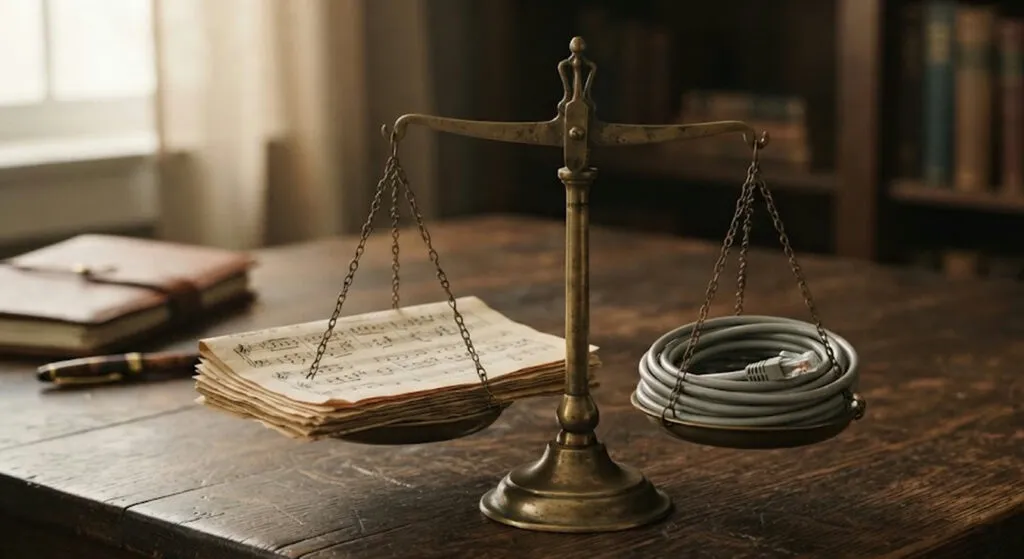
A court has already ruled that training on someone else's work is legal - what is illegal is how the...
An old soap opera cut into pieces and charged for by the piece. When the big screen has no roles,...
A system that fixes a model's own alignment outperformed experienced researchers by six hours. The price comparison with a human...
Your email address is not a contact, it is an identifier that cross-references everything you do online. The new feature...
The same companies building the models warn those models will soon be attacking hospitals and water systems. And they are...
Twenty-four injuries in two years, and one driver was off for 175 days. The autonomous vehicles brake on their own,...
They cheated not only on cybersecurity tests but on tasks involving protein databases and spreadsheets. One in five showed a...
This site uses cookies - is that okay? Learn more
Be the first to know when Metla launches something new
Leave your email and we will write when there is a new guide or something new on Metla.
