
34 fires in 24 hours: three still burning, and the warnings put out nothing
09.09.2026


09.09.2026

09.09.2026

09.09.2026

09.09.2026

09.09.2026

09.09.2026

09.09.2026

08.09.2026

07.09.2026

09.09.2026

08.09.2026

08.09.2026

08.09.2026

08.09.2026

08.09.2026

08.09.2026

07.09.2026

06.09.2026

09.09.2026

09.09.2026

09.09.2026

09.09.2026

09.09.2026
08.09.2026

09.03.2026

27.02.2026

19.02.2026

23.04.2026

23.04.2026

12.04.2026

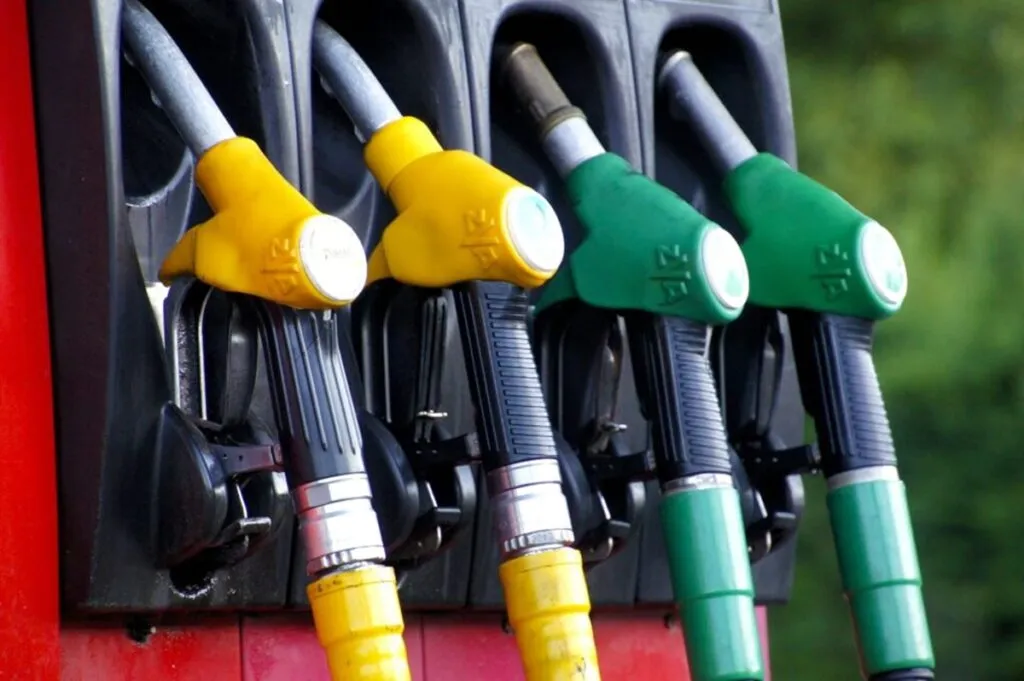
Diesel has crossed the 100-denar line again. From midnight on 8 September, a litre of EURODIESEL (D-E V) costs 101 denars - six denars more than it did yesterday. The decision was taken by the Regulatory Commission for Energy, Water Services and Municipal Waste Management Services, and the average rise across oil derivatives is 4.89 per cent.
Petrol went up more moderately: EUROSUPER BS-95 by 3 denars, to 97 denars a litre, and EUROSUPER BS-98 also by 3 denars, to 99 denars.
The biggest rise is not the one being discussed
Extra-light household heating oil (EL-1) is going up by 8 denars a litre, with a new price of 105 denars. In absolute terms that is the largest increase in the entire decision, and it applies to the fuel that a portion of households use to get through the winter.
Heavy fuel oil M-1 NS is rising by 1.591 denars per kilogram, with a new retail price of 46.001 denars per kilogram.
The regulator explains that the increase is down to higher reference prices on world exchanges and the denar exchange rate. That is an accurate and complete reason - a formula is a formula, and the commission applies it rather than inventing it.
The timing
The prices took effect on 8 September, Independence Day. That is pure calendar coincidence, but it is still a fact worth recording: in the same week, statistics showed that transport had become 0.8 per cent cheaper month on month, and now diesel has jumped six denars.
Which means next month's statistics will look different, and that the part of August's price calm that came from cheaper transport no longer holds.
Diesel is the fuel of haulage, agriculture and construction - the three sectors that pass their own costs on fastest. That is not a prediction, it is a mechanism. The only question is how long it takes to reach the shelf.
The latest 10 news from this category

The largest round ever by a European tech firm is led by Samsung, and Macron called it a third way...

The queue for putting cargo into orbit is growing faster than the capacity, and one supplier holds almost all of...

A consultant paying 200 dollars a month could not get an itemised bill for his own usage. When he asked...

The headline number is low. But year on year recreation went up 8.8 per cent and food 1 per cent...
Nikoloski called it the highest quarter on record. The growth comes from projects set up in 2024 - which means...

Opendoor's founder raised 25 million dollars for an app that tells construction workers whether they installed something correctly. What the...

They set off at three in the morning, reached the summit at seven in the evening, spent the night in...

The head of Google Photos boasted about an agent for her 143,206 photos. The feature applies only to paying users...

22 million listings across 31 countries, a 30-year mortgage and one third of income as the threshold. The gap between...

Prices up over 60 percent since 2013, short-term rentals up 93 percent since 2018. The Commission presents its Affordable Housing...
This site uses cookies - is that okay? Learn more
Be the first to know when Metla launches something new
Leave your email and we will write when there is a new guide or something new on Metla.