
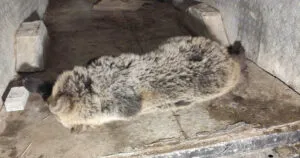
Bear cub killed on the Skopje-Tetovo motorway: the fence is a legal obligation, while the rescue team exists only in a Viber group
25.10.2026


25.10.2026
25.10.2026

25.10.2026

25.10.2026
25.10.2026

25.10.2026

25.10.2026

25.10.2026

25.10.2026
25.10.2026

25.10.2026
24.10.2026
25.10.2026
25.10.2026
25.10.2026
25.10.2026

24.10.2026

23.10.2026

25.10.2026

25.10.2026

25.10.2026

25.10.2026
25.10.2026

25.10.2026
25.10.2026

25.10.2026
24.10.2026
24.10.2026
22.10.2026
20.10.2026

23.04.2026

23.04.2026

12.04.2026

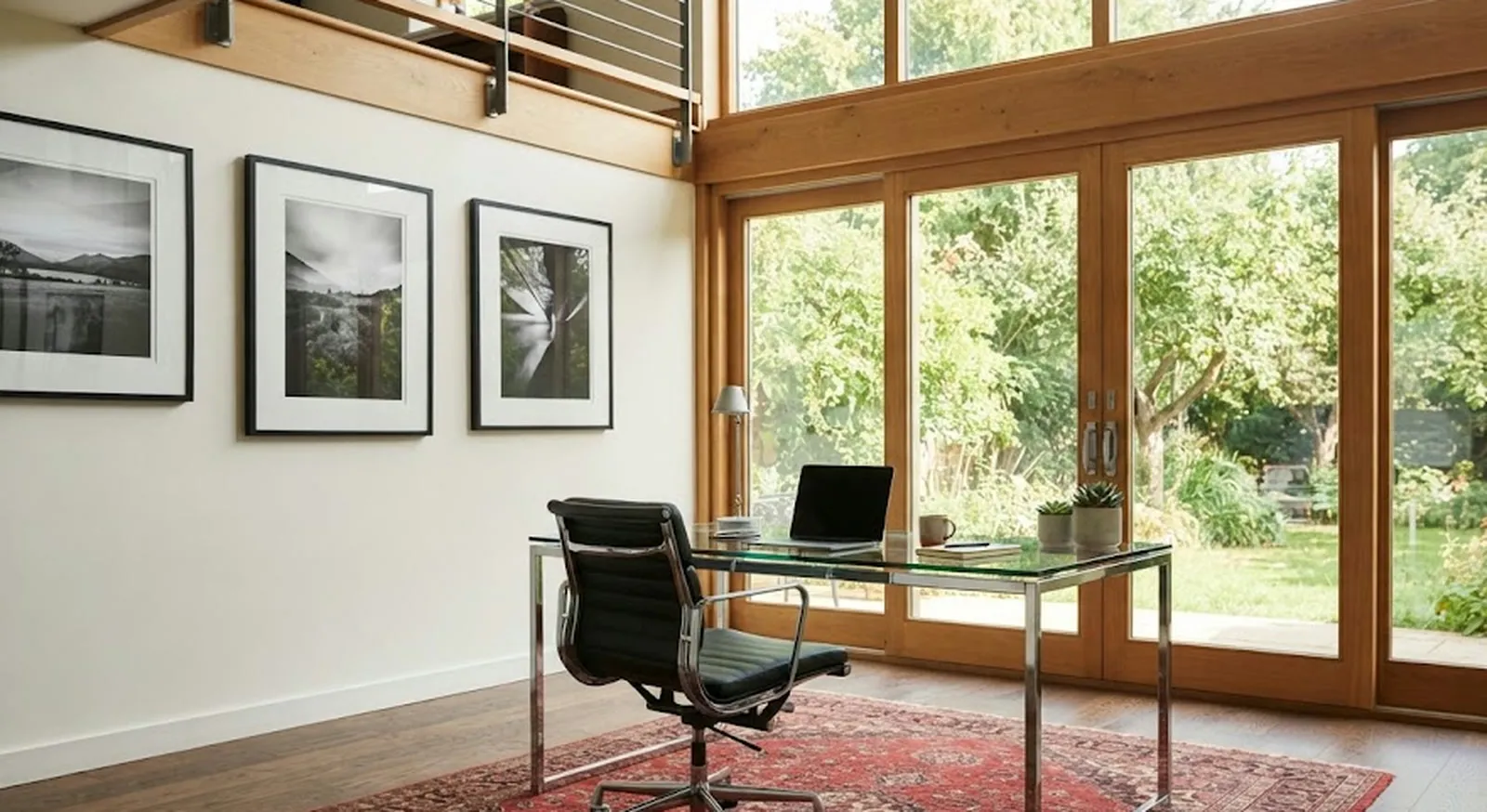
A glass desk is not a fashion decision. It is a decision about light. When the work surface is transparent, light passes through it instead of hitting a solid mass and casting a shadow in the middle of the room - and that is exactly what separates a room that looks like an office from a room you actually want to work in.
The home study of Spanish television presenter Nuria Roca is worth examining precisely because every move in it has a rationale, not just a price. The room has double height - a ceiling on two levels - which immediately gives the air inside a different volume. Large sliding glazed doors with wooden frames let light in without interruption and open the room onto the garden, so the greenery outside functions as part of the decor. The lighting is layered: indirect technical light, recessed adjustable ceiling spots, and one adjustable task lamp in the style of the classic Tolomeo, around 300 euros, directly above the desk.
The centre: glass and chrome, with a Persian rug beneath
The desk has a slim chromed tubular frame and a glass top. The choice is deliberate - no visual weight, the light passes through. But glass and steel together make for a cold room, and here comes the move that saves it: under the desk lies a Persian rug with a fine floral pattern in reddish tones. It is the only warm thing in that part of the room, and without it the whole solution would be a lounge, not a study. The chair is ergonomic, in black leather, with no ornament.
What costs little and shows a lot
This room teaches one thing that applies to a sixty-square-metre flat as much as to a house with a garden: the colour does not come from the furniture, it comes from the small things on the desk. Here that means a mustard-yellow cylindrical organiser, a wooden geometric pen holder, jars with ribbed glass and bamboo lids, small ceramics and folders in strong colours. Not one of these objects is expensive and each of them can be swapped out for a season. If your room feels dead, that is what it is missing - not a bigger desk.
On the desk there are also large-format books from publishers like Taschen, on architecture, photography and design. Here it is worth being honest: they are decoration too. But unlike a lot of other decoration, they also get read.
The walls are treated as a separate decision
Instead of a neutral surface waiting for something, the walls carry black and white photographs and large-format portraits in simple black frames, with industrial and urban motifs that emphasise the height of the space. On the opposite side sits an entirely different register - typographic posters with a message, printed on kraft paper and framed in light wood, plus abstract and geometric compositions in yellow and red. This is not a random mix. One side is strict and vertical, the other is loud and graphic, and together they give character to a room that would otherwise be merely functional.
The reading corner - and why it exists at all
Opposite the desk is a rest zone in mid-century style: two retro armchairs with visible curved wooden frames, upholstered in sea-green velvet. Beside them a walnut sideboard with a pronounced natural grain and a satin finish, carrying geometric ceramics in white and black and dried branches. The lighting comes from a brushed brass floor lamp with a marble base and a half-globe shade.
This corner is the instructive part of the whole room. The work zone and the rest zone are in the same space, but with completely different materials - glass and chrome against wood, velvet and brass. That is what tells your head it has moved from one place to another without leaving the room.
The second office - the one in the kitchen
And finally, the move that most resembles our reality. Part of the kitchen has been turned into a work corner with an industrial glass partition in a black steel frame - it isolates sound without cutting off the light or the view. The wall is clad in natural oak slats, which brings in warmth and texture. The table is round and serves for both eating and working. The chairs are DSW by Charles and Ray Eames, with a white polypropylene shell and beech legs.
And here is the most usable detail in the whole story: under the window there is a low bookshelf, the books arranged by colour. That is the solution for a flat with no separate study and no prospect of one. The glass partition is expensive, the slats are mid-priced, and the shelf under the window is nearly free - and yet all three solve the same problem: work and life in the same room, without one swallowing the other.
The latest 10 news from this category
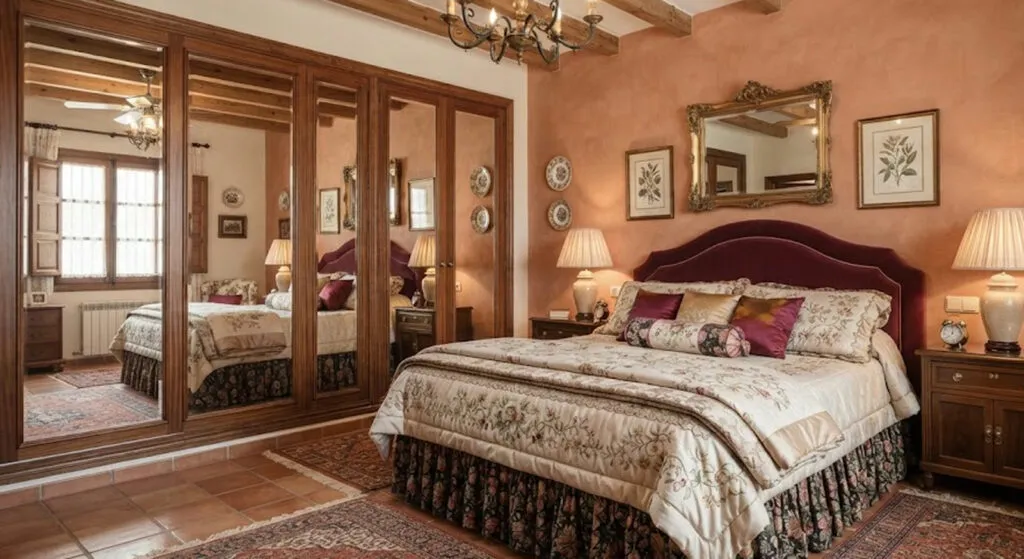
Five bedrooms, five bathrooms, a pool in Sierra Helada and not a single minimalist corner. The Spanish legend's home is...
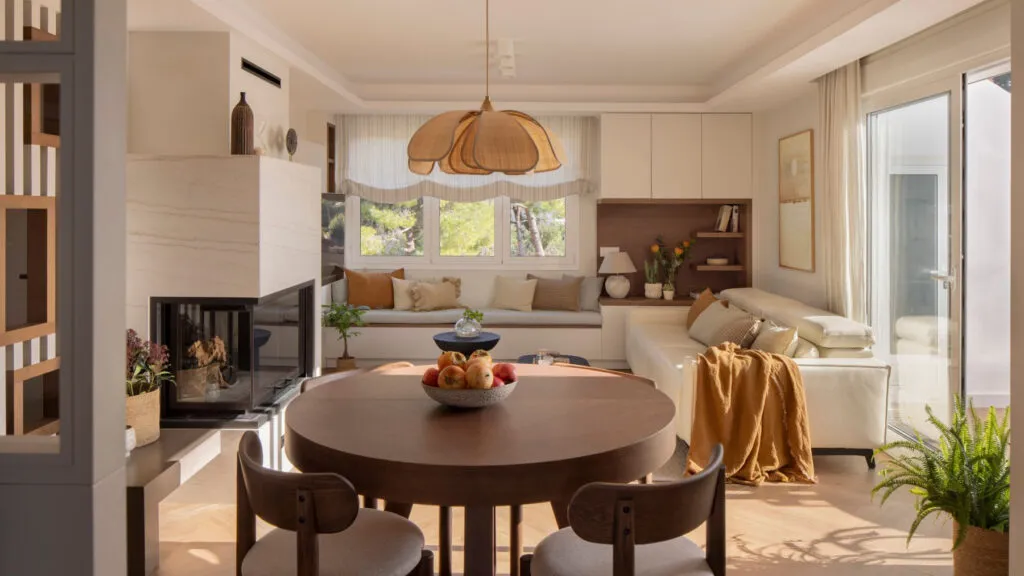
Sloping walls are usually an excuse for empty corners. Here they became a walk-in wardrobe, a reading bench and a...

The singer who joined Operación Triunfo 25 years ago has decorated a home without luxury. Most of the ideas in...
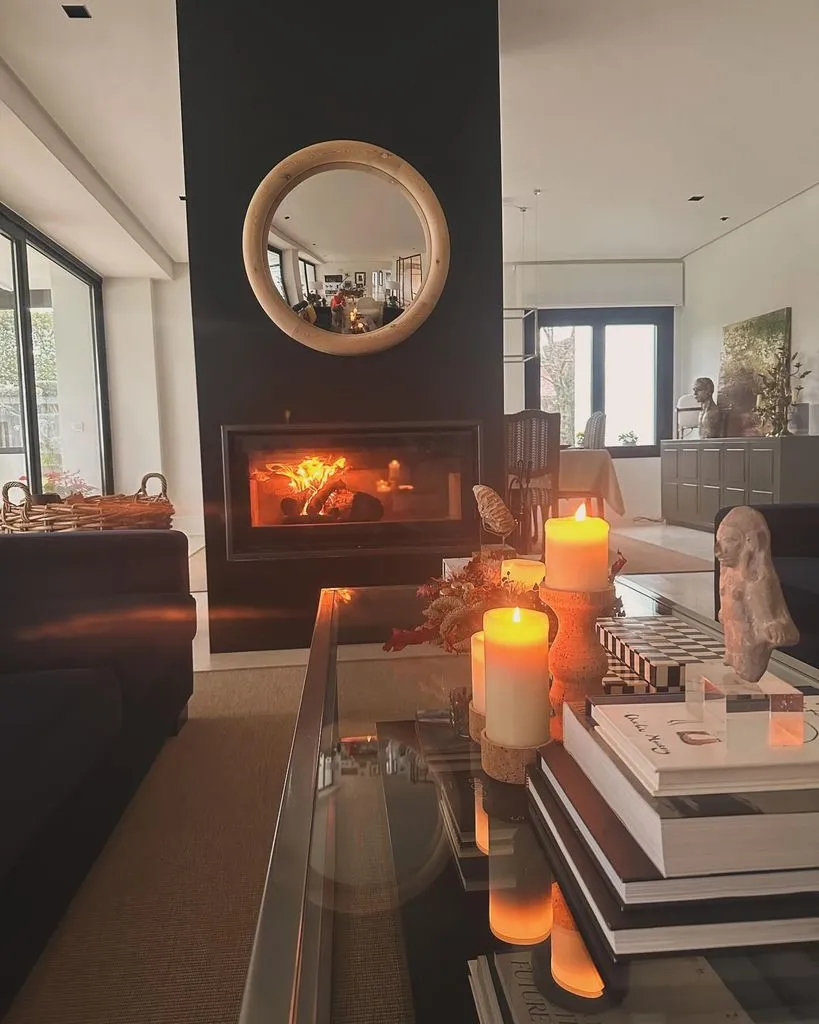
A TV presenter who lives in a rush every morning built herself a home where everything moves slowly. The best...
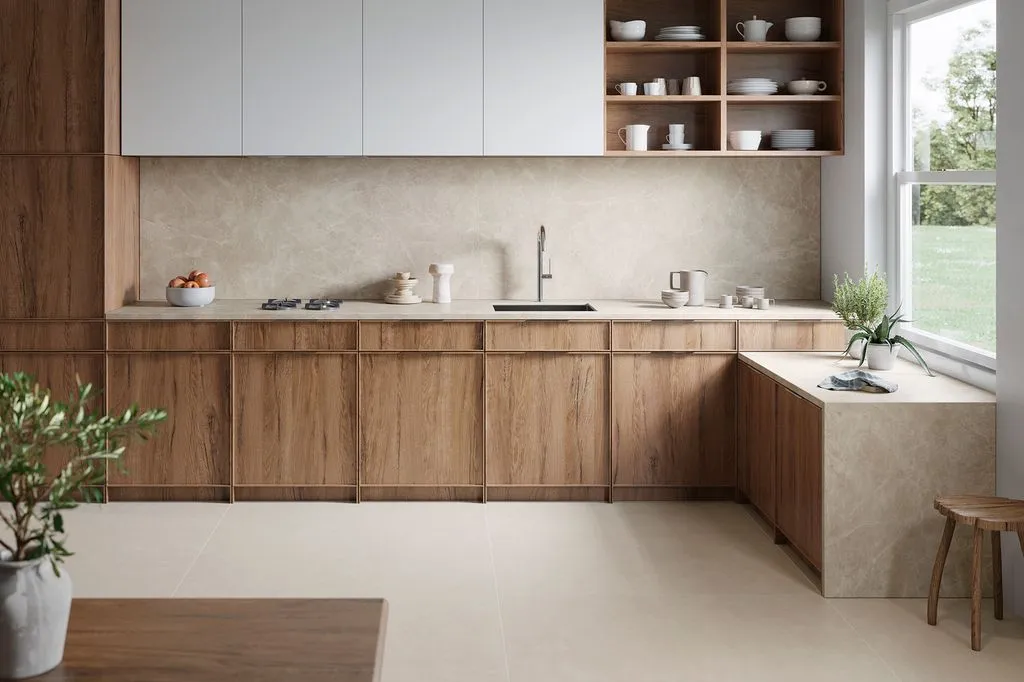
Before you pick a tile because it's on trend, ask the question rarely heard in a tile showroom: what will...
The designer removed an entire bedroom so the kitchen could reach the dining table. Sometimes a small flat is saved...
Bare walls, glass, an open kitchen and too much empty space: a home can look perfect and sound like an...
The dark wood wall unit is back in fashion, but the rule is clear: borrow the decade's warmth, don't reconstruct...
Dark colours supposedly make a room smaller. Designer Juancho González proved the opposite - with white walls, a mirror in...
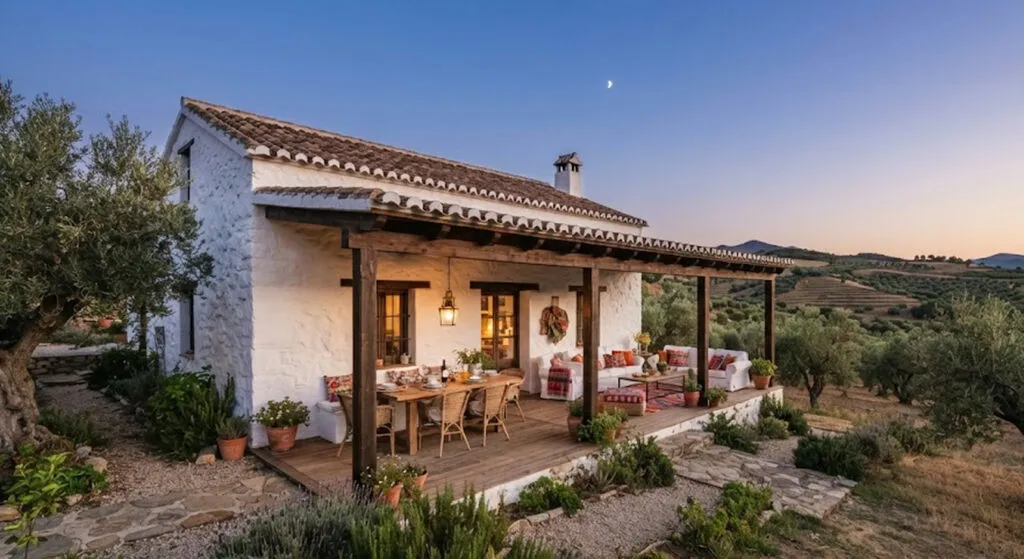
An estate bought the year he became a matador, century-old olive trees and a kitchen with velvet armchairs. How El...
This site uses cookies - is that okay? Learn more
Be the first to know when Metla launches something new
Leave your email and we will write when there is a new guide or something new on Metla.