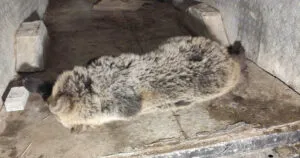
Bear cub killed on the Skopje-Tetovo motorway: the fence is a legal obligation, while the rescue team exists only in a Viber group
25.10.2026


25.10.2026
25.10.2026
25.10.2026
25.10.2026

25.10.2026
25.10.2026

25.10.2026
25.10.2026

25.10.2026

25.10.2026

25.10.2026

24.10.2026

25.10.2026

25.10.2026

25.10.2026
25.10.2026

24.10.2026

23.10.2026

25.10.2026

25.10.2026

25.10.2026
25.10.2026

25.10.2026

25.10.2026
25.10.2026
25.10.2026
24.10.2026
24.10.2026
22.10.2026
20.10.2026

23.04.2026

23.04.2026

12.04.2026


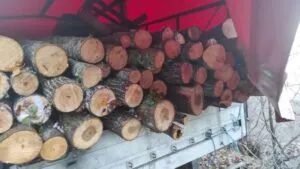
The head of the Directorate for Protection and Rescue did not offer the motive as a theory. He said it out loud: the fires are set to cover up illegal logging, and the flames appear precisely on the plots where the forest has already been cut. Twenty-three fires in a single day, eight still burning, crews exhausted, and Skopje under smoke again. Some of that smoke came from outside - the fire line near Gracani ran more than five kilometres, the smell reached Centar, Aerodrom and Karpos, and a state helicopter flew a firefighting mission outside our territory for the first time. Thirty-one fires in twenty-four hours, on that same day.
The figure released by the Crisis Management Centre completes the picture: 1,696 fires over three months, 1,627 of them burning on grass, stubble and landfills. So the problem almost never starts in a forest - that is where it ends up. And when it does reach forest, as on Pelister where the fire was deliberately set, nearly the entire firefighting capacity of the country has to be pointed at one mountain. The success after 72 hours rested on people awake for more than 48. When the outcome depends on exhausted volunteers, that is not a system - it is luck repeating itself until it stops.
Drivers paid one amount at the counter; the report sent to the institutions stated another. For five years nobody opened that gap. The small line items everyone pays when registering a vehicle - roads, municipalities, the Red Cross, the environment - were laundered through a brokerage firm, according to the investigation, for a total of 2.26 million euros. This is not one month of missed inspection. This is a figure that sat in the reports the whole time, waiting for somebody to compare it against the payments.
The same week, the State Audit Office explained why it cannot audit EVN - the state holds no ownership stake. Formally correct. In practice it means the company that bills everyone for electricity stays out of reach of the body that checks how public money is spent. The 94,847 people working outside the system fit the same picture: when every second worker earns up to 600 euros, undeclared work stops being a choice and becomes arithmetic.
This cohort of first-graders was born when more than 19,000 children a year were still being born here. 19,031 born, 14,500 sitting down in first grade. The falling birth rate does not cover the difference, because those children were already born and already counted - they left. It is the one number in the entire education system that needs no survey to understand.
The consequences are already visible on the ground. Two schools in Bitola are running for one child each, three satellite schools are being mothballed, and 188 first-graders on the interior ministry's lists simply never showed up. The minister, meanwhile, told first-graders to ask for a little brother - in a year when 26 schools closed. Demography is not a message for six-year-olds. It is a question about why their parents left.
The city train to Zelenikovo is not a new railway. Part of the route ran on wooden sleepers laid in 1959 - older than most of the passengers. With the sleepers replaced, the train runs at 80-90 instead of 20-30 kilometres per hour, for 40 denars and twenty-five minutes, eight departures a day with a four-hour hole in the middle. The infrastructure was already there. What was missing was the decision to touch it.
Day one showed the other end of the story too: the prime minister in the first carriage in the morning, a train with no power outside Lisice by evening, and passengers stuck on a track they could not even step down from. The same pattern repeats elsewhere - 150 electric buses for 51 million euros arrive after two annulled tenders nobody ever explained, and the real test is not the vehicles but the chargers. And the boulevard in Keramidnica, pending since 1965, is finally being cut through - but only halfway.
At the "Puls" trial the expert witness said the sentence that holds the whole week together: the inspector could and should have shut the venue down, and the law had required action years earlier. The first official record of the club's condition was written after it had already burned. That is not a delay in procedure. That is an order of operations in which the document comes last, once there is nothing left to prevent.
The same order showed up in smaller cases. A daughter reported them missing at 00:49, and at 13:50 she found the bodies herself - thirteen hours nobody accounts for on the institutions' side. Bitola stayed silent for four days, then answered with a denial rather than an explanation. And in Montenegro, the man who killed three people at a shooting range had crossed the border eight times in six days without a single service flagging him as a risk - in the end he was recognised by some lads down by the river and a taxi driver.
None of these cases began with missing information. The motive behind the fires was known, the payments were logged, the births were counted, the sleepers had been there since 1959, and for the club the law had been clear for years. What was missing is the step between knowing and acting - and this week, nowhere was that step taken in time.
The latest 10 news from this category
The ambulance service got vehicles with no one to drive them, Skopje's public transport company has buses that don't run,...
A defendant with confiscated passports made it to Sofia, the Saraj police report stayed under lock, the average new flat...
Every announcement this week came with a date and a photo op. What was missing was the last line: how...
A network "untouchable" for more than 15 years, a hospital under construction since the eighties, accession talks Skopje and Tirana...
The state announces inspections, and an inspector gets detained. Oil falls, diesel climbs. A week in which almost every official...

Two inspections of the same cable car with opposite findings, a climate plan contradicting its own urban plan, and a...
A week in which oversight had a price, the celebration cost nothing from the Budget, and deadlines expired faster for...
The map of which municipalities never sprayed came out after the epidemic, spraying in Resen began only after the raven...
Thirteen sprayings and four dead, technical solutions drawn up but never built, and five years of investigation without a single...
Fifty-two fires in one day stopped by villagers, a crisis closed with a glass of water in front of the...
This site uses cookies - is that okay? Learn more
Be the first to know when Metla launches something new
Leave your email and we will write when there is a new guide or something new on Metla.