


Kratovo man stabs police officer mid-intervention: prosecutors want the 40-year-old detained
15.09.2026


15.09.2026
15.09.2026
15.09.2026

15.09.2026
15.09.2026
15.09.2026

15.09.2026

14.09.2026
13.09.2026

15.09.2026

15.09.2026
14.09.2026

15.09.2026
15.09.2026

15.09.2026
15.09.2026
14.09.2026
13.09.2026

15.09.2026

15.09.2026

15.09.2026

15.09.2026

15.09.2026

14.09.2026

09.03.2026

27.02.2026

19.02.2026

14.09.2026
14.09.2026

13.09.2026

23.04.2026

23.04.2026

12.04.2026

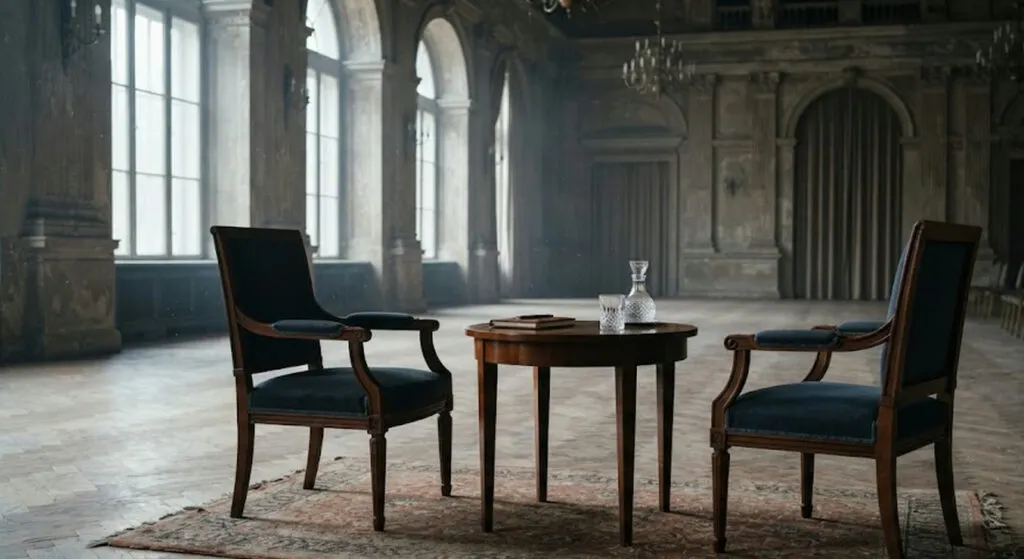
Switzerland offered to host peace talks on Ukraine. Russia replied that the offer no longer exists as an offer - because, according to Moscow, neither does the neutrality that made it worth anything. Deputy Foreign Minister Alexander Grushko said as much without much circling around it.
"We have pointed out repeatedly that, unfortunately, little remains of Swiss neutrality as we know it. In that sense Geneva as a neutral platform, symbolising the spirit of consensus, can of course no longer be viewed that way", Grushko said, adding that the Swiss government's moves have turned the country into a de facto associate member of NATO, if not a direct one.
The offer and the refusal
Swiss President Guy Parmelin had earlier said the country is ready to provide a venue for peace talks on Ukraine. Russia's ambassador in Bern, Sergey Garmonin, responded that Russia does not need the "good offices" of Switzerland, which in Moscow's view has lost its former standing as a credible neutral state. The reason the diplomat gives is specific: Switzerland adopts EU sanctions.
This is worth pausing on. Geneva is not just a city with a pretty lake - it is an institution, a place where agreements were signed for half a century precisely because no side could claim the host was rooting for anyone. The last round of trilateral talks between Russia, the US and Ukraine took place in Geneva, on 17 and 18 February. The head of the Russian delegation, Vladimir Medinsky, described those talks at the time as difficult but constructive.
What is left when the neutral table is gone
If seven months later the same venue is no longer acceptable, then Geneva has not changed - the willingness to sit down has. Neutrality is useful to whoever wants a deal and inconvenient to whoever wants time. Rejecting the venue is a cheaper way of rejecting the conversation than openly saying there will be no negotiations.
The question that remains is practical: which city is next? Every country that volunteers will be measured by the same yardstick - does it impose sanctions, is it in NATO, how did it vote on some resolution. With those criteria, the list of acceptable hosts narrows down to the countries with the least interest in the talks succeeding at all.
The Balkans know this game by heart. An argument about the venue is the oldest way of postponing the argument about the substance.
The latest 10 news from this category
Trump scaled back the military exercises to ease the tension, and Wonsan answered in the form of projectiles. What does...

The sanctions list got a seven-day extension instead of one measured in months, a move diplomats themselves call unprecedented. Two...
The will says one thing, a committee of twenty-one men decided another. The queen mother says the army pulled the...
A country that was Europe's byword for stability for decades now has a parliament split into two blocs by a...
Sixteen years in power, defeat at a regular election, five months of quiet - and now the election result is...
When an institution with a legal department and a palace apparatus has to publish a list of its verified accounts,...
Nobody said they do not trust Washington. Everyone is behaving as though they do not - gold, weapons, the cloud...
The warning reached the president three years before 9/11. The problem was not a lack of information, but that nobody...
In 1976 tradition demanded the future king choose a bride with no past. Thirty years later that same king married...

Five institutions declined to comment on damaged infrastructure the global oil market depends on. When that many addresses have nothing...
This site uses cookies - is that okay? Learn more
Be the first to know when Metla launches something new
Leave your email and we will write when there is a new guide or something new on Metla.
