UGD's E-Transcripts Were "Fixed" for Money for Five Years: Two Employees Held in Custody
05.11.2026


05.11.2026

05.11.2026

05.11.2026

05.11.2026

05.11.2026

05.11.2026

05.11.2026
04.11.2026

03.11.2026

05.11.2026

05.11.2026

04.11.2026

05.11.2026

05.11.2026

05.11.2026

05.11.2026

04.11.2026

03.11.2026

05.11.2026

05.11.2026

05.11.2026

05.11.2026

05.11.2026

04.11.2026

05.11.2026

04.11.2026

03.11.2026

23.04.2026

23.04.2026

12.04.2026

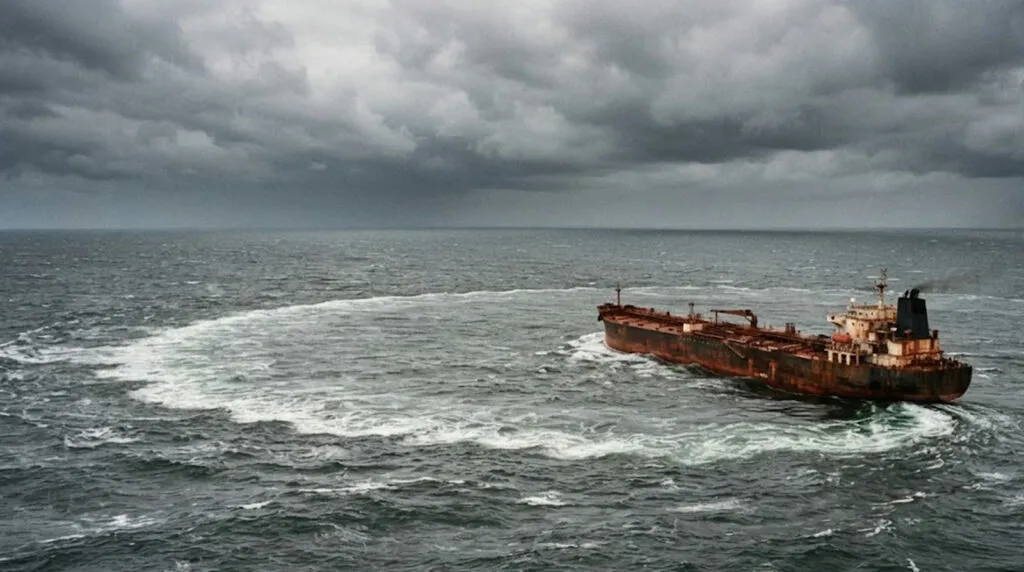
Before the congressional elections, Donald Trump struck a deal with Vladimir Putin: Russian diesel in American ports, cheaper fuel at the pumps and happy voters at the ballot box. The voters were not happy - the Democrats won both chambers. And now, according to shipping data, the tankers are slowly losing interest in America too.
Two of the three ships loaded with Russian diesel that were sailing toward the US coast abruptly changed course. Leruo, a tanker owned by a Hong Kong company, flying the flag of Sierra Leone and under UK, EU and Canadian sanctions, listed Brazil as its new destination on Monday. Talisman, a 20-year-old Russian tanker under US, UK and European Union sanctions, turned from the Atlantic back toward the Mediterranean and is now off the coast of Algeria. It is signalling that it is "awaiting orders" - in other words, the cargo still has no confirmed buyer or port.
The third, the Greek-owned Agioi Fanendes, is for now still heading for the US, but it too is "awaiting orders". Its owner, Eastern Mediterranean Maritime, said earlier that the port of discharge has not yet been confirmed. Meanwhile, Beast, a sanctioned tanker from the Seychelles that loaded its cargo on 27 October at the Russian port of Primorsk, is also sailing toward the Atlantic.
The scheme that was supposed to save the election
The logic behind the deal was simple, and the problem real. US diesel stocks fell below 100 million barrels, for the first time in more than two decades. Diesel futures jumped by more than 60 percent after Trump started the war in Iran, and at American pumps a gallon costs about 6.27 dollars, close to the all-time record from September. Russian fuel was supposed to bring prices down before election day. The Republicans got nothing out of it.
The deal enraged the Democrats, but also some Republican members of Congress, who warned it might be illegal and demanded it be cancelled immediately. New Jersey governor Mikie Sherrill this week sent an official letter to the operators of ports and terminals in her state: turn back any tanker carrying Russian diesel or face stiff penalties.
"Two of the three Russian diesel cargoes destined for the US have now been diverted to other destinations," said Matt Smith, an analyst at Kpler. "Given that American buyers are clearly holding back because of regulations, laws and sanctions, it would be no surprise at all if the third tanker changed course too."
Jacob Meldgaard, chief executive of the shipping company TORM, said what Washington doesn't want to hear: "Even before the Democrats took over Congress, you could see that bringing Russia back into the world economy is not that easy. Not even when the American administration itself is pushing it."
On paper the sanctions apply; at sea it depends on who is buying. When an American president personally opens the door to Russian fuel and the market is still afraid to walk through it, that says something about the strength of the rules the West imposed. In the Balkans, where every Russian pipeline and every tanker is a political question, it is worth asking: if not even the White House can sell Russian fuel, who could?
The latest 10 news from this category
When even the loudest Republicans admit the party went through an extinction-level event, the defeat isn't spin. Texas fell, and...
When one sentence runs out, a new one gets written. The leader of the Umbrella Movement, jailed since he was...
Halfway through his term, Trump has sunk to 38 percent approval, and Texas got a Democratic senator for the first...

Hundreds of people, a police cordon, and still a man from Hoogwoud got within a step of the king. He...
Texas after three decades, Kansas after 87 years, and Musk's 168 million dollars gone with the wind. Two years after...
"I wasn't on the ballot, and if I had been, we would have won in a landslide." First the veto,...
Police outside the Constitutional Court, a president cutting short a trip to Africa, a prime minister who says he is...
Meat in the bin, empty fridges, and the attackers aren't asking for money. If someone can remotely spoil the stock...
The King spoke of horror and deep personal sorrow before the leaders of 56 countries. He never said "sorry", and...
The administration wanted the ballots of people it claims aren't citizens set aside - the court refused on an emergency...
This site uses cookies - is that okay? Learn more
Be the first to know when Metla launches something new
Leave your email and we'll write to you when there's a new guide or something new on Metla.