
The Entire Interior Ministry Lost Its Health Insurance Overnight: Police Officers Turned Away From Chemotherapy Over One Unposted Entry
11.08.2026


11.08.2026

11.08.2026

11.08.2026

11.08.2026
11.08.2026

11.08.2026

11.08.2026
10.08.2026

10.08.2026

11.08.2026

11.08.2026

10.08.2026

11.08.2026

11.08.2026

11.08.2026

11.08.2026

10.08.2026

09.08.2026
11.08.2026

11.08.2026

11.08.2026

11.08.2026

11.08.2026

11.08.2026

09.03.2026

27.02.2026

19.02.2026

23.04.2026

23.04.2026

12.04.2026
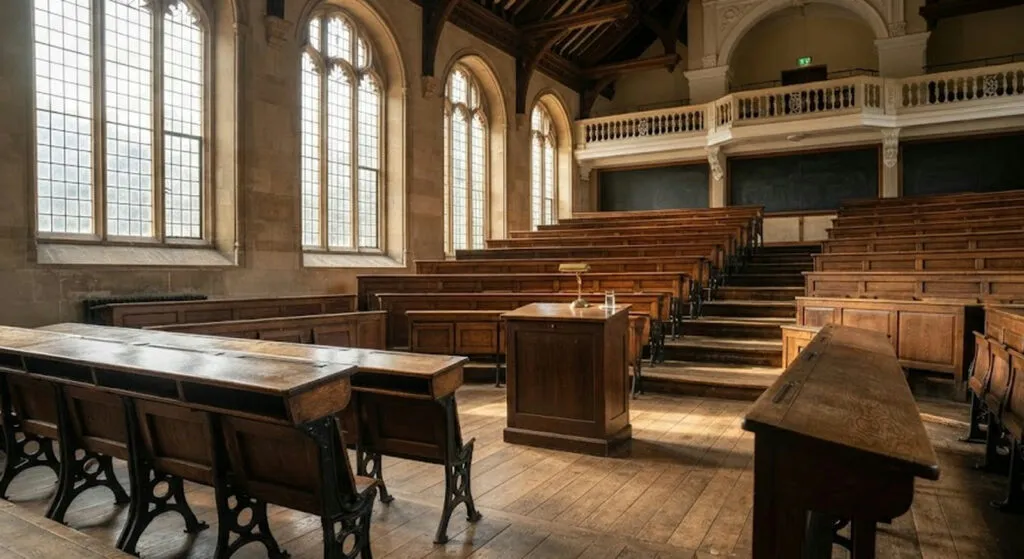
Oslo has made a decision that says more about the state of the Norwegian monarchy than any official palace statement. Prince Sverre Magnus, the younger son of Crown Prince Haakon and Mette-Marit, will study at the same university where Infanta Sofia, the younger daughter of Felipe VI and Queen Letizia, already studies. Forward College, with campuses in Lisbon, Paris and Berlin. It isn't a coincidence, and nobody is pretending it is.
Royal houses have watched each other for centuries and copy whatever looks like it works. It used to be Sandhurst for military training, Georgetown for politics and international relations, Oxford and Cambridge for everything else. The template has been refreshed, but the logic is the same: find whoever is doing it well and send your child there. The Dutch princesses already took the same path as Leonor and Sofia. Now Norway is doing the same.
Why the younger daughter and not the heir?
This is where the genuinely interesting part lies. In modern monarchies, the siblings of heirs are no longer substitutes waiting for someone to fall ill. They are part of how the institution's legitimacy is built. At 19, Sofia combines an international education, an agenda of her own and a constant presence on the front line of official life. Neither Isabella of Denmark, nor Alexia of the Netherlands, nor Gabriel of Belgium has built such a solid institutional role. Sofia became the model others are copying.
The case of Sverre Magnus is entirely different, and that is what makes it more interesting. For years the Royal Palace in Oslo was extremely closed about him. Haakon and Mette-Marit repeated in interviews that the boy had no official duties and should be treated almost like any other Norwegian. After finishing school in 2024 he lived in Milan, worked in photography and registered a small production company. Not one protocol, not one duty.
Then everything fell apart. The first arrest of his half-brother Marius Borg opened a crisis that is still running. On top of that came the age of King Harald and Queen Sonja, Mette-Marit's serious health problems, the two-year judicial investigation into Marius, who was sentenced at first instance to four years in prison for two rapes and two cases of domestic violence, and the reputational damage from the revelation of the princess's friendship with Jeffrey Epstein. No palace communications operation survives a list like that.
From "ordinary citizen" to a figure they need
Princess Ingrid Alexandra has returned from the Sydney campus and will be able to take on the regency in the autumn. Sverre, who until yesterday was a young man outside official life, suddenly became essential to the institution's stability. For two years the same dilemma kept circling: if he is an ordinary citizen, then let him do his military service like every Norwegian; if he isn't, then he is a prince and must be prepared as a representative of the state. The decision to send him where Sofia is means the dilemma has been settled - in the second direction.
What shows here is something rarely said out loud: monarchies aren't traditions that carry themselves, they are institutions that get managed and repaired when they break. When one house enters a crisis of trust, the first thing it does is copy the template of a house that isn't in one. Do our institutions react that fast when their credibility collapses?
If the Norwegian plan works, in ten years Sverre Magnus will be a prince with an international education and a functioning public role. And the fact that a Spanish infanta who will never sit on the throne became an academic reference for an entire generation of European royal children is a bigger win for the court in Madrid than any state visit.
The latest 10 news from this category
The fifteen-year-old stays in Miami. The divorce has lasted longer than the marriage, and the only party who hasn't spoken...
Daily horoscope - 11.08.2026
Daily horoscope - 10.08.2026
Daily horoscope - 09.08.2026

He rented out his house in Los Angeles, moved to a smaller flat, and claims a blacklist is shutting him...
Daily horoscope - 08.08.2026
The palace announced it as an administrative detail. Behind it stands a woman with a transplanted lung and a daughter...

That many people in one room and not one frame got out. That isn't chance, it's a decision carried out...

A stage name, a first single and one sentence announcing a career. Until now, only the children of second-borns could...
This site uses cookies - is that okay? Learn more
Be the first to know when Metla launches something new
Leave your email and we will write when there is a new guide or something new on Metla.