
The Judge Who Gave Markovski His Passport Back Retired Three Days Later: „I Feel No Responsibility”
31.07.2026


31.07.2026
31.07.2026

31.07.2026

31.07.2026

31.07.2026

31.07.2026

31.07.2026

31.07.2026
30.07.2026

31.07.2026

31.07.2026

30.07.2026

31.07.2026

31.07.2026

31.07.2026

31.07.2026

30.07.2026

29.07.2026

31.07.2026

31.07.2026

31.07.2026

31.07.2026

31.07.2026

31.07.2026

09.03.2026

27.02.2026

19.02.2026

31.07.2026
30.07.2026
29.07.2026

23.04.2026

23.04.2026

12.04.2026
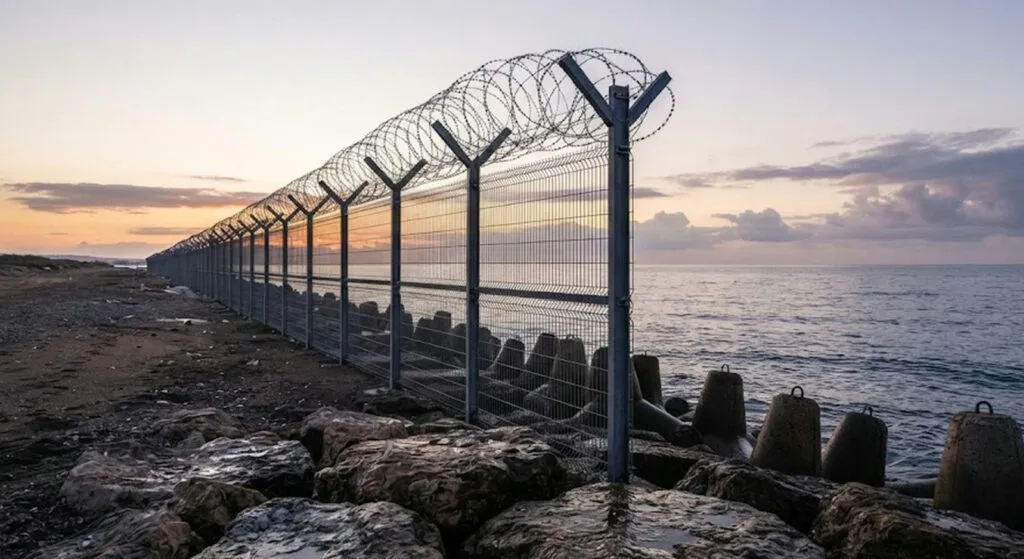
Italian Foreign Minister Antonio Tajani today demanded something that until yesterday was unthinkable to say out loud in Brussels: that Spain be suspended from Schengen. „I support closing the Schengen area with Spain,” he wrote, condemning „irregular and uncontrolled immigration”.
The trigger is Ceuta - the Spanish enclave on the North African coast. Migrants flooded the border today, overwhelming police on the city's breakwater after swimming across from the Moroccan side, the Spanish Civil Guard said. Nine died. The Spanish military is sending 60 personnel to reinforce the police.
The numbers are chaos, which is itself a data point. State broadcaster TVE reported that between 2,000 and 3,000 young people crossed the border. Some media mention a figure of 20,000. The Spanish state agency EFE reported that hundreds of young people were seen climbing over the protective fence - which at that moment was not under police supervision at all.
The fence nobody was guarding
That last sentence carries all the weight. This is not a defence that was breached, it is a defence that was not there. Ceuta, together with Melilla, is the European Union's only land border with Africa. Both cities periodically see waves of migrants. Not a surprise, not a first, not unpredictable. And still - the fence was unsupervised.
Tajani is not asking for that to be fixed. He is asking for Spain to be shut out. That is the difference between solving a problem and finding a culprit, and Europe increasingly picks the second. Schengen was conceived as a promise that internal borders disappear. When the first reaction to pressure on the external border is a demand to bring the internal ones back, the promise starts to sound conditional.
Macedonia knows this scene from the other side of the table. For years the same Union explained to the region that borders are a technical standard, not a political message - while fences went up across the Balkans and people were counted. Now the same vocabulary is being used among the member states themselves. Do the rules apply equally to everyone, or do they depend on who is under pressure at that moment?
The nine who died in Ceuta will not be an agenda item at the meetings in Brussels. They are the end of a sentence that begins with an unsupervised fence and finishes with a demand to suspend another country.
The latest 10 news from this category
She was interning at SHAPE, the Alliance's most sensitive military headquarters. She became a suspect because she asked odd questions...
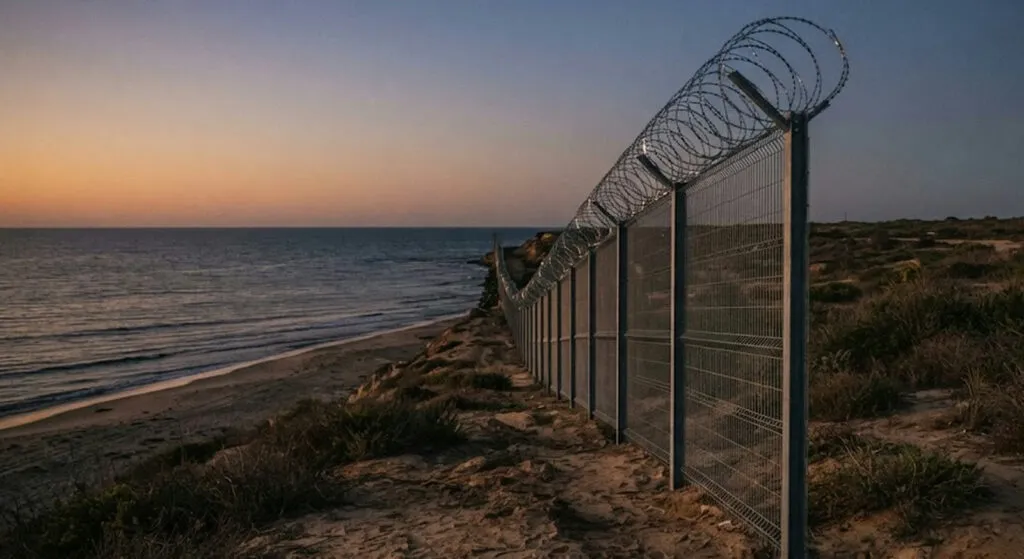
Three died trying to swim the final stretch. The border into Ceuta works as strictly as Rabat wants it to...

Lavrov said it at a table where China also sits. Beijing spent decades not wanting a nuclear North Korea on...
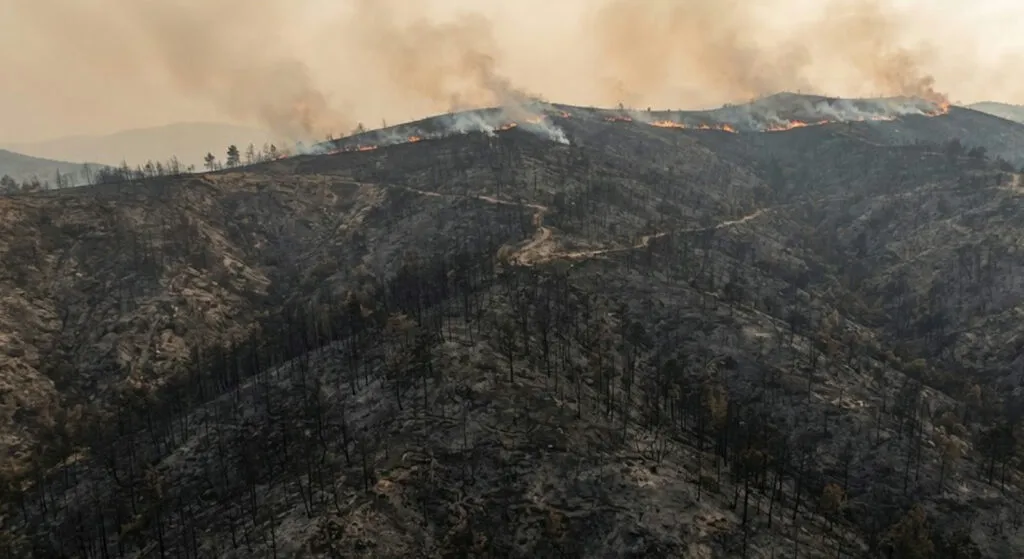
Sánchez writes to Brussels that the fire spreads „exponentially faster” than any calculation allows. The proposal covers the western Mediterranean...

According to a UN estimate, the informal levy was already bringing them up to 180 million dollars a month. Now...

The former prince was due to testify as the man who was attacked. The court decided it can wait another...

Russia warns of an Asian version of NATO and points to bombed Yugoslavia as its main proof. The argument holds...
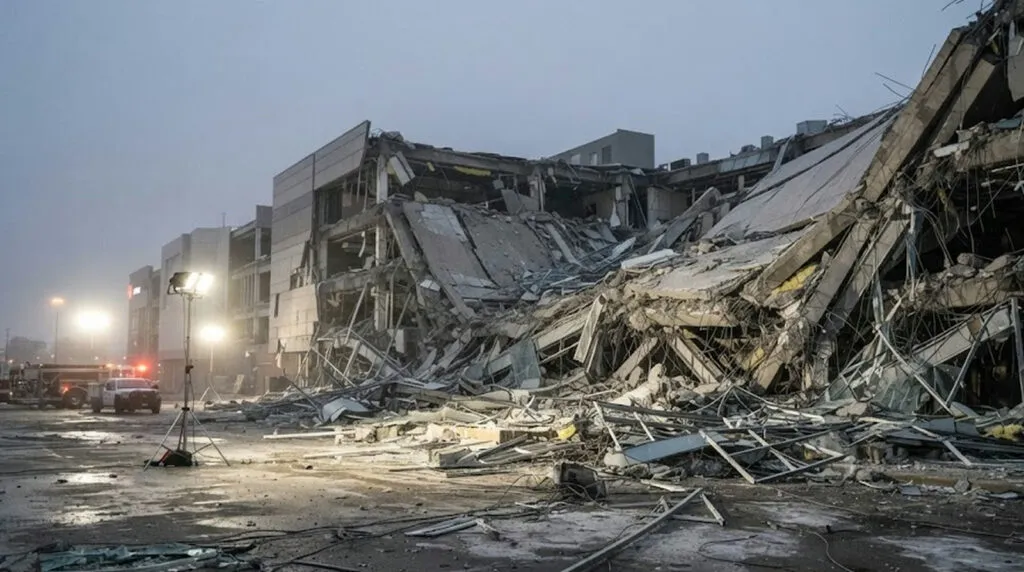
Japan has some of the strictest seismic codes in the world. Even so, within hours the hospitals were overwhelmed, and...

Tehran rejected Oman's fifty-fifty split proposal. A closed chokepoint does not issue a press release, and the effect is felt...

The legal opinions are already written, the mechanism has to pass before October. Institutions move fast only once every fact...
This site uses cookies - is that okay? Learn more
Be the first to know when Metla launches something new
Leave your email and we will write when there is a new guide or something new on Metla.