

Kratovo man stabs police officer mid-intervention: prosecutors want the 40-year-old detained
15.09.2026


15.09.2026

15.09.2026

15.09.2026

15.09.2026

15.09.2026

15.09.2026

15.09.2026

14.09.2026
13.09.2026

15.09.2026

15.09.2026

14.09.2026

15.09.2026

15.09.2026

15.09.2026

15.09.2026

14.09.2026

13.09.2026

15.09.2026

15.09.2026

15.09.2026

15.09.2026

15.09.2026

14.09.2026

09.03.2026

27.02.2026

19.02.2026

15.09.2026

14.09.2026

14.09.2026

23.04.2026

23.04.2026

12.04.2026

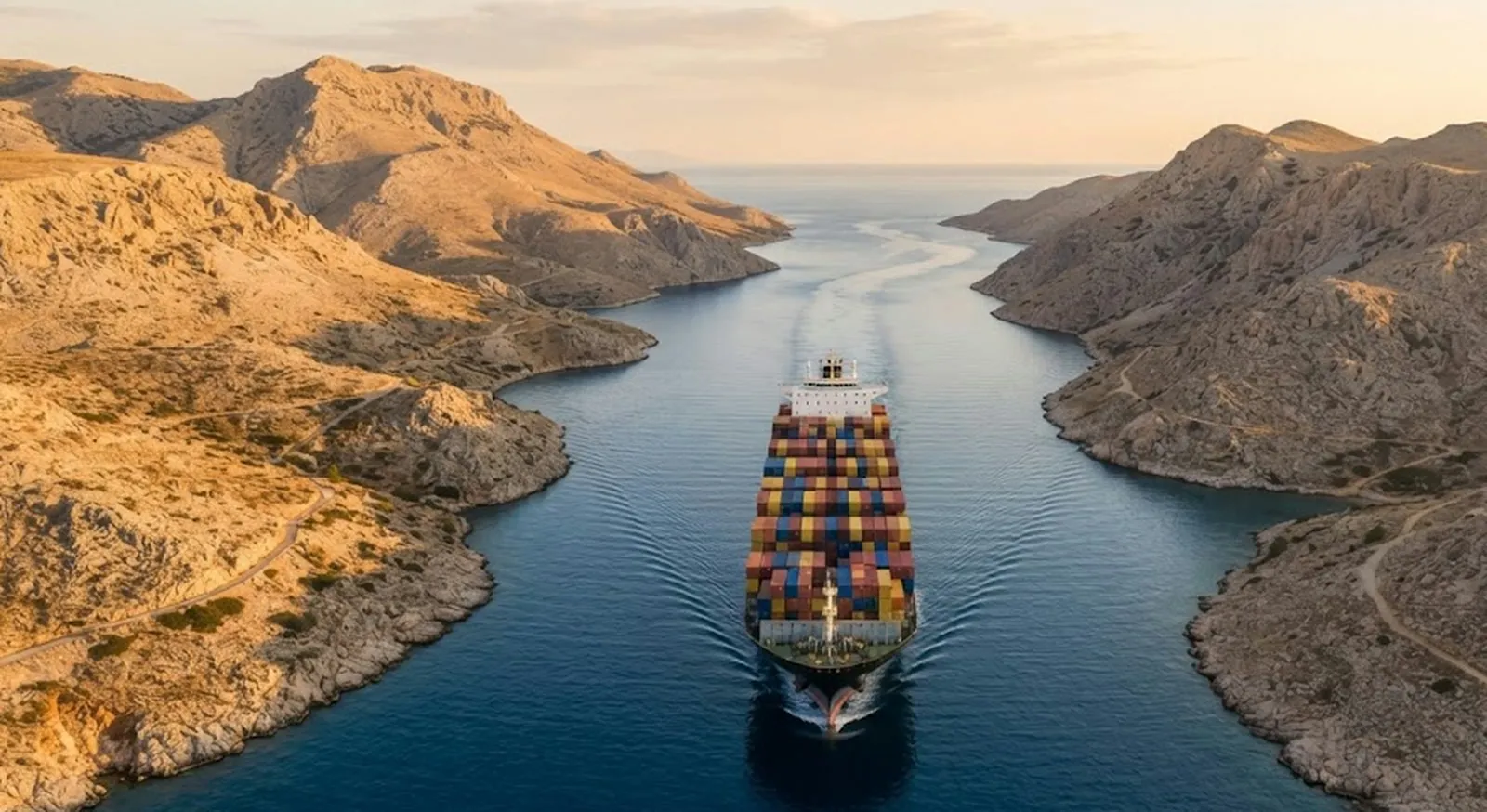
Yemen's Houthi rebel movement is preparing a plan to charge a fee for merchant ships passing through the Bab el-Mandeb strait. Not an attack, not a blockade - a toll. One of the world's most important sea routes, the one linking the Red Sea to the Gulf of Aden, is to get a toll gate with its own regulatory body.
The initiative comes after the Houthis declared a comprehensive naval embargo against Saudi Arabia on 20 July. According to news agency information, the idea of fees developed during July, when a Houthi delegation visited Iran for the funeral of Ayatollah Ali Khamenei. Regional officials claim the Iranian interlocutors encouraged the plan, after which Iranian advisers travelled to Yemen to help set up the body that would collect the fee.
Chinese ships don't pay
According to the same sources, Chinese merchant vessels would be exempt. China had previously held direct talks with the Houthis to secure safe and unhindered passage for its ships through the area. So the system is not blind - it has a list. And a list means politics, not security.
The aim, it is claimed, is twofold: regular tolls from international shipping and simultaneous economic pressure on the United States and its allies. Avoiding Bab el-Mandeb means sailing around the southern tip of Africa, which extends the voyage to Asia by around 34 days. That is more than a month's difference for every container.
180 million dollars a month, according to a UN estimate
Here the figure explains the whole story. According to a 2024 United Nations panel estimate, the Houthis were previously able to earn up to 180 million dollars a month from shipping companies paying for safe passage. Those figures are not independently confirmed, but they show what financial interest sits behind the latest plan for official fees.
In other words, this is not a new business - it is an attempt to convert an informal levy into an institution. The difference between extortion and a toll is only whether there is an office issuing a receipt.
Nobody has the capacity to stop it
International naval forces currently lack sufficient capacity to fully protect merchant ships against the possible application of such measures. Western diplomats admit there is no significant political will to further strengthen military patrols in the region.
Bab el-Mandeb is a key alternative export route for Saudi Arabia, which means any levy further increases both security and economic risks. The recent attack on a Saudi tanker near the port of Jizan, claimed by the Houthis, demonstrated this corridor's vulnerability.
One question is rarely asked out loud: if an armed group can charge for navigation through international waters and nobody has the will to stop it - what exactly does freedom of maritime traffic mean? Or is it a rule that applies only where someone has the capacity to enforce it?
The latest 10 news from this category
Trump scaled back the military exercises to ease the tension, and Wonsan answered in the form of projectiles. What does...

The sanctions list got a seven-day extension instead of one measured in months, a move diplomats themselves call unprecedented. Two...

Switzerland offered a table for talks on Ukraine, Moscow replied that the table stopped being neutral once Bern adopted EU...

The will says one thing, a committee of twenty-one men decided another. The queen mother says the army pulled the...

A country that was Europe's byword for stability for decades now has a parliament split into two blocs by a...

Sixteen years in power, defeat at a regular election, five months of quiet - and now the election result is...

When an institution with a legal department and a palace apparatus has to publish a list of its verified accounts,...

Nobody said they do not trust Washington. Everyone is behaving as though they do not - gold, weapons, the cloud...
The warning reached the president three years before 9/11. The problem was not a lack of information, but that nobody...

In 1976 tradition demanded the future king choose a bride with no past. Thirty years later that same king married...
This site uses cookies - is that okay? Learn more
Be the first to know when Metla launches something new
Leave your email and we will write when there is a new guide or something new on Metla.
