


Kratovo man stabs police officer mid-intervention: prosecutors want the 40-year-old detained
15.09.2026


15.09.2026

15.09.2026

15.09.2026

15.09.2026
15.09.2026
15.09.2026
15.09.2026

14.09.2026
13.09.2026

15.09.2026

15.09.2026

14.09.2026

15.09.2026

15.09.2026

15.09.2026

15.09.2026

14.09.2026
13.09.2026

15.09.2026

15.09.2026

15.09.2026

15.09.2026

15.09.2026

14.09.2026

09.03.2026

27.02.2026

19.02.2026

15.09.2026

14.09.2026
14.09.2026

23.04.2026

23.04.2026

12.04.2026

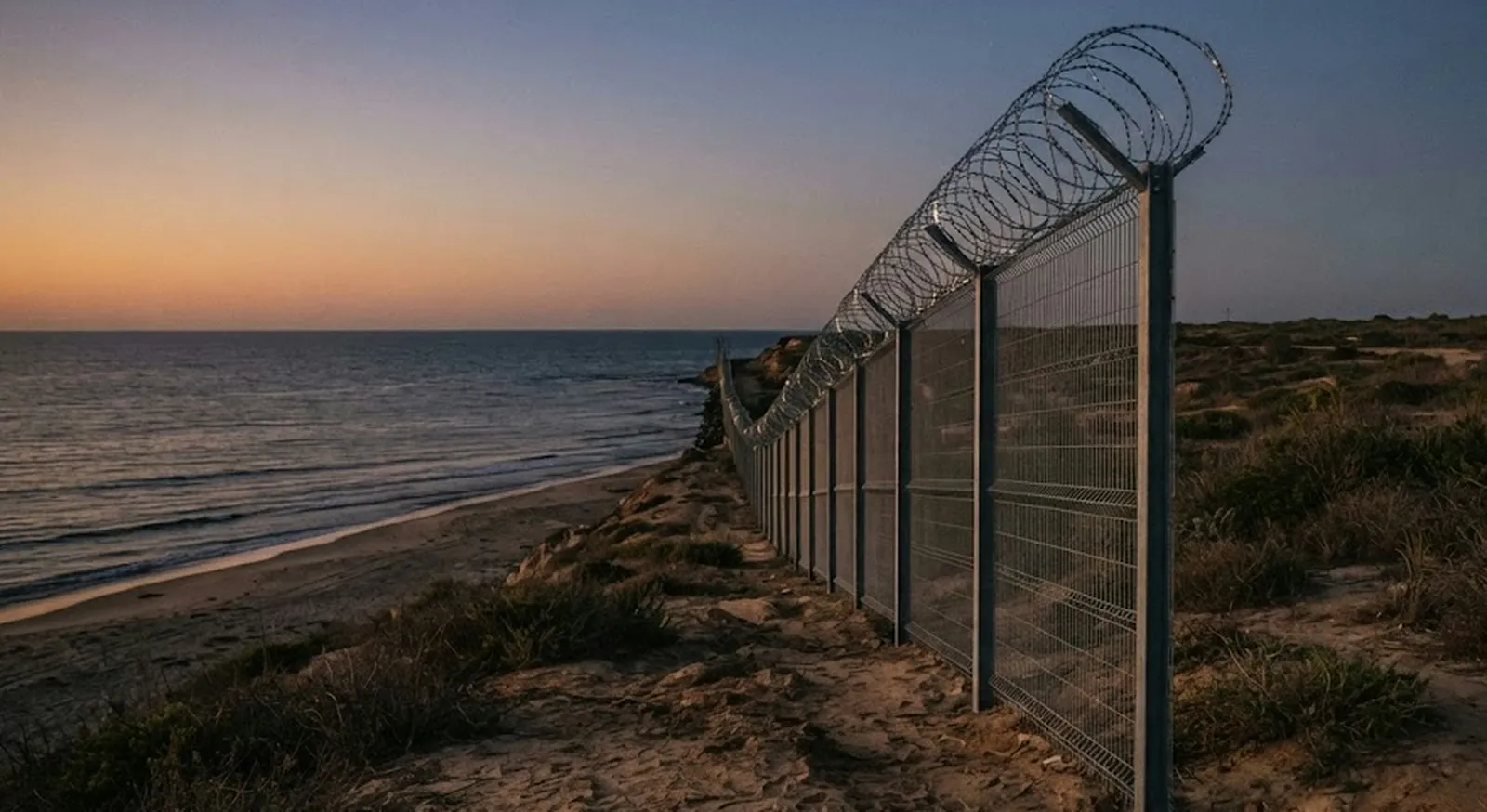
„The border has fallen.” Those were the words a union representative of Spain's Civil Guard used to describe the situation in Ceuta, the Spanish enclave on the North African coast. Around 30,000 people from Morocco tried to get in - along the shore, over the breakwater, some by water. At least three died trying to swim that final stretch.
The local government wants the army, Madrid says the law does not allow it
The regional government of Ceuta requested a state of emergency and the deployment of the army, citing a threat to national security. The Spanish Interior Ministry's answer was cold and legal: under current law, a state of emergency cannot be declared over migration alone.
Formally - correct. Practically - the reception centres are already overflowing, and hundreds of people are sleeping on the street. When the law says one thing and the street shows another, it is usually not the law that wins. Improvisation wins.
Why it opened up right now
A Moroccan human rights activist noted that exceptional circumstances allowed the crossing at Tarajal to open. That is the phrasing. The translation is simpler: the border into Ceuta operates as strictly as Rabat wants it to operate that day.
Ceuta is not a new point on the map. In 2021, more than 8,000 people entered within two days, in a crisis that also coincided with strained relations between Madrid and Rabat. The difference now is the number - 30,000 against 8,000.
The border as a bargaining tool
Spanish and Moroccan authorities, according to sources, coordinated on returning those who entered illegally. So the return channel functions when both sides agree. Which means it functioned before as well - and that the pause was not a technical problem.
This is the quiet point of the whole story: the footage shows young men, but also families. People who did not decide anything about geopolitics and ended up in the middle of it. For them the border is a wall; for the states on either side it is a lever that goes up and down.
Does Europe really believe this gets solved with a fence one metre higher? The Balkans remembers 2015 and knows how long plans last when they are built on the assumption that somebody else will guard the borders for you.
The latest 10 news from this category
Trump scaled back the military exercises to ease the tension, and Wonsan answered in the form of projectiles. What does...

The sanctions list got a seven-day extension instead of one measured in months, a move diplomats themselves call unprecedented. Two...
Switzerland offered a table for talks on Ukraine, Moscow replied that the table stopped being neutral once Bern adopted EU...
The will says one thing, a committee of twenty-one men decided another. The queen mother says the army pulled the...
A country that was Europe's byword for stability for decades now has a parliament split into two blocs by a...
Sixteen years in power, defeat at a regular election, five months of quiet - and now the election result is...

When an institution with a legal department and a palace apparatus has to publish a list of its verified accounts,...

Nobody said they do not trust Washington. Everyone is behaving as though they do not - gold, weapons, the cloud...
The warning reached the president three years before 9/11. The problem was not a lack of information, but that nobody...
In 1976 tradition demanded the future king choose a bride with no past. Thirty years later that same king married...
This site uses cookies - is that okay? Learn more
Be the first to know when Metla launches something new
Leave your email and we will write when there is a new guide or something new on Metla.
