
Six Years of Fake Licence Categories Issued From an Interior Ministry Desk: Six Charged, 21 More Under Investigation
21.09.2026


21.09.2026

21.09.2026

21.09.2026

21.09.2026

21.09.2026

21.09.2026

21.09.2026

20.09.2026

20.09.2026

21.09.2026

21.09.2026

20.09.2026

21.09.2026

21.09.2026

21.09.2026

21.09.2026

20.09.2026

19.09.2026

21.09.2026

21.09.2026

21.09.2026

21.09.2026

21.09.2026

21.09.2026

09.03.2026

27.02.2026

19.02.2026

21.09.2026

21.09.2026

20.09.2026

23.04.2026

23.04.2026

12.04.2026

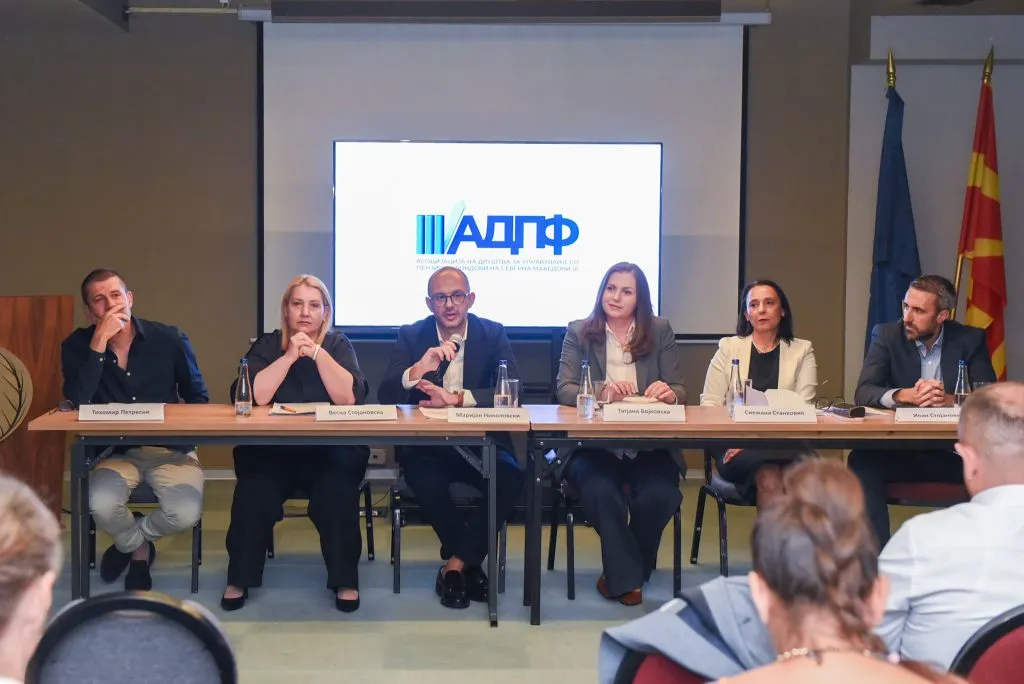
One hundred and forty-seven people currently draw a pension from the second pillar. The average amount is 9,878 denars a month. Those are all the beneficiaries of a system that has been running since 2006 and has accumulated over 3.4 billion euros in individual accounts belonging to around 638,000 insured people.
The figure of 147 sounds small, and that is accurate - the system is still maturing. By 2030 the number of beneficiaries is expected to be between four and five thousand. But right now, as the first payouts begin, the question of what happens to that money is opening up.
Nationalisation as a solution for a year and a half
The association of pension fund management companies came out with a clear position: the assets in the second pillar are personal property, they are inherited, and they enjoy a higher level of protection, whether the coverage applies during working life or after retirement.
„That is only a short-term solution that will not solve the long-term problems,” the association says of proposals to transfer the assets into the state fund. Their estimate is that the money would cover the budget deficit for somewhere between a year and a half and three years. After that - the same problem, but without the fund.
The average annual return of the mandatory pension funds since they were introduced is over 5.5 percent. Of the total accumulated assets, more than one billion euros is added value distributed across individual accounts.
Eighty to ninety percent below the minimum pension
Here the story gets more complicated than the press release. Prime Minister Hristijan Mickoski announced he is considering pension reform and suggested that second-pillar beneficiaries might be disappointed by the state of their accounts.
And the numbers are not on the side of optimism: it is estimated that 80 to 90 percent of future pensioners in the 2030-2032 period could end up with a pension below the legal minimum, which would once again require a state top-up.
So each side has one accurate claim. The funds are right that nationalisation is a temporary patch. But the critics also have a point when they say a system in which nearly nine out of ten beneficiaries fall below the minimum is not delivering the role it promised.
The proposal: several funds instead of one
The association proposes multi-fund portfolios tailored to the insured person's age, and more aggressive investment strategies for younger members - those still twenty or thirty years from retirement who can absorb higher risk for a higher return. Strengthening voluntary insurance is also mentioned.
The government, for its part, is waiting on the results of three independent analyses before deciding what reform to carry out.
Three analyses, two opposing positions, and 638,000 people whose money is the subject of the debate. The one thing everybody agrees on is that the system as designed will not produce adequate pensions. The only disagreement is over who pays that shortfall - and when.
The latest 10 news from this category
Up 757 denars in a single month, and that is before rent. The unions want a 600-euro minimum wage, the...

Tinex, SuperTinex, Konto and Spot move to a Pristina-based group with 235 million euros in turnover. The commission saw no...
Greece has signed with AWS, Bulgaria is building an AI factory, Serbia has a state data centre. We have an...

Six family members, one agent with its own Gmail and access to everything you forward it. Google says people asked...

The WHO has declared loneliness a global health problem linked to around 870,000 deaths a year. On America's east coast...

A married pair of students woke up unhappy with their late-night scrolling and decided the problem was not the scrolling...
State statistics office data for 2024: 3,280 foreign affiliates, 105 thousand employees, close to three billion euros in value. Four...

In Obrshani and Debreshte the crop is rotting unsold. One question nobody answers - how many tonnes of peppers have...

The DFC is paying for feasibility work and a resource assessment. Mickoski claims the reserves exceed those of the world's...

Nearly a million vehicles will get money without a single application being filed. The previous government froze prices, this one...
This site uses cookies - is that okay? Learn more
Be the first to know when Metla launches something new
Leave your email and we will write when there is a new guide or something new on Metla.