


They Rode In on Scooters, Torched the Shops and Left: The Fire in Shuto Orizari Burned for Three Hours, Setting It Took Fifty Seconds
13.09.2026


13.09.2026

13.09.2026
13.09.2026

13.09.2026

13.09.2026

13.09.2026
13.09.2026

12.09.2026

11.09.2026

13.09.2026

13.09.2026

12.09.2026

13.09.2026

13.09.2026

13.09.2026
13.09.2026

12.09.2026

11.09.2026
13.09.2026

13.09.2026

13.09.2026

13.09.2026

13.09.2026

12.09.2026

09.03.2026

27.02.2026

19.02.2026

13.09.2026

12.09.2026

11.09.2026

23.04.2026

23.04.2026

12.04.2026

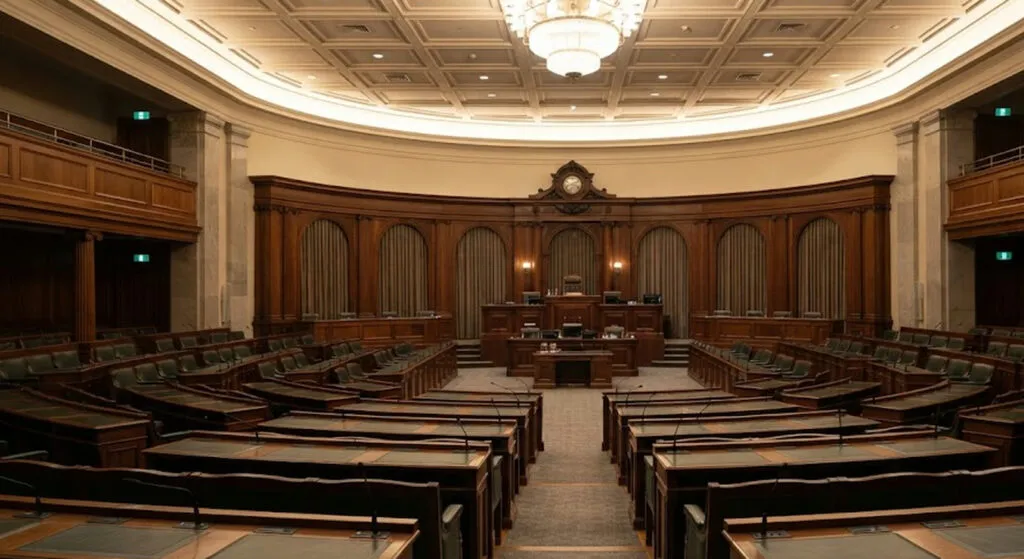
On 24 September Montenegro's parliament is due to debate removing its speaker, Andrija Mandic. The reason: he sent condolences to the family of Ratko Mladic, a convicted war criminal. Mandic, a member of New Serb Democracy, is not the only Serb politician in the region who spoke up after Mladic's death - but he is the only one whose post is hanging by a thread because of it.
A third attempt in three years, but this time the numbers are different
The opposition Democratic Party of Socialists launched the initiative, and an extraordinary session has been scheduled. This is the third such attempt in three years and the previous two ended the way these usually end - with nothing. The difference is in the signatures: this time the initiative gathered the support of 38 out of 81 MPs, some of them from the governing majority.
The signatories include representatives of the Bosniak and Albanian communities. Six MPs from the governing Bosniak Party have announced they will vote for dismissal. In a fragile coalition, that is not a number you survive easily.
This is not his first time
Mandic has landed the state in trouble before with positions more often closer to Belgrade than to Podgorica. His initiative for a resolution on Jasenovac, as a response to the UN resolution on Srebrenica, created tensions with Croatia and the threat of a block on EU negotiations. In Croatia, Mandic - a Chetnik vojvoda, as it happens - has been declared persona non grata.
The DPS message is direct: it is time to see who is prepared "for the sake of an armchair and petty privileges to look past even this anti-civilisational act by Mandic". The initiative states that his positions deepen social divisions, damage the reputation of parliament and Montenegro's international credibility.
"The first man of the parliament of a state aspiring to be the next member of the European Union is obliged to respect the values on which Montenegro's constitutional order rests, to respect the judgments of international courts and to cultivate a culture of remembrance," the DPS says.
The quorum as a shield
Removing Mandic does not require an absolute majority of 41 votes, but a majority of those present at the session. Yet the governing majority has a second weapon - not showing up. For the session to start, at least 41 MPs must be in the chamber. If they simply stay away, there is no debate at all.
The opposition already sees that scenario coming and is announcing a new attempt in October, at the regular sitting, when under the rules it has the right to propose one item for debate and the government must accept it. So the defence is not an argument - the defence is an empty chair. A question worth asking out loud: how many institutions in the region work exactly like that, by absence instead of by answer?
A test for the coalition, not for one man
Analyst Milos Perovic believes the initiative has turned into a far more serious test than it looked at the outset.
"The initiative stopped being merely a question of removing one official. It became a test of the internal cohesion of the parliamentary majority and, much more importantly, a test of the limits of the political compromise on which that majority rests," Perovic says.
Support for Mandic has been announced by almost all MPs of prime minister Milojko Spajic's Europe Now Movement, the Democrats and the smaller governing pro-Serb parties. But Perovic warns that the key question is no longer whether the opposition will gather the votes, but whether within the government itself there is a willingness to withhold support from Mandic.
"The Bosniak Party's decision showed that this possibility exists, but on its own it still does not constitute a new parliamentary majority. If after this the coalition partners in government carry on without a more serious political reckoning, it will be interesting to watch the relationship between the Bosniak Party and New Serb Democracy," he says. If cooperation continues with no change at all, he adds, that would mean the public distancing from contentious moves is above all a way of preserving the appearance of principle before their own voters.
Is the government falling? Probably not - but not because of stability
The DPS claims "it is clear to everyone that this is the terminal phase of this parliamentary majority" and illustrates it with other clashes inside the government: the transport minister and the prime minister hold opposing positions on the concession of Montenegro's airports, the deputy prime minister is demanding the resignation of a minister in that same government, and a significant number of majority MPs will vote to remove the speaker.
Perovic is far more restrained. In his view, Montenegro faces a period of controlled internal conflict in which the governing parties will keep cooperating because it currently suits them, while at the same time increasingly building their own political positions.
"The governing majority behaves less and less like a single political bloc, and more and more like a collection of parties that cooperate where their interests overlap," he says.
The European path as the only glue
Montenegro is approaching the final stretch of European integration, and Perovic points out that the European agenda is precisely the strongest shared interest holding this heterogeneous majority together. But as the end of the Brussels negotiations nears, the question also opens of who will politically cash in the result. Spajic's PES will try to present it as the success of its own policy, while the other partners will defend their own identity and electorate.
The opposition, Perovic says, is exploiting the cracks in the majority, but has still not offered a sufficiently convincing alternative - so at the moment it is better at opening problems for the government than at creating a new majority.
That is the sentence that hurts most and repeats most across the Balkans. A state on the threshold of the EU, a parliament debating whether condolences to a convicted war criminal's family are a political problem, and an opposition that knows how to count signatures but not how to offer what comes next. On 24 September only one thing will be clear: how much an armchair costs.
The latest 10 news from this category
Four days before the Hague verdict, the square in Pristina told the court it should back down. Among the guests...

Nobody banned anything - the line item simply stopped paying for itself. That is the purest version of modern censorship,...

The stated reason is expensive production and weak commercial return. The timing is two months before an election. In Belgrade...

Zukan Helez asked the international community to withdraw its signature from the existence of Republika Srpska - then added that...
The government asked itself for elections, and packaged the reason as global instability. Serbia votes on 25 October - with...
Almost every German party condemned the Serbian government over the state send-off for Ratko Mladic. The one that did not...
The previous government recognised Palestine. The new one is opening an Israeli embassy. Between the two there is not a...
Serbia sent six ministers but not the leadership of the state - and then claimed these were not state honours....

Belgrade kept the last direct air link between Russia and Europe, and is now opening a route to an enclave...
The opposition is attacked not for what it proposes but for what it would hypothetically do. A mechanism the whole...
This site uses cookies - is that okay? Learn more
Be the first to know when Metla launches something new
Leave your email and we will write when there is a new guide or something new on Metla.
