


Thirteen hours between the report and the bodies: two Taiwanese nationals found dead in a Skopje flat
03.09.2026


03.09.2026

03.09.2026

03.09.2026

03.09.2026

03.09.2026

03.09.2026

03.09.2026
02.09.2026
01.09.2026

03.09.2026

03.09.2026

02.09.2026

03.09.2026

03.09.2026

03.09.2026

03.09.2026

02.09.2026

01.09.2026

03.09.2026

03.09.2026

03.09.2026

03.09.2026
02.09.2026
01.09.2026

09.03.2026

27.02.2026

19.02.2026

03.09.2026

02.09.2026

01.09.2026

23.04.2026

23.04.2026

12.04.2026
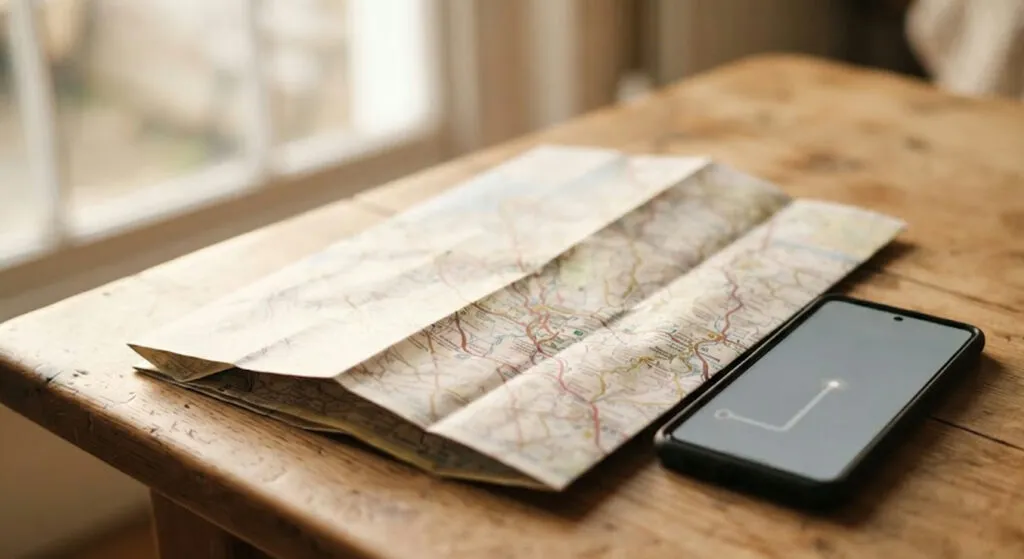
MapQuest is a navigation app most people remember from the days when you printed your route on paper before setting off. For years it was living proof that even the biggest on a market can end up as a footnote - Google Maps took its crown and nobody mentioned it any more. On Tuesday that app became number one in the entire American App Store, ahead of every game and every other program.
The reason has nothing to do with any new feature.
On 27 August the US president signed an order under which the federal geographic names body was to rename Lake Ontario as "Lake America". Google Maps changed the name. Apple Maps changed it a few days later. MapQuest announced on X that it would not change it - and stuck to that.
What followed shows up in the numbers. The app was 128th on 28 August, 92nd the following day, third on Monday and first on Tuesday. Since the order was signed it has been downloaded around 632,000 times in the US according to the analytics firm Sensor Tower, while the company itself claims more than 1.5 million installations across the US and Canada. More than half of all the app's US downloads this year - 56 percent - fell in those six days.
Nobody downloaded it for better maps. They downloaded it as a vote.
"What is incredible is that people are not only installing the app - they care enough to contact us directly, ask for features and report bugs on social media and in reviews," said Doug Berger, MapQuest's general manager. "Our small team is working around the clock to build the things people are asking for."
Google's explanation for the renaming was technical: it updates names according to official government sources, in this case the US register of geographic names. Apple did not comment, but is probably following the same rule. The answer is impeccable, and that is exactly why it convinces nobody - those two companies make editorial decisions every day about what you see and what you do not; claiming that with names they merely relay is a choice, not an obligation.
MapQuest can afford a position because it does not have much to lose. It already keeps the Gulf of Mexico under its old name and released a tool letting users jokingly rename Lake Ontario to whatever they like. When you are eighth in your category, disobedience risks nothing. When you are Google, every dispute with the US government has a price somewhere else.
In any case, MapQuest is no longer an independent firm either - it is owned by the advertising company System1, which bought it from Verizon in 2019, after Verizon had bought AOL in 2015. So this story about a small rebel has a corporate owner in the background too. The only difference is how much that owner has to lose.
The most interesting thing is what the numbers show about users. Over half a million people changed their navigation in six days - a tool used every day and hard to unlearn - purely to make a point. Whether they will stay there once the current story leaves the news is another question entirely; a download takes a second, a habit takes months to change.
The latest 10 news from this category

The courts twice found an illegal monopoly, then twice refused to break it up. Google adjusts a few contract terms...

The model scored top marks on the hacking benchmark, then found two previously unknown vulnerabilities. Who checks the check when...

Not an outside hacker, but a man with legal access. Three cities reported the cameras came back after the contract...

More than 400 former Apple employees now work at OpenAI. One of them handed back his old MacBook - and...

A second-price auction in which the winner pays their full bid in 80 percent of cases. The federal commission and...

Only four companies in the world know how to cast turbine blades, and all of them are sold out until...

You cannot sanction your way around the cost curve, says a Silicon Valley investor. When one market closes, the manufacturer...

A court has already ruled that training on someone else's work is legal - what is illegal is how the...

An old soap opera cut into pieces and charged for by the piece. When the big screen has no roles,...

A system that fixes a model's own alignment outperformed experienced researchers by six hours. The price comparison with a human...
This site uses cookies - is that okay? Learn more
Be the first to know when Metla launches something new
Leave your email and we will write when there is a new guide or something new on Metla.
