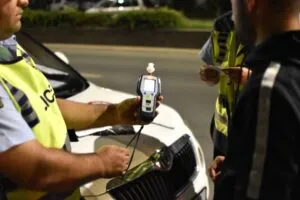
Released After 3.23 Per Mille, Back Behind the Wheel 29 Hours Later With 3.50: Only Then Did the Bitola Man End Up in Custody
11.11.2026


11.11.2026

11.11.2026

11.11.2026

11.11.2026

11.11.2026

11.11.2026

11.11.2026

06.11.2026
05.11.2026

11.11.2026

11.11.2026

06.11.2026

11.11.2026

11.11.2026

11.11.2026

11.11.2026

06.11.2026

05.11.2026

11.11.2026

11.11.2026

11.11.2026

11.11.2026

11.11.2026

11.11.2026

11.11.2026

10.11.2026
07.11.2026

23.04.2026

23.04.2026

12.04.2026


The Ministry of Justice announced that the draft of the new Criminal Code and the draft of the new Law on Criminal Procedure have been sent to the European Commission for an opinion. According to the ministry, this is the first completely new Criminal Code in three decades. A big announcement. Just one detail is missing: nobody outside the working groups and Brussels knows yet what it says.
Seven years in the making
Work began in 2019, when an expert group was set up to analyse the existing framework. From 2020 to 2026 a working group led by academician Vlado Kambovski held consultations with the courts, prosecutors' offices, the bar, academia and civil society. The proposal was published on ENER, the national e-consultation portal, back in July 2022, more than 50 opinions were considered, and 33 EU directives have been built into the text.
In parallel, a 25-member working group led by Prof. Dr. Gordana Lažetić completed the new Law on Criminal Procedure in October 2026, aligned with 25 European directives. Changes have been announced on confiscation, financial investigations, electronic evidence, special investigative measures, victim protection and remote hearings. The current law was passed in November 2010 and has applied since 1 January 2013.
The question the ministry skipped
The entire statement doesn't say a word about what interests citizens most: are the high penalties for officials coming back? In September 2023 Parliament reduced the penalties for some forms of abuse of office and for criminal association, and also deleted the specific provision on abuse in public procurement. The lower penalties also shortened the statute of limitations. We know what that means in practice: cases that simply expire.
In January 2026 Parliament reintroduced a public procurement provision in Article 353, with prison terms of one to eight years, or four to ten where there is large-scale gain or damage. But in its report of 4 November the European Commission found that those amendments left legal uncertainty, that the provision is too narrow for serious tender rigging, and that high-level corruption cases continue to drag on and expire.
Professor Aleksandra Deanoska Trendafilova, a member of the working group, announced at an expert debate in late October a separate criminal offence for abuse in public procurement, which would also cover concessions and public-private partnerships. Good. But an announcement at a debate is not a text.
The ministry says the draft will be published on ENER. Until then, the law that is supposed to decide how much a minister answers for abusing their office is read first by European officials, and only afterwards by the citizens who pay that minister's salary. Why wasn't the text published the moment it went to Brussels?
The latest 10 news from this category

The president stopped the law, the majority cut one article and moved on. The contested provisions the opposition warned about...

Еден коалициски партнер нуди решение, друг се заканува дека ќе си оди ако тоа помине. Испитот за идните судии стана...
Brussels praised foreign policy and the Growth Plan. On corruption it writes that there's no progress, and on the judiciary...
The opposition lists the zeros in the report, the government hits back with personal attacks. Corruption and the empty judges'...
Corruption is widespread, electoral reforms are stalled, and on the Constitution "no attempts were made". Amid all that, Brussels found...
The opposition accuses the local self-government minister of glorifying a convicted war criminal, ties to Serbian intelligence structures and threats...
DUI took Brvenica, and for VMRO-DPMNE the result is "more than excellent" - even though its coalition partner VLEN ended...
The rules are good, the services don't cooperate, so let's delete the rules. The opposition asks why the Coordination Council...

The opposition announces an interpellation and demands an investigation, the governor answers with "Is that clear now?" How long the...

Mickoski counts a gain of 1,200 votes since the first round, but he doesn't have Brvenica. "Alone against everyone" sounds...
This site uses cookies - is that okay? Learn more
Be the first to know when Metla launches something new
Leave your email and we'll write to you when there's a new guide or something new on Metla.