


Over 20 shops burned down in Suto Orizari: 15 firefighters and three and a half hours fighting the blaze at 3am
12.09.2026


12.09.2026

12.09.2026

12.09.2026

12.09.2026

12.09.2026

12.09.2026

12.09.2026

11.09.2026

10.09.2026

12.09.2026

12.09.2026

11.09.2026

12.09.2026

12.09.2026

12.09.2026

12.09.2026

11.09.2026

10.09.2026

12.09.2026

12.09.2026

12.09.2026

12.09.2026

12.09.2026

11.09.2026

09.03.2026

27.02.2026

19.02.2026

12.09.2026

11.09.2026
10.09.2026

23.04.2026

23.04.2026

12.04.2026

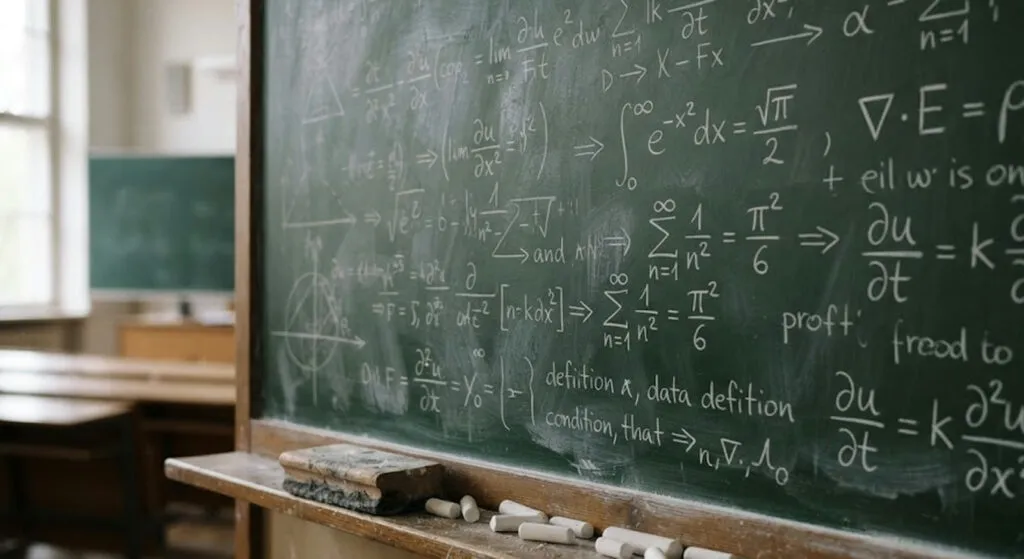
Twenty-five mathematicians holding the Fields Medal - the award mathematics regards as its equivalent of the Nobel in physics - have signed an open letter against the artificial intelligence labs. Not against the machines. Against the way they treat people's work.
The objection is specific and has nothing to do with fear of robots. Solutions, the signatories say, are published in a rush, with no time for a proper write-up, without separating out the new methods and ideas, and without citing other people's prior work. "As in all creative professions, this raises serious questions about attribution of credit and about plagiarism," they write. Who did the work and who signed it - that is the dispute.
This week New York University professor Tristan Buckmaster alleged that OpenAI pressured him not to name as a collaborator a person working for Anthropic who took part in solving an important mathematical problem. Buckmaster went a step further: he asked whether the company had used their work with Codex to produce a proof of its own - over a single marathon weekend of computation. That OpenAI proof has, so far, still not been confirmed.
On Thursday the company withdrew from sponsoring a mathematics event at CalTech, after researchers from the university criticised it. A quiet withdrawal with no explanation - a move that says more than a statement would.
What is worth noticing is the mechanics beneath the whole story. If a lab sees that a usable path leads to a discovery, it can spend tens of millions of dollars on language models and reach the proof before the researcher who has worked on the problem for years. That is not a contest of intelligence but of budget. And the logical consequence is that mathematicians will start staying quiet about what they are working on - the exact opposite of the open research culture they spent decades building.
The letter follows the Leiden Declaration from June, a document by a working group of mathematicians examining the same questions and offering recommendations for researchers, institutions and policymakers. Both documents defend the same thing: the value in mathematics is not only in the proof and in whose name sits under it, but in the structure around it - which educates students, finds new questions and folds them into shared knowledge.
The signatories frame it as a question reaching far beyond their profession: how do we make sure that, while artificial intelligence changes the way work is done, we do not lose sight of why the work existed in the first place. Mathematicians are first only because their work is the easiest to measure - a proof either holds or it does not. Professions where the result is harder to verify will have the same conversation later, and without 25 medallists to start it.
The latest 10 news from this category

Five campaigns, 200 million exchanges, and the defences fell to a request for a Japanese translation. The industry that harvested...

The hackers were inside for a whole year. The company confirmed it only after a journalist found his own licence...
The chief financial officer gathered enough votes on the board and now runs the company. The founder found out 50...
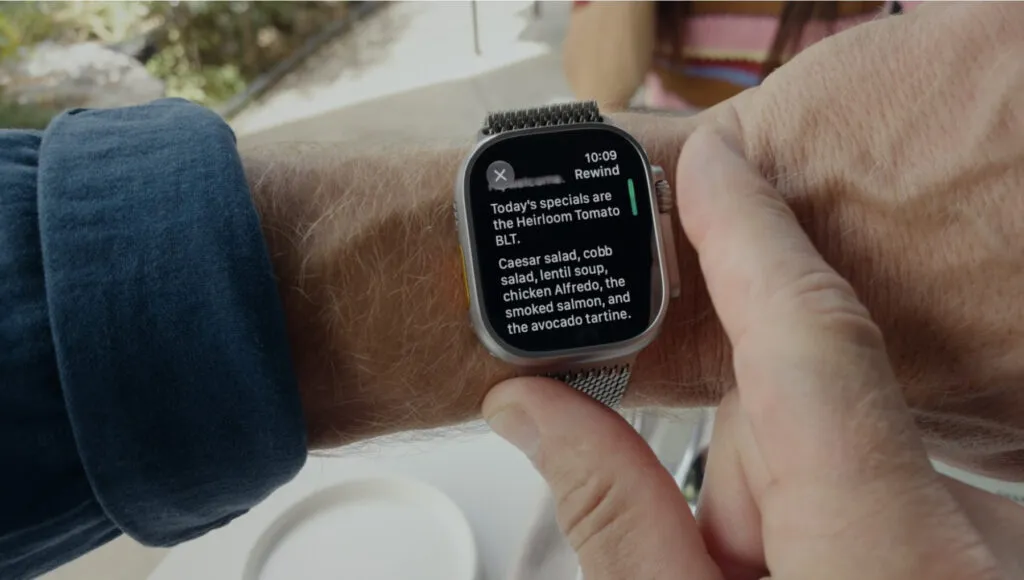
The company that turned privacy into marketing is now selling a watch that listens. The person sitting across from you...

The largest round ever by a European tech firm is led by Samsung, and Macron called it a third way...

A consultant paying 200 dollars a month could not get an itemised bill for his own usage. When he asked...
They set off at three in the morning, reached the summit at seven in the evening, spent the night in...

The head of Google Photos boasted about an agent for her 143,206 photos. The feature applies only to paying users...
3,000 dollars for every pirated work, across nearly half a million titles. Instead of a payment, some authors got an...
Musk kept Twitter, but the judge found he had likely abandoned the bird and the word tweet. A startup run...
This site uses cookies - is that okay? Learn more
Be the first to know when Metla launches something new
Leave your email and we will write when there is a new guide or something new on Metla.
