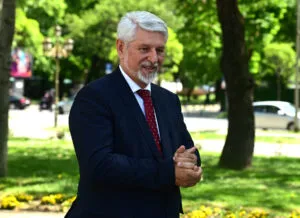
A New Criminal Complaint Against Jakimovski: A Building Permit Based on a Plan Struck Down Back in 2018
16.09.2026


16.09.2026
16.09.2026

16.09.2026
16.09.2026

16.09.2026

16.09.2026

16.09.2026

15.09.2026

14.09.2026

16.09.2026

16.09.2026

15.09.2026

16.09.2026

15.09.2026

14.09.2026

16.09.2026

16.09.2026

16.09.2026

16.09.2026

15.09.2026
15.09.2026

09.03.2026

27.02.2026

19.02.2026

16.09.2026

15.09.2026

14.09.2026

23.04.2026

23.04.2026

12.04.2026

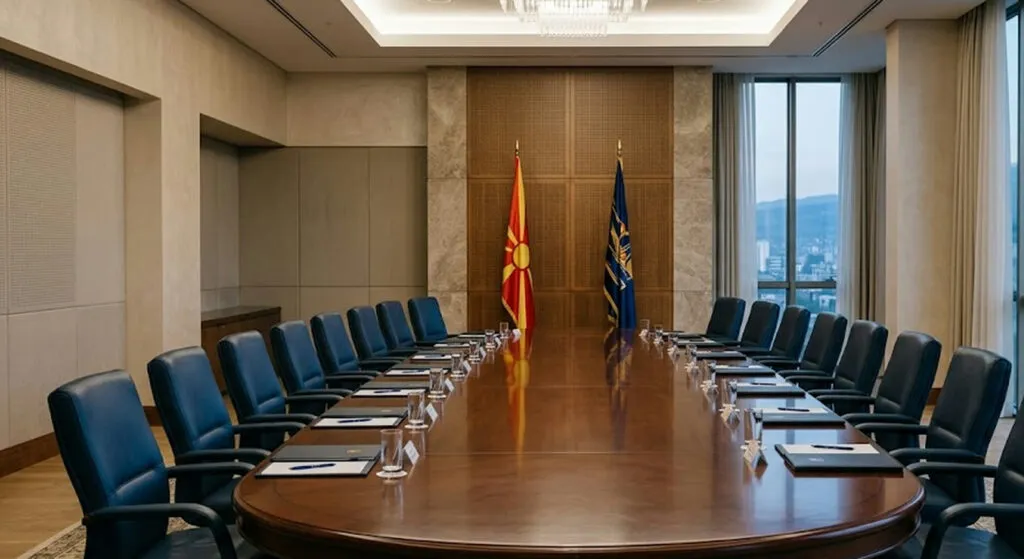
Donald Trump has issued an ultimatum to the European Union: fulfil your obligations from the trade agreement by July 4, 2026, or prepare for a dramatic increase in tariffs. The date is not chosen by accident - it is the 250th anniversary of American independence, and Trump wants a political stage, not just a trade decision.
"I am waiting patiently for the EU to fulfil the historic trade agreement we signed," Trump said. The agreement is the one struck in Scotland a few months earlier and which has since stood as a classic case of bureaucratic foot-dragging. Brussels says not everything can run on American priorities. Washington says it has waited long enough and patience is over. Who is right? Depends on who is defining the terms.
European Commission President Ursula von der Leyen has previously rebuffed Trump's threats with auto tariffs and called on Washington to respect the existing agreement. She is now in a position where neither accepting nor rejecting the ultimatum will hand her a win. If she submits, she will be accused of weakness. If she refuses, the European economy pays the price.
Meanwhile, Trump's circle claims there is agreement between Washington and Brussels that "a regime that kills its own citizens cannot manage a bomb that could kill millions" - an allusion to Iran's nuclear programme. Does that mean Iran is also part of the trade negotiating package? Everything is linked in the new American diplomacy: trade, security, energy.
For Balkan countries, this is news with consequences. North Macedonia, Serbia, Albania - all of them have trade arrangements via EU-US relations. When the two giants clash, the former Yugoslav republics are pushed to pick a side or absorb hidden tariffs. Countries still seeking entry into the EU or US investment experience these conflicts as side blows. July 4, 2026 is close. Whether the Balkans will use the crisis for strategic positioning, or wait to see what's left after the spin - depends on whether the region's politicians can read the room.
The latest 10 news from this category

Sanctions imposed over one war are being offered as currency in an entirely different dispute. Most member states are against...
El Nino in the Pacific shifts the currents that decide where snow falls. An area that usually gets a metre...
The easiest way to dismiss an uncomfortable argument is to point at who is making it. But that does not...

The appeals court ruled the entire trial must start over. The son of Norway's queen is waiting for it on...
Trump scaled back the military exercises to ease the tension, and Wonsan answered in the form of projectiles. What does...

The sanctions list got a seven-day extension instead of one measured in months, a move diplomats themselves call unprecedented. Two...

Switzerland offered a table for talks on Ukraine, Moscow replied that the table stopped being neutral once Bern adopted EU...

The will says one thing, a committee of twenty-one men decided another. The queen mother says the army pulled the...
A country that was Europe's byword for stability for decades now has a parliament split into two blocs by a...

Sixteen years in power, defeat at a regular election, five months of quiet - and now the election result is...
This site uses cookies - is that okay? Learn more
Be the first to know when Metla launches something new
Leave your email and we will write when there is a new guide or something new on Metla.