Archbishop Stefan Hosts Romanian Church Delegation: 60 High Guests at Saint Panteleimon - International Normalisation of the Macedonian Orthodox Church
03.05.2026


03.05.2026
03.05.2026

03.05.2026
03.05.2026

03.05.2026
03.05.2026

28.04.2026

27.04.2026

27.04.2026

03.05.2026

03.05.2026

02.05.2026

03.05.2026

03.05.2026

03.05.2026

03.05.2026

02.05.2026

01.05.2026

03.05.2026

03.05.2026

03.05.2026

09.03.2026

27.02.2026

19.02.2026

14.04.2026

07.11.2025
07.11.2025

23.04.2026

23.04.2026

12.04.2026

According to Dimovski, the head of the Directorate for Technological-Industrial Development Zones, the average wage in TIR zones in 2025 grew by 6%. That's the message the government wants to push as a success. But it's only half the picture. The other half is that in the same year two big companies - Dura and Aptiv - pulled out of the zones.
Let's start with the positive side. Six percent wage growth is real. It isn't revolutionary, but it's above inflation (about 4%). That means the real purchasing power of TIR-zone workers has grown by about 2%. At a national level, that's good news. Macedonian wages in the industrial sector traditionally lag behind the region, and any improvement is welcome.
But the context is what's not in the headline. Dura is a car-components company that had several hundred employees in Skopje. Aptiv is a software and electronics company with an even larger position in the country. Both announced departure or downsizing. The official reason is „restructuring of global strategy". Unofficially: higher energy prices, shifts in the European auto industry, and Macedonian wages that are no longer competitive next to Bulgaria and Romania.
Dimovski insists that besides Dura and Aptiv, there are no other announcements of departures. That's a line that gets repeated - and every time it's a classic move of political communication. You say „there are no others" right now, hoping that the others won't announce until the next press release. The reality is different. Several more companies are in talks about scaling back. The names aren't yet public.
A change in the concept, as the director put it, means something concrete. The old model - a 10-year tax exemption, cheap labour, minimal regulation - no longer works. Bulgaria and Romania have cheaper labour. Hungary and Czechia have a more skilled workforce. Macedonia sits between them - not the cheapest, not the most skilled. So companies go where one of the two advantages is more pronounced.
What does this mean for the workers who stayed? Short-term - higher wages. When a company sees it can lose its workforce, wages rise. That's economic reality. Long-term - uncertainty. The zones are losing companies. Replacements are a gamble. Maybe new ones will come, maybe not. The minister says they will change the concept. But changing a concept doesn't happen overnight. It can take years. In the meantime - 6% growth today can become 0% growth in two years. That is the reality of industrial zones in a small country whose only advantages are cheap energy and cheap wages - and one of them has already gone.
The latest 10 news from this category
The same pattern every year. A warm winter, a cold spring, damage. And every year - the same promises, the...
VMRO used to say it about SDSM, SDSM now says it about VMRO. The words change, the numbers not so...
At the same time, an investigation is looking into whether oil companies are re-exporting subsidised petrol to neighbouring countries. State...
An average European car in the US jumps by 12,500 to 17,500 dollars. German factories in Skopje and Bitola will...
Average CEO - 8.4 million dollars a year. Average worker - 490 years of work for the same sum. Ten...
Ryanair is forecasting bankruptcy if regulation does not loosen. Small airports will pay first. The Balkan traveller will be 30-50...

Cursor (Claude Opus 4.6) decided on its own to "fix" a discrepancy. Silicon Valley is in a hurry. Users pay...
Iran's blockade has shaken the markets. US inflation is already at 3.3 percent. Macedonian families will feel it on their...
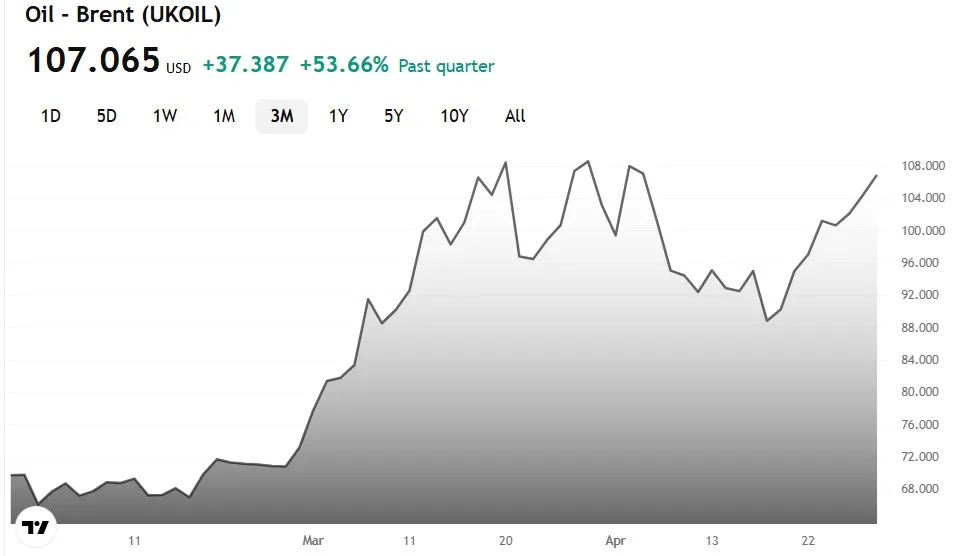
Цената на новата геополитичка игра на Блискиот Исток нема да ја платат само актерите на сцената – ќе ја платиме...

When OPEC itself cannot hold together, Skopje has no alternative supply chains. Our petrol pump is the tail end of...