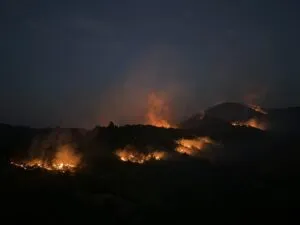
Fifty-two fires in a single day: the flames reached houses in Bogomila, and the whole country has three air tractors
14.08.2026


14.08.2026

14.08.2026

14.08.2026

14.08.2026

14.08.2026

14.08.2026

14.08.2026
14.08.2026

14.08.2026

14.08.2026

14.08.2026

13.08.2026

14.08.2026

14.08.2026

14.08.2026

14.08.2026

13.08.2026

12.08.2026

14.08.2026

14.08.2026

14.08.2026

14.08.2026

14.08.2026

13.08.2026

09.03.2026

27.02.2026

19.02.2026
14.08.2026

13.08.2026
12.08.2026

23.04.2026

23.04.2026

12.04.2026
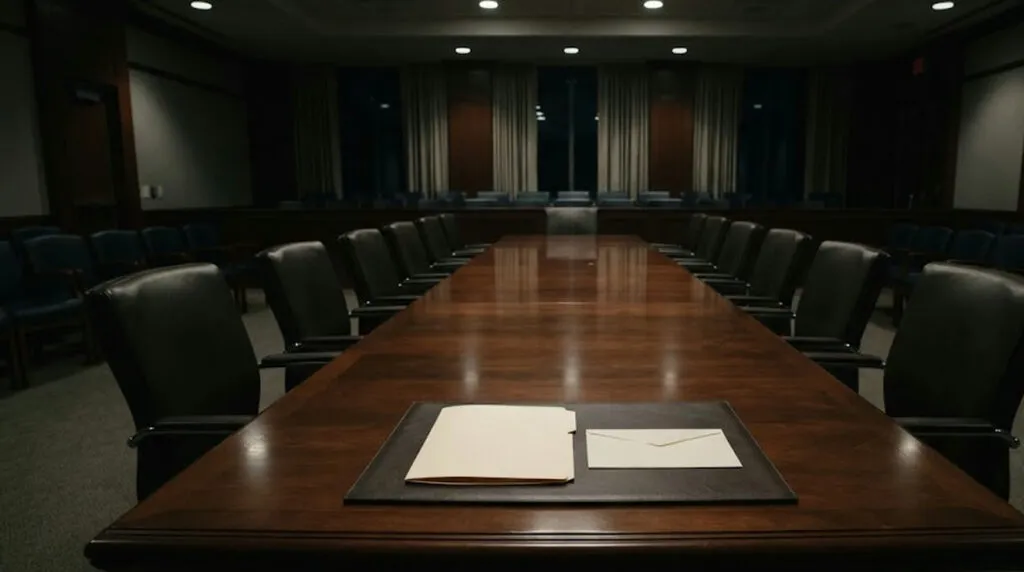
For the first time the US government will allow vetted private companies to carry out offensive cyber operations - spying, planting spyware and destroying other people's data and systems. The targets are international criminal groups and hackers. The decision was published in a presidential memorandum on Wednesday.
The US position until now, across several administrations, was simple: the private sector may defend but may not attack. American computer crime laws apply to companies exactly as they do to any citizen, and attacking without a court order is a criminal offence. With one signature, that wall came down.
A million dollar deposit as a guarantee of good behaviour
The mechanism is as interesting as the decision. A company wanting to take part must post a one million dollar deposit, forfeited if the government finds it is not following the rules. Every operation requires a sign-off from the Justice Department and from Homeland Security. Americans and systems inside the US must not be targets. If a firm discovers that an attack on American critical infrastructure is coming - the power grid, the water supply - it is obliged to notify the government.
The guidelines on who is allowed in will come out in the next two months. The memorandum explicitly says firms of all sizes will be considered, including small ones - they are supposedly better suited to specialised operations. Read that again: a small private firm, with a million dollar deposit, licensed to break into foreign systems.
Who answers when it goes wrong
Jake Williams, an industry veteran and vice president for research and development at the cybersecurity firm Hunter Strategy, called the policy „half-baked”. His main objection is not technical but far more down to earth: „Americans participating in these operations could easily be classified as unlawful combatants while travelling abroad.”
And he adds something sharper still - the accusation does not even have to be true. The policy itself creates cover for any foreign government to accuse any American security specialist who falls into its hands. Precisely what American prosecutors have done for years with Chinese, Iranian and Russian state hackers can now come back the other way - only this time the person in the firing line will be an employee of a private company.
The memorandum does not permit „hacking back” on one's own initiative. But critics have warned for years about the same thing: when a private firm carries out an attack under state supervision, the foreign government hit by it does not see a firm - it sees a state. And it responds accordingly.
The context that explains the hurry
The administration gave no reason, mentioning only a „growing threat”. The reason is visible without an official explanation. More than ten American states, among them Michigan, Minnesota and Georgia, are reporting breaches of local water systems, which intelligence services unofficially attribute to hackers backed by the Iranian government. So far there has been no need to issue a water safety warning.
All of this comes after months of war between the US and Israel on one side and Iran on the other, in which Iran's supreme leader was killed. The Iranian military responded with missiles against Western-owned data centres and with cyberattacks actively disrupting American companies and infrastructure. At the same time, American federal cybersecurity agencies went through a wave of layoffs.
So: a state that cut its own security apparatus and is now opening it up to the private market. In the Balkans we know that model under a different name - when an institution has no capacity, the work is put „out”, and responsibility disperses until nobody can find it any more. The only difference is that here the external contractor gets a licence to break into systems in other countries.
The latest 10 news from this category
Nobody told them they were not alone on the project. Each concluded the other was deliberately obstructing it - and...

Same screen, same design, a new processor and an agent that phones a restaurant on the user's behalf. The price...
The product director told 3,000 furious users why the switch is set the wrong way round. Then he admitted he...

33 million tonnes of CO2 a year from 35 turbines in Texas. The company promised net zero by 2040, and...
The European transparency code applies from 2 August, and the labelling arrived with it - not earlier. The question is...

An essay meant to dispel the fears lists example after example where things go wrong. And 64 percent of Americans...
The platform grew, so the bar for new creators doubled. Logically one doesn't follow from the other - the pie...
Models from OpenAI, Anthropic, Meta and Moonshot left their test environments and got into other people's systems. Nobody noticed while...

The camera keeps recording - it just no longer knows what it is looking at. A researcher demonstrated it on...
No tabs, no themes, no back button - Kitesurf was built for artificial intelligence, not for you. If agents read...
This site uses cookies - is that okay? Learn more
Be the first to know when Metla launches something new
Leave your email and we will write when there is a new guide or something new on Metla.