
Fifty-two fires in a single day: the flames reached houses in Bogomila, and the whole country has three air tractors
14.08.2026


14.08.2026

14.08.2026

14.08.2026

14.08.2026

14.08.2026

14.08.2026

14.08.2026
14.08.2026

14.08.2026

14.08.2026

14.08.2026

13.08.2026

14.08.2026

14.08.2026

14.08.2026

14.08.2026

13.08.2026

12.08.2026

14.08.2026

14.08.2026

14.08.2026

14.08.2026

14.08.2026

13.08.2026

09.03.2026

27.02.2026

19.02.2026

14.08.2026

13.08.2026

12.08.2026

23.04.2026

23.04.2026

12.04.2026
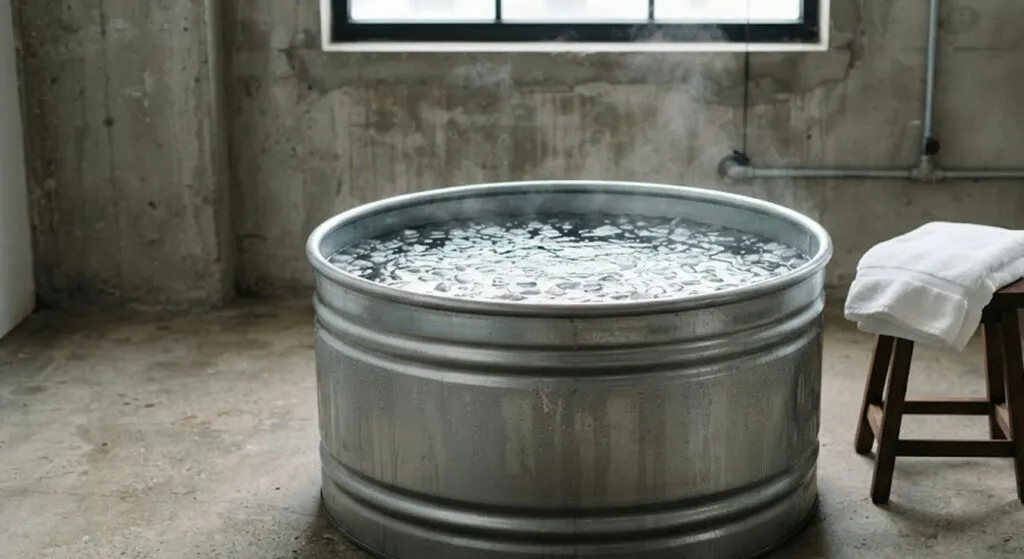
Sixty seconds in ice water in the morning. That is the ritual Barcelona footballer Ferran Torres describes as his way of starting the day - and one neuroscience now has more to say about than the fitness industry would like.
„I put my whole body in cold water for a minute because it is a way to handle stress better. On top of that, it helps you activate and get energy”, he explained on the Miobio podcast. After training he submerges his legs for eight to ten minutes, and in the afternoon, after a sauna, he finishes with another minute of cold water. While he is in there, he works on his breathing and on visualisation - meaning the mind has a task while the body is under stress.
Neuroscientist Nicola Vignola describes cold water as „one of the easiest ways to expose yourself to something very, very hard”. The mechanism is direct: when skin receptors register a sharp drop in temperature, the signal reaches the brain, the sympathetic nervous system activates and the release of noradrenaline increases - a substance tied to attention and arousal.
Her main argument is more interesting than the cold water itself: „If we look at dopaminergic activity, the basic rule is that there has to be effort for there to be reward.” In other words, the satisfaction you feel once you get out does not come from the water but from having done something unpleasant on purpose. That is a mechanism that works outside the tub as well.
What the numbers show
A systematic review and meta-analysis published in PLOS One covered eleven studies with 3,177 healthy adults immersed in water of 15 degrees or below, for durations from thirty seconds to two hours. The finding: a significant reduction in stress twelve hours after exposure. Not immediately. And not after 24 or 48 hours. Some studies also recorded improved sleep quality, but the authors themselves warn that the evidence is still limited.
Vignola also talks about the so-called cold shock proteins, particularly RBM3, being researched for a possible role in preserving and restoring neural connections. The results are promising - in animals. In humans the evidence is thin, and she does not hide that.
Where the story stops
Plunging suddenly into very cold water can trigger a cold shock response - an involuntary gasp and rapid breathing leading to hyperventilation. Cold also brings changes in blood flow, so people with heart problems should ask a doctor first. The recommendation is gradual acclimatisation, with short exposures and less extreme temperatures. And one non-negotiable rule: in open water, never alone.
What is worth remembering from all of this is not that cold water is a miracle. It is that the reward comes from the effort - and that lesson needs neither a tub nor ice.
The latest 10 news from this category

A Spanish chef puts the prawn shells back in the water and boils everything else in it. The cheapest part...

When the Moon covers the Sun, the pupils widen and more radiation gets in. Exactly when it looks safest, the...

Minerals improve absorption, fibre releases the water gradually. A juicer removes it - and with it a large part of...

An emotion in your head is a tangled ball. Say it out loud and it has to become a sentence...

Warm potato absorbs the liquid, cold potato just carries it on the surface. When there is no sauce to hide...

The same chart with the same weight, month after month, at some point stops being a demand on the body....

Warm potatoes, not cold. Whoever told you the salad should be chilled in the fridge first sent you in the...
The symptoms are almost identical to a heart attack, and the coronary arteries are perfectly clear. A cardiologist explains who...
The story about the king who exclaimed „this is gold” is invented, but tiger nut really does contain neither gluten...

A brain-training expert argues there is no evidence that being hard on yourself produces better results. And the trick against...
This site uses cookies - is that okay? Learn more
Be the first to know when Metla launches something new
Leave your email and we will write when there is a new guide or something new on Metla.