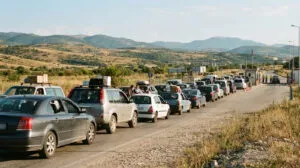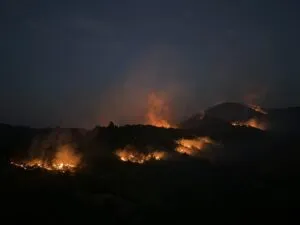
Fifty-two fires in a single day: the flames reached houses in Bogomila, and the whole country has three air tractors
14.08.2026


14.08.2026

14.08.2026

14.08.2026
14.08.2026
14.08.2026
14.08.2026
14.08.2026
14.08.2026

14.08.2026
14.08.2026

14.08.2026

13.08.2026

14.08.2026

14.08.2026

14.08.2026

14.08.2026
13.08.2026

12.08.2026

14.08.2026

14.08.2026

13.08.2026

09.03.2026

27.02.2026

19.02.2026
14.08.2026
13.08.2026
12.08.2026

23.04.2026

23.04.2026

12.04.2026
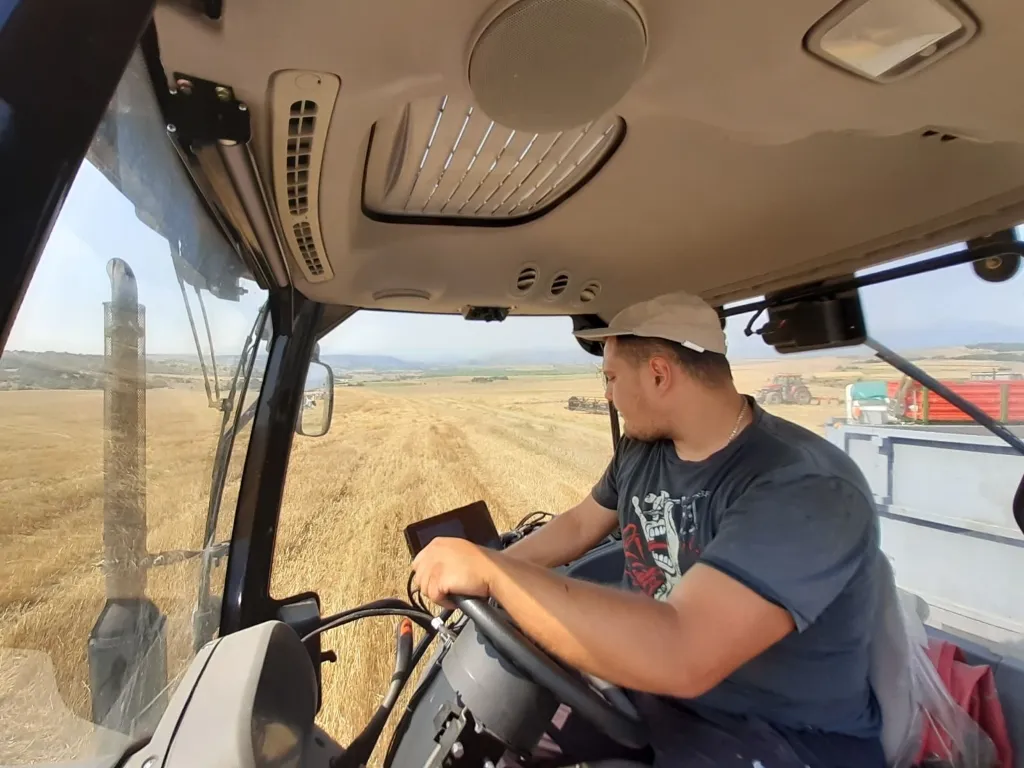
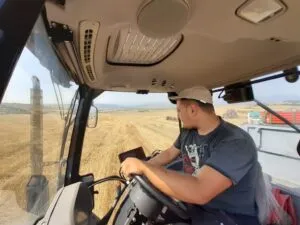
There is land, there are producers, there is demand for workers - and there is nobody to work the fields. That is the paradox Macedonian agriculture carries into this harvest, and it does not get solved by raising daily wages, even though that is precisely the only thing producers are doing.
In the Tikveš region, where the picking of early grape varieties has begun, the daily wage for a picker reaches 1,800 denars, and for the workers doing the loading - up to 2,500 denars for around six hours of work. Even that is not enough. According to vineyard owners, the agricultural workforce consists mostly of people aged between 55 and 75.
„There are no people, nobody to plant, nobody to pick”, is the sentence producers keep repeating. The fields stay in the hands of older generations who keep the family production going out of sheer inertia.
Who stays and who leaves
Some of the domestic seasonal workers are themselves leaving. Macedonian pickers go to Italy for the season, where the same work pays more. In Prespa, where the apple harvest is traditionally done by workers from Albania, foreign labour is expected again this year.
So domestic agriculture increasingly depends on workers who are not domestic, while the domestic ones go where the same work is worth more. That is one sentence that explains the country's demographic picture better than any report.
The employers' organisation assesses that the legal simplifications for seasonal employment have reduced undeclared work but have not solved the chronic shortage. The new legal framework for work engagement, in force since 1 January 2026, regulates seasonal work - but regulation does not create people.
It is not just the wage
The reasons run deeper than the sum. The work is physically hard, the day is long, it is done outdoors in high temperatures, and the income depends on the yield and on purchase prices the producer has no influence over. Young people can compare the earnings abroad for the same job, and that is a comparison the domestic field always loses.
The National Rural Network warns that young people see agricultural work as an occupation without a secure future - high production costs, climate change, weak rural infrastructure and unstable income. The ministry is announcing measures to support young people starting an agricultural business, and the new law provides grants for young investors in rural production.
For 2026 the state has secured around 40 million euros for the new Operational Employment Plan, aimed at the unemployed, the young and vulnerable groups. The question is how much of that reaches the sector where the shortage is greatest.
Vineyard owners are also expecting a smaller yield because of the drought and the spring frosts. If there are not enough workers during the harvest, part of the produce stays in the fields - which means a loss for the producer and less supply on the domestic market. And the question behind all of this is not who will pick this autumn, but who will produce food once this generation aged 55 to 75 is gone too.
The latest 10 news from this category
Permits jumped by 39 percent while Skopje still operates under a master plan that ran out in 2022. Building and...
Digitalising invoicing makes sense. The question is what the same training will look like for a craftsman with one employee...

Two sets of statistics describe different things and are never placed side by side. What is missing is a third...
Nobody told them they were not alone on the project. Each concluded the other was deliberately obstructing it - and...

A business outlet reported the company was preparing a round - and the article fulfilled itself. The CEO's phone blew...
Until now the private sector was allowed to defend but not to attack. One signature brought that wall down, and...
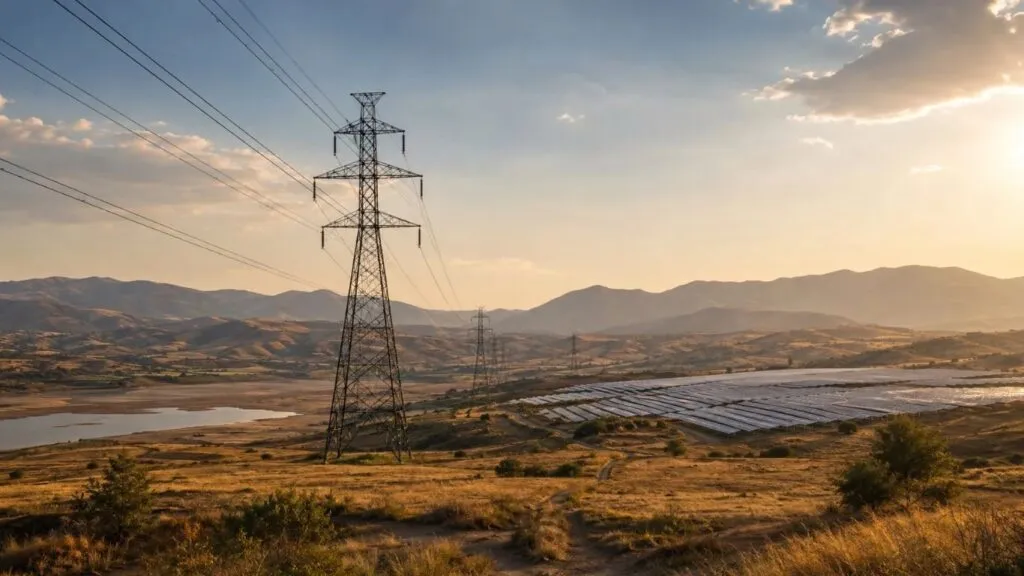
Drought is shutting down a reactor in Romania, and the evening hour breaks the entire regional system. Macedonia got off...

Same screen, same design, a new processor and an agent that phones a restaurant on the user's behalf. The price...
Europe finally has a tech company it calls its own. The infrastructure underneath it is held by Google, and the...

The product director told 3,000 furious users why the switch is set the wrong way round. Then he admitted he...
This site uses cookies - is that okay? Learn more
Be the first to know when Metla launches something new
Leave your email and we will write when there is a new guide or something new on Metla.