
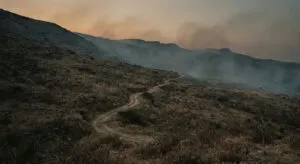
Fifty-two fires in a single day: the flames reached houses in Bogomila, and the whole country has three air tractors
14.08.2026


14.08.2026

14.08.2026

14.08.2026

14.08.2026

14.08.2026

14.08.2026

14.08.2026
14.08.2026

14.08.2026
14.08.2026

14.08.2026

13.08.2026
14.08.2026
14.08.2026

14.08.2026

14.08.2026

13.08.2026

12.08.2026

14.08.2026

14.08.2026

14.08.2026

14.08.2026

14.08.2026

13.08.2026

09.03.2026

27.02.2026

19.02.2026
14.08.2026

13.08.2026

12.08.2026

23.04.2026

23.04.2026

12.04.2026
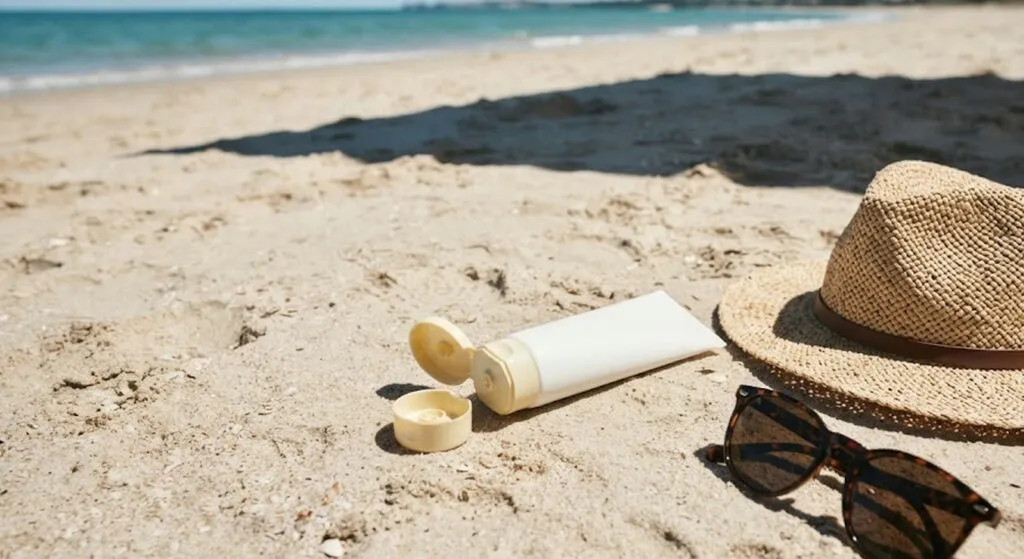
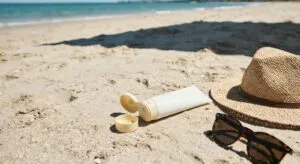
The entire summer industry rests on one quiet misunderstanding: that tanned skin means healthy skin. Dermatologist Cristina de Hoyos states the opposite without qualification - „dermatologically speaking, tanning is not a synonym for health, but precisely the opposite”.
The mechanism is more interesting than the advice. Tanning, she says, „is a defence mechanism through which the skin tries to protect the DNA of its cells”. So the colour we chase on the beach for weeks is a signal that the body has already started defending itself against something. It is not a reward for time spent in the sun, it is a response to damage.
Sunburn is the next stage of the same story, and here is the sentence worth remembering: „Every burn leaves a biological mark that accumulates with all previous exposures.” Skin does not start from zero each summer. What happened in childhood stays on the account.
That is why de Hoyos is categorical about something treated here as simply part of summer: „Sunburn must never be considered normal.” And once it has happened - „if your skin is already warning you that there is an injury, prolonged sun exposure only makes it worse”.
What works and what does not
Prevention is boring and that is exactly why it works: sunscreen every day, reapplication every two hours, avoiding the sun during the hottest hours, and clothing that covers. Nothing new, nothing expensive, nothing requiring a stylist's advice.
If a burn has already happened - a cool shower, moisturiser, water. And a list of things not to do: ice directly on the skin, toothpaste, vinegar and alcohol-based home remedies. All of them are handed down from generation to generation and all of them make it worse.
On blisters the advice is different from what people expect - do not pop them. „Although they are uncomfortable, they act as a natural protective mechanism and reduce the risk of infection.”
De Hoyos's conclusion is one sentence that holds in August and in November alike: „Skin has a memory and every exposure counts.” So the question is not how to tan faster. The question is what bill you are paying for that colour and when it arrives.
The latest 10 news from this category
Valentino and Ermanno Scervino brought it back in full this season, and the advice is more specific than the usual...

Queen Victoria set the rule in 1840. What connects everyone who broke it is not rebellion but budget.

Merino wool keeps you cool, while ordinary acrylic traps heat and moisture. The difference is one line on the label...
The hair has already gone through the phase that precedes shedding. Plus one verdict the supplement industry has no interest...

One dress with detachable parts instead of two gowns. And the best detail is neither the dress nor the decor...

Fashion sells it as taste maturing. The chronology shows something else - every new industry demanded new packaging.
A fan is not a solution, it is the same trap under a different name. The basics cost almost nothing...

A wedding lasts twelve hours, and the dress is cut for one. The sleeves and the cape come off in...
Every season the fashion industry finds a way to declare your old pieces expired. This time the tool is a...
A brush doesn't create density that physically isn't there. That's the arithmetic no viral clip will mention to you.
This site uses cookies - is that okay? Learn more
Be the first to know when Metla launches something new
Leave your email and we will write when there is a new guide or something new on Metla.