
Twenty-one fires in a single day: the record nobody wanted to break
13.08.2026



13.08.2026
13.08.2026

13.08.2026

13.08.2026

12.08.2026

12.08.2026
13.08.2026

13.08.2026

12.08.2026

13.08.2026

13.08.2026

13.08.2026

13.08.2026

12.08.2026

11.08.2026

13.08.2026

13.08.2026

13.08.2026

13.08.2026

13.08.2026

12.08.2026

09.03.2026

27.02.2026

19.02.2026
13.08.2026
12.08.2026
11.08.2026

23.04.2026

23.04.2026

12.04.2026
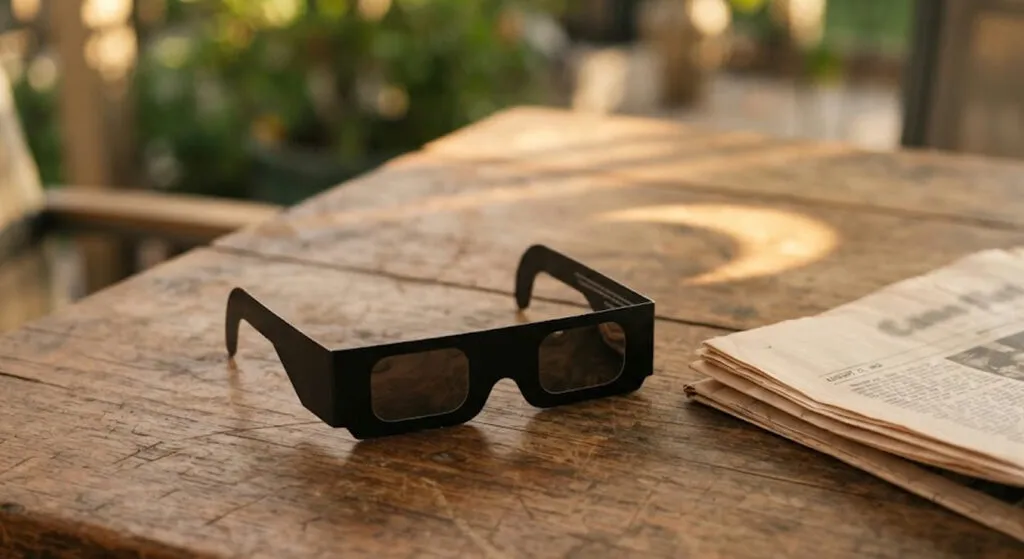
The retina has no pain receptors. That is one sentence, but the entire danger of yesterday's eclipse sits inside it - and so does the reason why warnings about glasses are not the marketing of some company selling cardboard frames.
This is explained by Jorge Ruiz Medrano, a retina specialist, in a formulation more precise than any official statement: „The retina has no pain receptors, so you can suffer an injury without feeling anything at all. Never take the glasses off.”
The damage does not appear immediately. It shows up after several hours, sometimes only after one or two days. So the person who looked at the sun unprotected yesterday and concluded it was fine because nothing hurt - that person simply has not yet reached the moment when they will understand.
There is a second mechanism, more perverse than the first. When the Moon covers most of the Sun, the light drops and the pupils widen. A wider pupil means more radiation entering the eye. At precisely the moment when it looks safest, the risk is at its highest.
The condition is called solar retinopathy and it strikes the macula - the central part of vision, the part you read with. The symptoms are dark patches in the visual field, blurred images, distorted lines, altered colour perception. What the experts do not say loudly often enough: damage to the photoreceptors currently has no cure that reverses it.
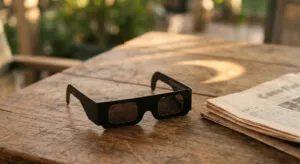
The rules are simple and require no equipment. Only glasses certified to ISO 12312-2, which block 99.999 percent of sunlight plus ultraviolet and infrared radiation. Check them for scratches before use. The three-one-thirty rule: three seconds of looking, one minute of pause, thirty seconds in total at most. And the glasses do not come off even during total darkening.
What does not work, and everyone has a relative who swears it does: X-ray films, CDs, smoked glass, ski goggles, ordinary sunglasses. Not one of those blocks anywhere near enough. Nor does a telescope, binoculars or a camera without a solar filter fitted in advance - those actually concentrate the light and speed up the damage.
Worth remembering until next time, because next time always comes. The difference between watching something that happens once in a lifetime and paying for it with your central vision is a piece of cardboard costing a few euros - and the will to read the certificate printed on it.
The latest 10 news from this category

Minerals improve absorption, fibre releases the water gradually. A juicer removes it - and with it a large part of...

An emotion in your head is a tangled ball. Say it out loud and it has to become a sentence...

Warm potato absorbs the liquid, cold potato just carries it on the surface. When there is no sauce to hide...

The same chart with the same weight, month after month, at some point stops being a demand on the body....

Warm potatoes, not cold. Whoever told you the salad should be chilled in the fridge first sent you in the...
The symptoms are almost identical to a heart attack, and the coronary arteries are perfectly clear. A cardiologist explains who...

The story about the king who exclaimed „this is gold” is invented, but tiger nut really does contain neither gluten...

A brain-training expert argues there is no evidence that being hard on yourself produces better results. And the trick against...

None of the three requires mastery, but all three fail in the same place. Full measures, timings, and the trick...

Years of interpretations about lost teeth and falling into a void have no scientific backing. What does have backing is...
This site uses cookies - is that okay? Learn more
Be the first to know when Metla launches something new
Leave your email and we will write when there is a new guide or something new on Metla.