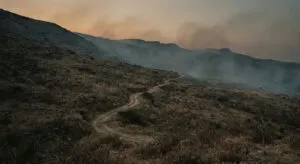
Fifty-two fires in a single day: the flames reached houses in Bogomila, and the whole country has three air tractors
14.08.2026


14.08.2026

14.08.2026

14.08.2026

14.08.2026

14.08.2026

14.08.2026
14.08.2026
14.08.2026

14.08.2026

14.08.2026

14.08.2026

13.08.2026

14.08.2026
14.08.2026

14.08.2026

14.08.2026
13.08.2026
12.08.2026

14.08.2026

14.08.2026

14.08.2026
14.08.2026

14.08.2026

13.08.2026

09.03.2026

27.02.2026

19.02.2026
14.08.2026
13.08.2026
12.08.2026

23.04.2026

23.04.2026

12.04.2026
There is an island still served by the only scheduled commercial hovercraft route in the world. Not as a tourist attraction, but as transport - people take it to work. This is Wight, the island off England's south coast, separated from the mainland by the Solent strait.
The northern shore is sheltered and calm. The southern one is the wild side - exposed to the winds funnelling through the Channel, with dramatic cliffs and beaches where almost nothing has been built. From the mainland you get there by ferry from Portsmouth, Lymington or Southampton, or by hovercraft from Southsea to Ryde.
The dinosaur island
Long before the festivals, palaeontologists called it Dinosaur Island. Around 125 million years ago this coast was mud and lagoons, and the remains the animals left behind were preserved. When the soft rock at Compton Bay erodes, the bones simply drop onto the beach. Over twenty different species have been identified so far, some of them known only from here. In 2024 Nick Chase found the most complete dinosaur skeleton discovered in the United Kingdom this century - a large herbivore, named Comptonatus chasei after him.
The queen who called it her paradise
Victoria and Prince Albert bought the Osborne estate in 1845 for 28,000 pounds. Albert conceived the new residence himself as an Italian Renaissance palace, inspired by his memories of the Bay of Naples. The build was led by architect Thomas Cubitt, the same man who built the main facade of Buckingham Palace. Victoria called it „this little paradise by the sea” and used it for over fifty years. She died there, on 22 January 1901. Edward VII gave it to the state, the rooms opened to the public in 1956, and today the estate is run by English Heritage - with her apartments left exactly as they were.
113 kilometres on foot around the whole thing
The entire island is circled by a waymarked coastal path of 113 kilometres. Most people finish it in four to seven days, but it can be walked section by section. The best-known stretch is the Tennyson Trail - 23 kilometres from Carisbrooke to Alum Bay, over several hills, past a granite monument to the poet, to the coloured cliffs above the Needles.
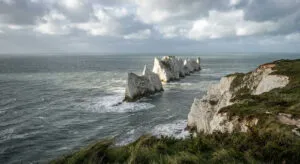
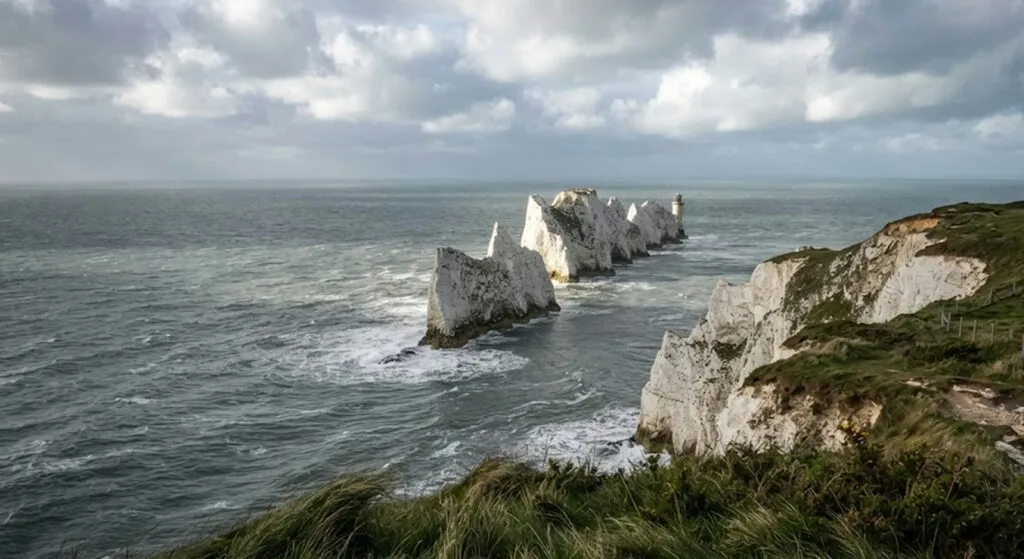
The Needles are three white chalk stacks rising around thirty metres above the sea, with a red lighthouse at the end. There was once a fourth, called Lot's Wife - it collapsed in a storm in 1764, and the crash was heard for kilometres around. That same chalk once connected the island to the Old Harry Rocks in Dorset, some thirty kilometres away.
The king stuck in his own window
Above Newport stands Carisbrooke Castle, with over a thousand years of history. During the civil war Charles I was imprisoned here - fourteen months before he was executed. He tried to escape twice, and one attempt failed because he got stuck between the bars of his own window. Both the room and the window are still there. So are the donkeys that turn a sixteenth-century wheel every day to draw water from a well 49 metres deep.
The microclimate that changes the botany
Ventnor, on the south coast, is stacked in terraces up the cliff, with houses piled along the slope. The ground beneath the cliffs creates a microclimate where the temperature runs around five degrees higher than the rest of Britain, with almost no frost. That is why Ventnor Botanic Garden survives there - twenty-two hectares of subtropical plants that grow nowhere else in England, including olive trees and giant Amazonian water lilies.
Three days in 1970 the island still remembers
The first festival was organised by the Foulk brothers to raise money for a town swimming pool. In 1969 Dylan played there - his first public appearance after a serious accident - and Lennon, Ringo Starr, Keith Richards and Charlie Watts came to the island. The 1970 edition gathered The Doors, Joan Baez, Leonard Cohen, Joni Mitchell, The Who, Miles Davis and Jimi Hendrix, among more than fifty performers. For Hendrix it was the last full performance in England - he died on 18 September that same year. The crowd was so large that the government introduced a limit: over five thousand people requires a special licence. The festival returned in 2002 and now takes place every June in Newport.
The island has gathered Victoria, Tennyson, Dickens, Keats and - in 1874 - Karl Marx, who described it as „a little paradise”. It is hard to find a place with a tighter link between the royal household and the counterculture. And you get to all of it by ferry from the English coast.
The latest 10 news from this category
Eight days of measurements at the crossing into Macedonia show the hour you leave changes more than anything else. Between...
Hemingway, Picasso and Fitzgerald did not come on holiday - they came to live there for a season. Everyone copied...
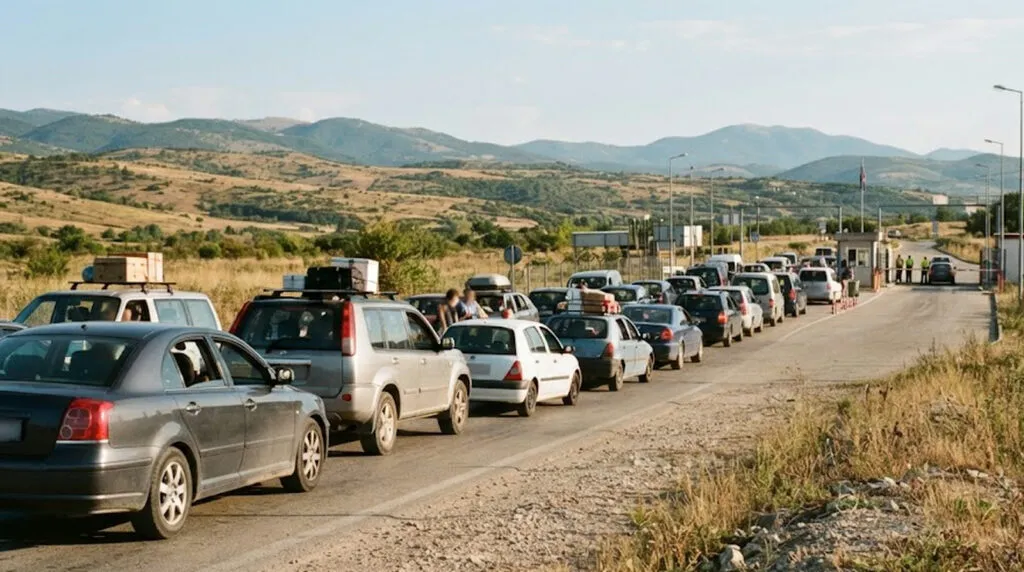
Three cars at midnight, twenty-nine at six in the morning. That same morning Medzitlija was empty, and the hour you...
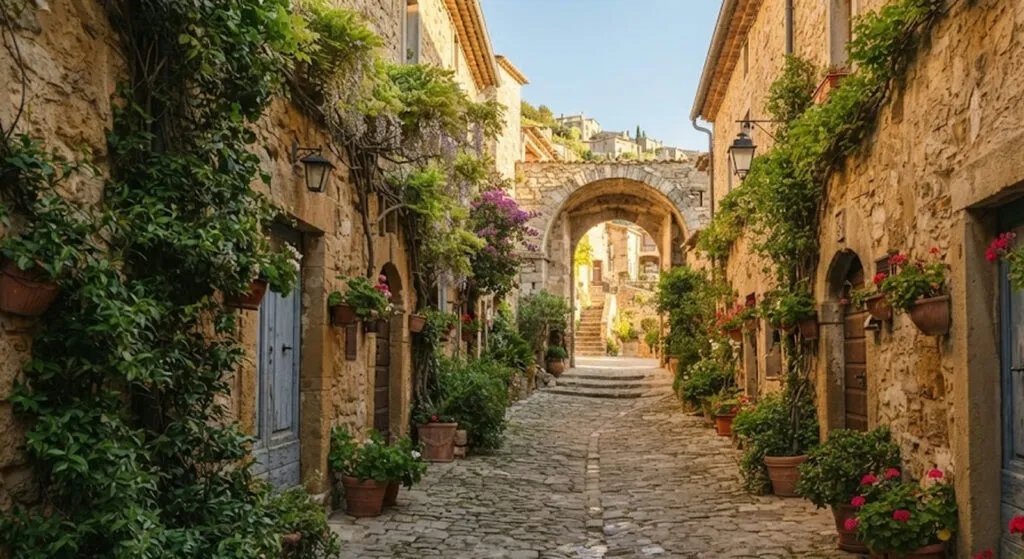
The moat around the village was not banked up but cut out of the stone. The shape stayed because for...
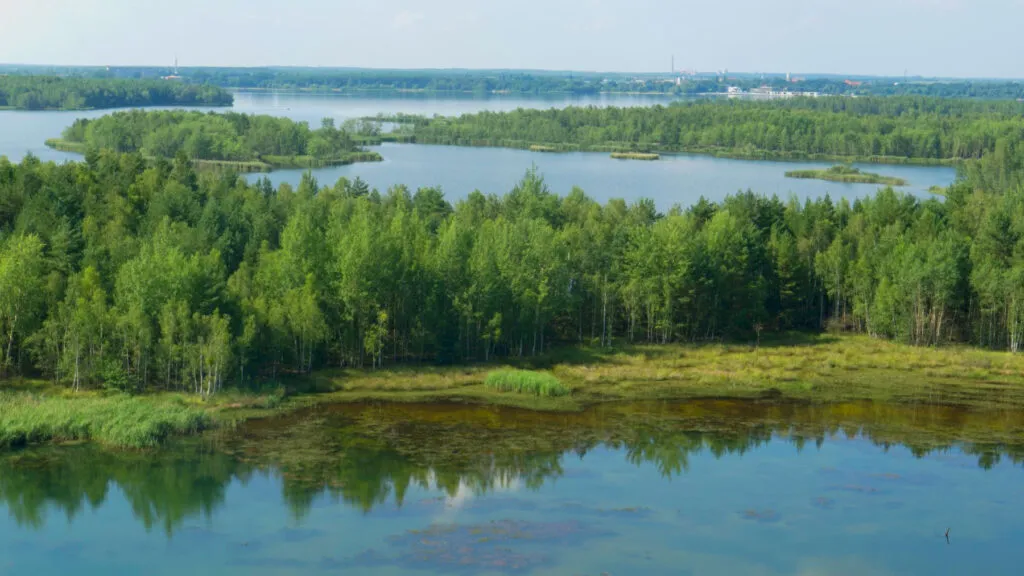
Two billion tonnes of coal taken out of the ground, and today they call the water the German Lake Como....
Bogorodica, Medzitlija and Star Dojran in one place - live cameras, queues hour by hour, and a forecast for the...
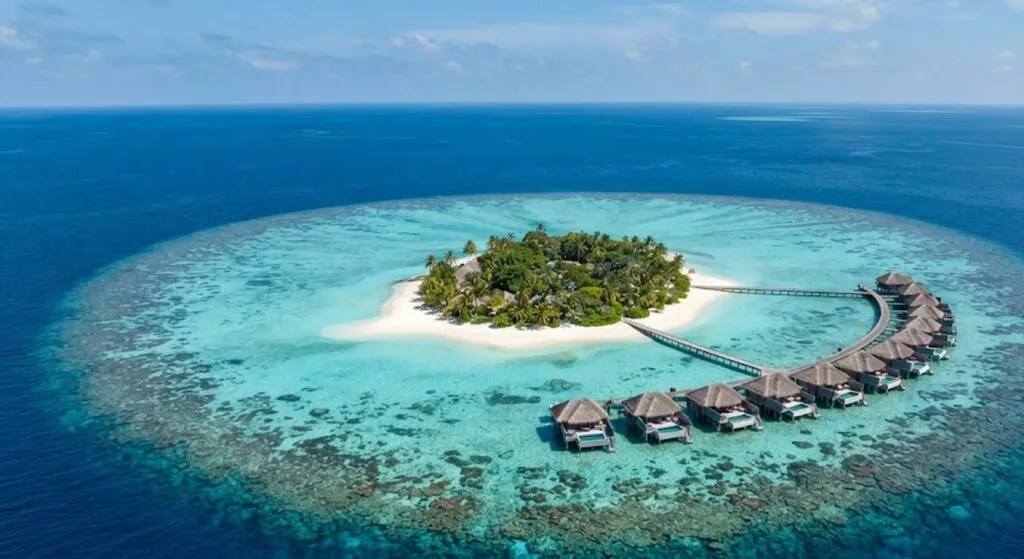
Of a thousand islands, only around a hundred have a single hotel each. There is another Maldives too - fishing...
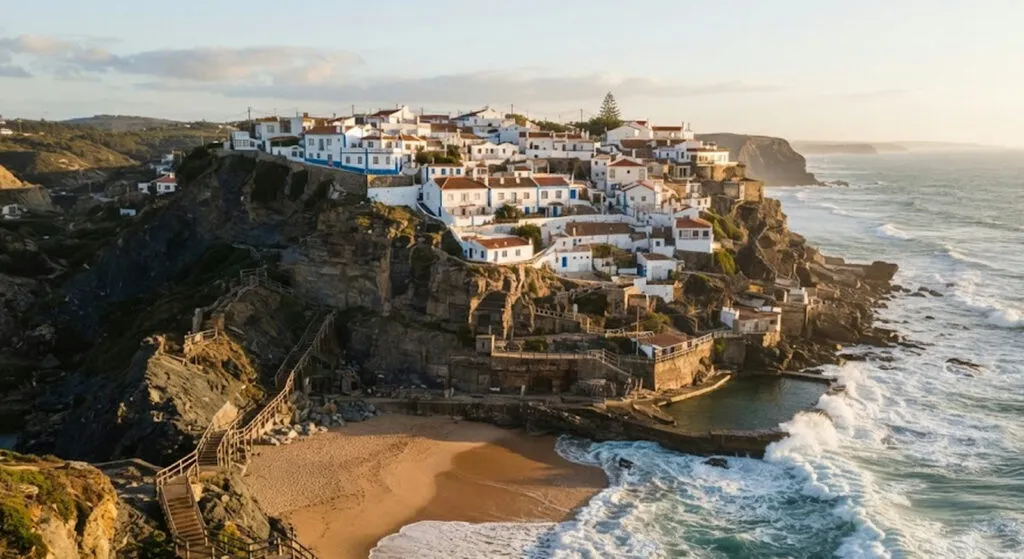
White houses with blue trim glued above the ocean, and beaches connected by an 18.5-kilometre trail instead of a car...
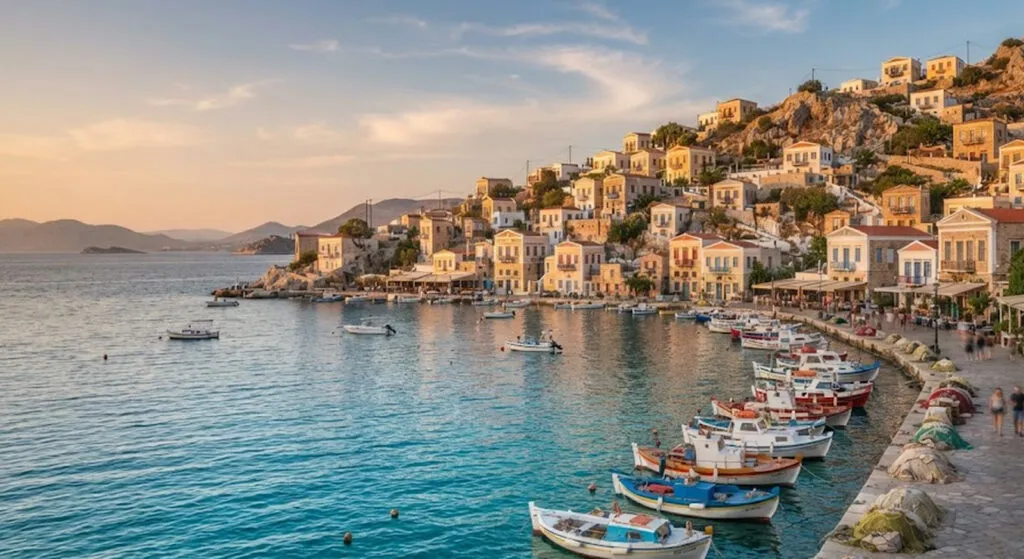
Eleven walking trails, eighty kilometres, and one staircase of six hundred steps that a local shepherd spent ten years carving....
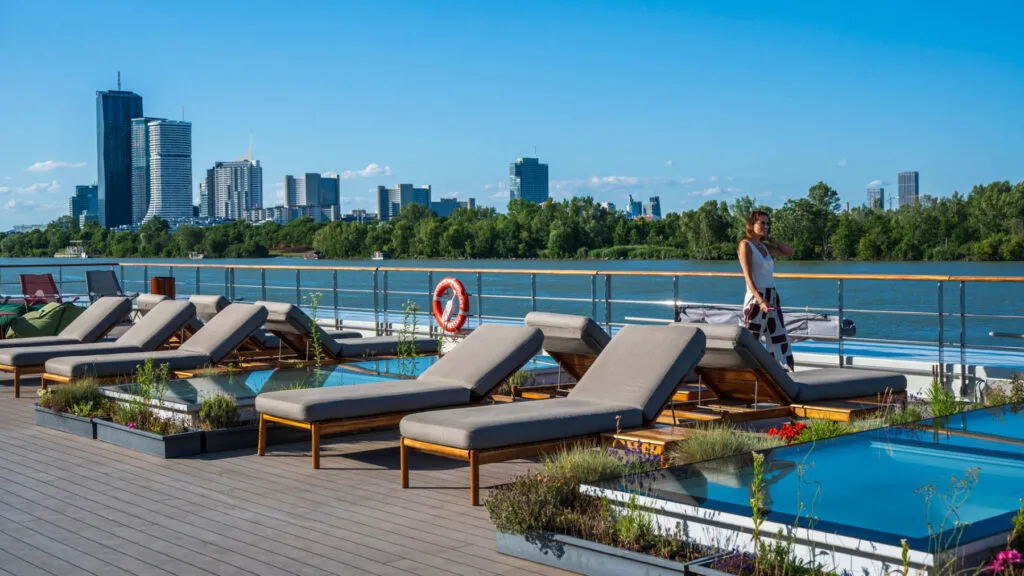
From Vienna to Budapest, stopping at Esztergom and Visegrád. A boat that docks in the old town centre, not twenty...
This site uses cookies - is that okay? Learn more
Be the first to know when Metla launches something new
Leave your email and we will write when there is a new guide or something new on Metla.