Fifty-two fires in a single day: the flames reached houses in Bogomila, and the whole country has three air tractors
14.08.2026


14.08.2026

14.08.2026

14.08.2026
14.08.2026

14.08.2026

14.08.2026
14.08.2026
14.08.2026

14.08.2026

14.08.2026

14.08.2026

13.08.2026

14.08.2026

14.08.2026

14.08.2026

14.08.2026
13.08.2026
12.08.2026

14.08.2026

14.08.2026

13.08.2026

09.03.2026

27.02.2026

19.02.2026

14.08.2026

13.08.2026
12.08.2026

23.04.2026

23.04.2026

12.04.2026
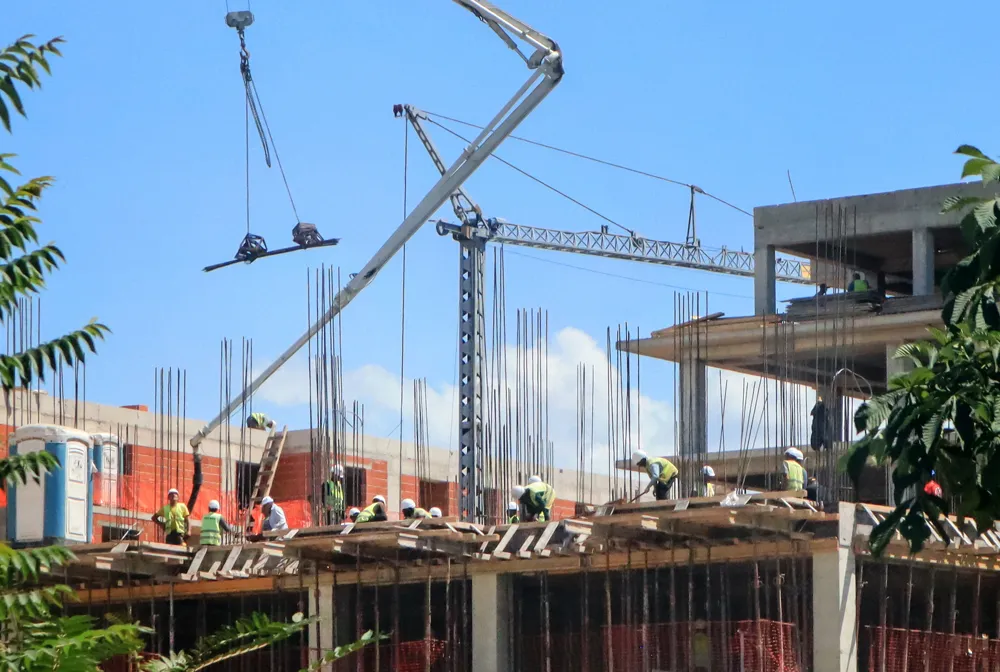
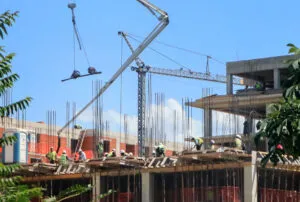
In June, 296 building permits were issued - 39 percent more than in the same month last year. The projected value of the buildings is 6,363,610 thousand denars, or around 103.5 million euros, up 31 percent year on year. The plans cover 754 flats with 64,266 square metres of usable space.
The figures come from the State Statistical Office and at first glance look like good news. Construction is working, investment is growing, the housing stock is expanding. A living city needs new homes, business premises and infrastructure - nobody disputes that.
The problem is that building and urban planning are not the same thing.
Where the money goes
Of the total, 200 permits (67.6 percent) are for buildings, 26 (8.8 percent) for infrastructure, and 70 (23.6 percent) for reconstruction. Individuals filed 218 permits, or 73.6 percent, but their share of the investment value is around 21.5 percent. In other words, almost four fifths of the money comes from companies - around five billion denars.
The bulk of the value is concentrated in the Skopje region, around 3.48 billion denars. By number of permits the Pelagonija region leads with 70. Among the flats, two- and three-room units dominate - 267 and 214.
What is not growing by 39 percent
The State Audit Office found that 22 of 34 municipalities fail to meet the standard of 25 square metres of green space per resident. Between 2020 and 2024, 77 percent of procedures for detailed urban plans missed their statutory deadlines.
Skopje, meanwhile, is operating under a General Urban Plan covering the period 2012-2022. The new one, for 2022-2032, was started back in 2019 and still has not been adopted. So the city is issuing permits worth 103.5 million euros a month under a plan whose term has run out.
Chaos rarely arrives as one big project everyone recognises. It arrives gradually, through individual permits that each look perfectly tidy on their own and together produce neighbourhoods with no greenery, no parking and no traffic logic. The difference between a city and a building site is whether the permits add up to a system or only to a number. So far we have only the number.
The latest 10 news from this category

Macedonian pickers go to Italy while in Prespa the apples are picked by workers from Albania. One sentence that explains...
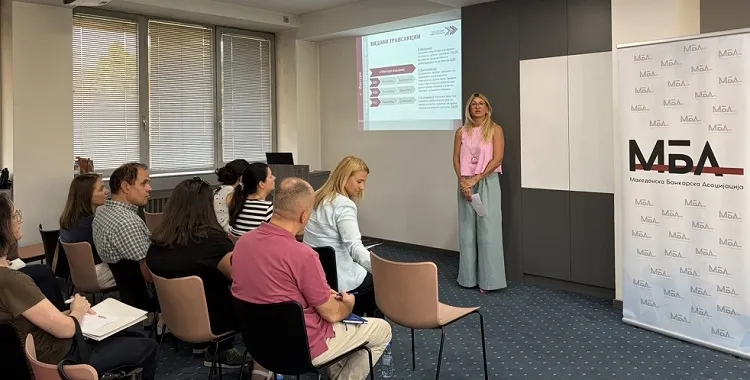
Digitalising invoicing makes sense. The question is what the same training will look like for a craftsman with one employee...

Two sets of statistics describe different things and are never placed side by side. What is missing is a third...

Nobody told them they were not alone on the project. Each concluded the other was deliberately obstructing it - and...

A business outlet reported the company was preparing a round - and the article fulfilled itself. The CEO's phone blew...
Until now the private sector was allowed to defend but not to attack. One signature brought that wall down, and...
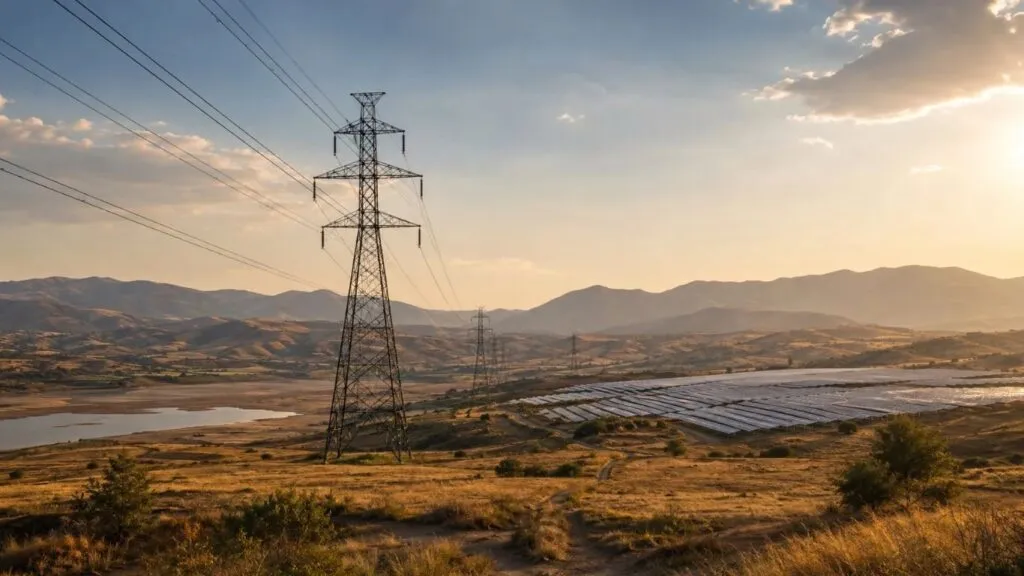
Drought is shutting down a reactor in Romania, and the evening hour breaks the entire regional system. Macedonia got off...

Same screen, same design, a new processor and an agent that phones a restaurant on the user's behalf. The price...
Europe finally has a tech company it calls its own. The infrastructure underneath it is held by Google, and the...

The product director told 3,000 furious users why the switch is set the wrong way round. Then he admitted he...
This site uses cookies - is that okay? Learn more
Be the first to know when Metla launches something new
Leave your email and we will write when there is a new guide or something new on Metla.