

Bogovinje: A 16-Year-Old "Accidentally" Shot a 15-Year-Old With a Pistol - So Where Did He Get the Gun?
26.10.2026


26.10.2026
26.10.2026

26.10.2026
26.10.2026
26.10.2026
26.10.2026
26.10.2026
26.10.2026

25.10.2026

26.10.2026

26.10.2026

25.10.2026

26.10.2026

26.10.2026

26.10.2026

26.10.2026
25.10.2026

24.10.2026

26.10.2026

26.10.2026

26.10.2026

26.10.2026

26.10.2026

25.10.2026

26.10.2026

25.10.2026
25.10.2026
26.10.2026
24.10.2026

22.10.2026

23.04.2026

23.04.2026

12.04.2026

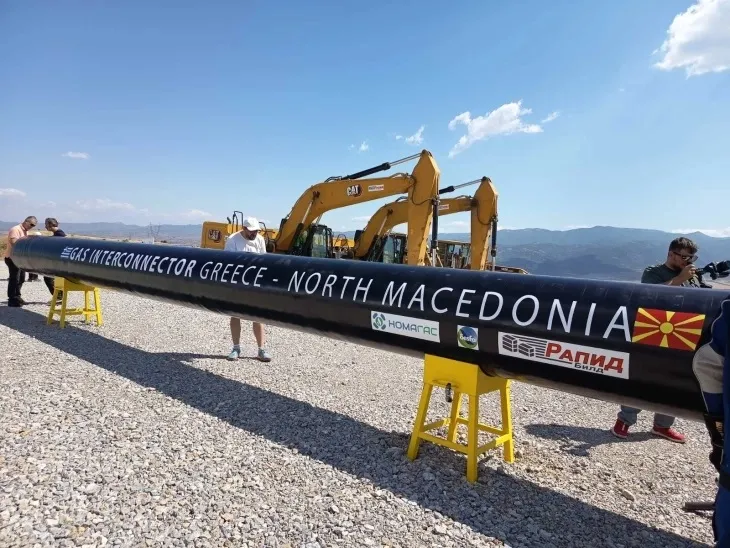
Macedonia today signed a memorandum in Thessaloniki on joining the Vertical Gas Corridor. It was signed by energy minister Sanja Božinovska, at the 10th Southeast Europe Energy Forum.
Until now the corridor was conceived as a route from Greece through Bulgaria, Romania, Hungary and Slovakia, all the way to Moldova and Ukraine. From now on we are in it too, along with Serbia.
Why this matters more than it sounds
The answer is in one figure Božinovska said out loud, and it is worth repeating.
Until now Macedonia had one single gas connection - with Bulgaria. And more than around 85 percent of that capacity is leased long-term by Gazprom.
In other words: the country had one door for gas, and most of it was already reserved by a Russian supplier. That is not supply, that is dependence with a signature on it.
The second door
The interconnector with Greece is under construction, and commercial operation is planned to begin before the end of 2027. Initial capacity is around 1.5 billion cubic metres a year, with room to increase.
The other half of the undertaking is the link with Serbia. The design and construction contract was signed with the company "Rapid Build", which is already working on the Greek-Macedonian section too. That pipeline is planned for completion by the end of 2028, roughly a year after the Greek link goes live. Capacity is estimated at three to six billion cubic metres a year.
The central point of the new system is the floating terminal at Alexandroupolis, through which liquefied natural gas - largely of American origin - and Azerbaijani gas from the TAP system will be routed northwards.
Macedonia has already reserved four slots at that terminal. "Srbijagas" has secured capacity of 300 million cubic metres a year for the next decade.
From end point to transit
The difference between being the end point of a pipeline and being part of a corridor is the difference between a buyer and a participant.
An end point pays the price it is given. A transit country has transit revenue, a second supply alternative, and an argument in negotiations it did not have before.
That is why Božinovska talks about an "energy crossroads" - and in this case the phrase is backed by a pipe already being welded.
What is still unresolved
A memorandum is a memorandum. The pipes are being built, but the dates are 2027 and 2028, and the capacities are estimates.
Second, swapping one supplier for another is not diversification in itself. If instead of Russian gas we buy American LNG through a Greek terminal, that is a better position - but still a position in which somebody else sets the price.
The real test will be what price a Macedonian household and a Macedonian factory pay in the winter of 2028, compared with today. Until then this is good news on paper with real foundations - which around here is already above average.
The latest 10 news from this category
Oil went up about six percent in a week, and diesel in Macedonia is already more expensive than both grades...
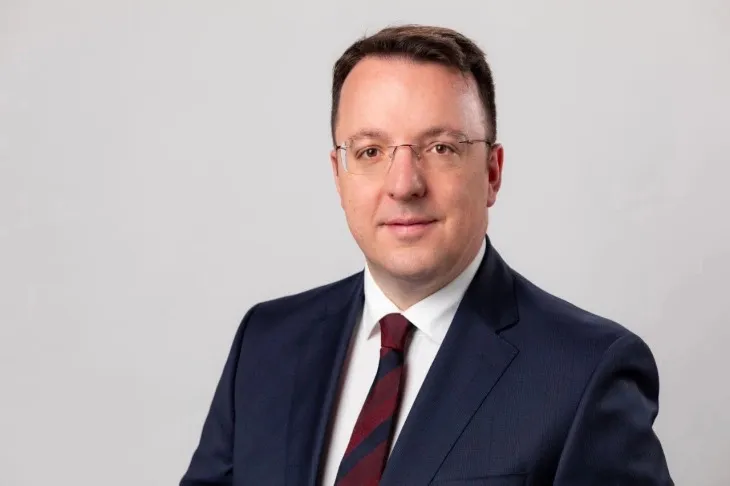
The deputy prime minister is promising a satellite network and lower bills on Facebook, "from the information I have". All...
The average August wage jumped to 48,733 denars, but the holiday bonus is calculated from a three-month average. Exactly how...
A 1,000-person pilot showed that 80 percent of the first users weren't engineers. Nobody is saying how much Uber pays,...

Every day Rivian receives more than 400,000 recorded scenes from its customers' cars. Now it also has a tool that...

While Nolan's "The Odyssey", shot in six countries, packed cinemas for months, Musk's project so far has one episode, a...

The appeal fee jumps from 50-200 to 150-600 euros, and a company that proves a tender was unlawful will no...
More than 11,000 denars between two baskets, a minimum wage of 26,000 and announced hikes in electricity and heating. The...

In July, a higher deficit was the price of more investment. Three months later investment is falling, the 750 million...

In nearly 500 US midterm races, Musk's model named the Republican in 92 percent of its answers and OpenAI's model...
This site uses cookies - is that okay? Learn more
Be the first to know when Metla launches something new
Leave your email and we will write when there is a new guide or something new on Metla.