
Just 14 months ago, Serbia's Alta Bank was cleared to take over Stopanska Banka Bitola. Today the parent bank in Serbia has lost its licence and the Macedonian bank is under administration. METLA examines the decisions, the responsibilities and the questions the public deserves answers to.
On September 1, 2025, the Executive Board of the National Bank of Macedonia adopted decision no. 15-27777/10, granting Alta Bank AD Belgrade prior approval to acquire up to 100 percent of the shares of Stopanska Banka Bitola.
At the time, the governor of the National Bank was Trajko Slaveski.
Just nine days later, on September 10, 2025, the Securities and Exchange Commission, at a session chaired by Bujare Abazi, approved the takeover bid.
The price was set at 3,777 denars per share. The takeover was successfully completed in October 2025.
So this was not a transaction carried out without institutional approvals. On the contrary, it went through procedures before the competent financial regulators.
WHO WAS SUPPOSED TO VET THE BUYER?
The first and most important institution is the National Bank of Macedonia.
When granting approval to acquire a qualifying holding in a bank, the regulator must assess the buyer's financial condition, its reputation, its ability to provide capital support, the transparency of its ownership and its compliance with legal requirements.
The second institution is the Securities and Exchange Commission, which oversees the legality of the takeover procedure and protects shareholders' rights within its remit.
The third is the National Bank of Serbia, which was responsible for supervising the parent Alta Bank in Belgrade.
The key question is whether the Macedonian regulator had a full and timely picture of the Serbian investor's financial condition before it issued its approval.
On October 30, 2026, the National Bank of Serbia revoked Alta Bank Belgrade's operating licence, citing a deteriorating financial position and liquidity problems, despite supervisory measures taken earlier.
On November 1, 2026, the National Bank of Macedonia withdrew its prior approval for the Serbian bank and placed Alta Bank Bitola under a three-month administration.
According to the official decision, as of October 22, 2026, Serbia's Alta Bank owned 95.336 percent of the Macedonian bank's shares.
The justification for the administration cites risks to future capital support, the functioning of the bank's governing bodies, client confidence and its stability.
That is a serious development for a financial institution whose dominant owner received regulatory approval only 14 months earlier.
The collapse of the parent bank does not, on its own, prove that the Macedonian National Bank committed an unlawful failure when it issued the approval.
But equally, the fact that the procedure was formally approved is not sufficient proof that all the risks were properly assessed.
To establish whether supervision was adequate, it needs to be checked what financial statements were submitted in 2025, what information was exchanged with the Serbian regulator, whether there were warnings, and when Macedonian institutions learned that the situation was deteriorating.
It is especially important to establish whether the problems in Serbia were new, or whether some of them could have been spotted earlier.
Without access to the supervisory documentation, one cannot responsibly claim that the approval was unlawful - nor that the assessment was flawless.
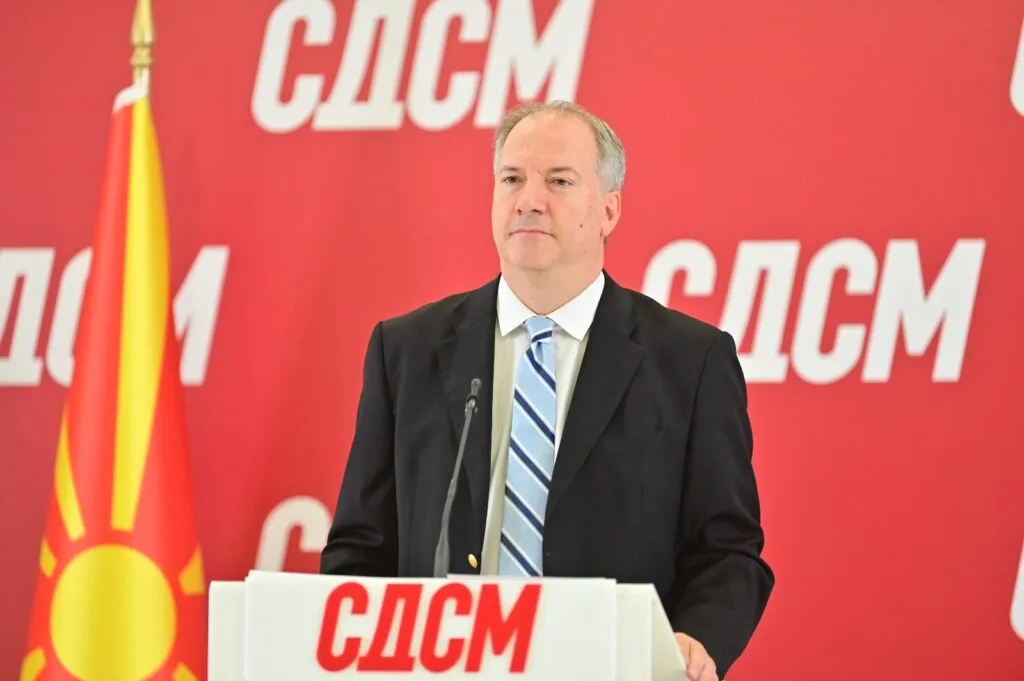
Prime Minister Hristijan Mickoski has asked the prosecutors to investigate alleged sabotage by SDSM in connection with the case, while also warning of possible consequences for companies linked to the Serbian market.
Such claims should be examined on the basis of evidence.
But political accusations must not crowd out the basic question: how was the decision to approve the takeover made, and did the competent institutions monitor the risks in a timely manner?
SIX KEY QUESTIONS:
- Which financial documents formed the basis for the approval of September 1, 2025?
- Did the National Bank of Serbia provide information about supervisory measures or financial risks at Alta Bank?
- When did the Macedonian National Bank first learn of the problems at the parent bank?
- Were additional control measures taken in the period between the takeover and the revocation of the Serbian licence?
- Were there warnings that could have led to a different decision in 2025?
- Will there be an independent review of the approval procedure and the subsequent supervision?
In banking, trust is the foundation of the whole system.
That is why the public must get answers not only about what happened to Alta Bank, but also about whether the competent institutions fulfilled their legal obligations.
Accountability is not established at party press conferences, but through documents, independent oversight and clearly established facts.
Because the real question isn't just who allowed the bank to be bought, but whether they did everything the law required to protect its depositors and the financial system.
METLA | November 5, 2026