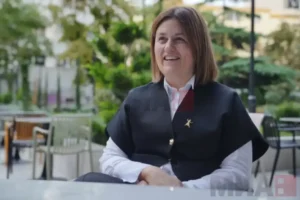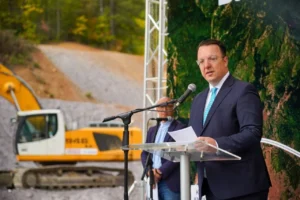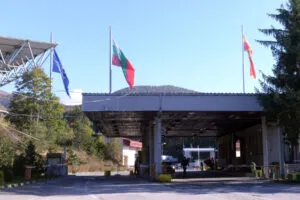
No Passport, on the Stop List, and Yet in Sofia: Who Let Iva Mihailova Across the Border?
13.10.2026


13.10.2026
13.10.2026
13.10.2026
13.10.2026

13.10.2026
13.10.2026
13.10.2026

12.10.2026

12.10.2026
13.10.2026
13.10.2026

12.10.2026
13.10.2026
13.10.2026
13.10.2026

13.10.2026

12.10.2026

11.10.2026
13.10.2026

13.10.2026
13.10.2026
13.10.2026

13.10.2026

13.10.2026
12.10.2026

10.10.2026

08.10.2026

23.04.2026

23.04.2026

12.04.2026

Slovenia's referendum on scrapping the public broadcaster's licence fee delivered a twist that only those who stayed up until morning got to see. Until the early hours, more voters were in favour of abolishing it. With 99.98 percent of ballots counted, the picture flipped: 50.04 percent against abolition, 49.96 percent in favour. In numbers: 461,765 against, 461,073 for. A margin of 692 votes.
The result isn't final yet. Postal votes will decide it: electoral commissions are counting ballots sent from within Slovenia, and the results of votes from abroad will be confirmed on 19 October.
How much money are we talking about? The fee in Slovenia is 14.02 euros a month, or 168.24 euros a year. In neighbouring Croatia people pay 10.62 euros a month, or 127.44 euros a year. The referendum on the fee is consultative - the government isn't legally bound to implement it, but Prime Minister Janez Janša promised to respect the will of the people.
Four referendums in one day
Slovenians voted in four referendums on the same day. The only legislative, binding one was on amendments to the Parliamentary Inquiries Act, and they were defeated with 51.26 percent against. Civic associations, backed by the opposition, collected the required 40,000 signatures, arguing that the amendments strip citizens of legal protection, give politicians too much power to intrude on privacy and effectively introduce a political police. A group of legal experts from the law faculties in Ljubljana and Maribor warned that the changes lower the standards for conducting parliamentary inquiries.
In the other two consultative referendums, 60.54 percent backed the idea of making welfare conditional on community work, and 55.29 percent voted to strip third-country nationals of the right to vote. Janša said the government would respect the will of the people, and opposition leader Robert Golob retorted that the government doesn't have the public's trust.
Slovenia asked its citizens directly whether they want to pay for their public broadcaster - and almost exactly half said no. That's not just a verdict on one monthly bill, but on trust in the television they fund. How many public broadcasters in the Balkans would survive the same question?
The latest 10 news from this category
In Serbia people are asking how to get refunds, while Croatian war veterans attack him for singing in Niš at...
His bandmates spent years trying to convince him to get treatment. At the end of September a concert in Makarska...
More than 50 people at the entrance, children and folk dancers inside, shouts of "Kill the Serb" as they left....
Twelve people from the Novi Sad group and eleven who took part in incidents against protesters - pardoned four weeks...
At a dinner in Athens, while Romania was sinking into political crisis, the US ambassador reportedly said America could do...
The European average is 26.3 years, the Finnish one is 21. And they are not students - more than half...
The first police investigation found no irregularities. The second established unlawful and disproportionate force. The difference was made by footage...
The domestic regulator found the irregularities first, and then the story stopped. It took crossing a border for the same...
Two million people stood against twenty-seven states and the text never came out. A reminder that EU membership does not...
A lorry stopped in the hard shoulder with a breakdown, a car with five passengers and one impact in the...
This site uses cookies - is that okay? Learn more
Be the first to know when Metla launches something new
Leave your email and we will write when there is a new guide or something new on Metla.