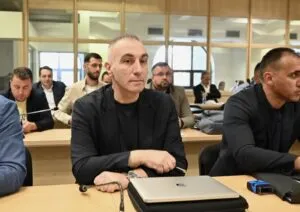
The "Lottery" Trial: 231 Pieces of Evidence, and So Far Not a Single Message Between Grubi and Bajrami
24.09.2026


24.09.2026
24.09.2026
24.09.2026

24.09.2026

24.09.2026
24.09.2026

24.09.2026
23.09.2026

22.09.2026

24.09.2026

24.09.2026

23.09.2026

24.09.2026

24.09.2026

24.09.2026

24.09.2026

23.09.2026

22.09.2026

24.09.2026

24.09.2026

24.09.2026

24.09.2026

23.09.2026

23.09.2026

09.03.2026

27.02.2026

19.02.2026

24.09.2026

23.09.2026
22.09.2026

23.04.2026

23.04.2026

12.04.2026

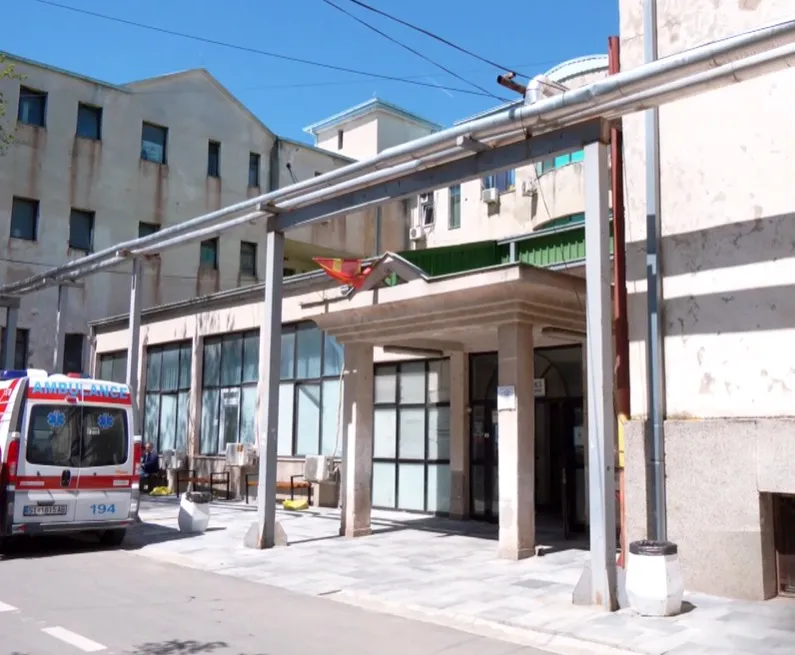
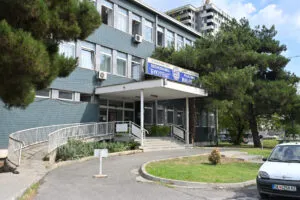
Two days before giving birth she was walking normally around the house, washing dishes and getting the baby's room ready. Today 19-year-old Stanka Mihajlova from the village of Banica is in a wheelchair. Between those two states sits one caesarean section at the Štip hospital and one discharge letter stating that the patient was released "in good general condition".
That discharge letter is the centre of this case. She gave birth on 26 June 2026. The document that sent her home says nothing about paraplegia - a condition she has been living with for more than a month now and which, according to the family, began while she was still hospitalised. Her father-in-law Velibran Stojanov says they carried his daughter-in-law out under the arms, that she could not walk, and that at home her condition got worse still.
On 4 July, in an ambulance from Strumica, she was brought to the neurology clinic at the Mother Teresa Clinical Centre. There, changes were recorded from the ninth to the eleventh vertebra. So documentation of a serious condition has existed since the start of July.
The commission that was never convened
The law requires a hospital in a case like this to convene a quality commission. The director of the Clinical Hospital in Štip, Dr Vladko Zahariev, did not do so for more than a month - and, judging by the reactions, only learned of the case once journalists asked him about it.
That is the point worth pausing on. Not the surgical error - that is for experts to establish. But the fact that the mechanism that exists precisely for situations like this did not engage on its own. The woman is a young mother of two children, one a month old, the other three and a half. She did not vanish from the system - she passed through three health institutions. And still nothing moved until the case went public.
There is a second inconsistency. The director of the Strumica hospital, Dr Goce Hristov, said this was a third caesarean section. The medical documentation the family provided shows it was the second. When basic facts change depending on who is speaking, it is hard to expect the family to trust whatever comes next.
Health Minister Sašo Klekovski announced an extraordinary inspection through the State Sanitary and Health Inspectorate at all three institutions where she was treated, as well as a specialist review in which experts in gynaecology, neurology and urology will determine whether an error was made. The Ministry is appealing against premature conclusions until all procedures are complete.
The appeal is reasonable - guilt really is established by specialists, not by the public. But there is a difference between not prejudging a medical finding and not asking why the statutory mechanisms failed to engage by themselves. The first is responsibility. The second would be looking away.
If the inspection finds everything was done by protocol, the question remains which protocol permits a patient who cannot walk to be discharged as "in good general condition". And if it finds it was not - then the question is why the family had to go live on social media outside a hospital before anyone reacted.
The latest 10 news from this category

The square metres and parking spaces were announced down to the last one. How many people will be hired and...
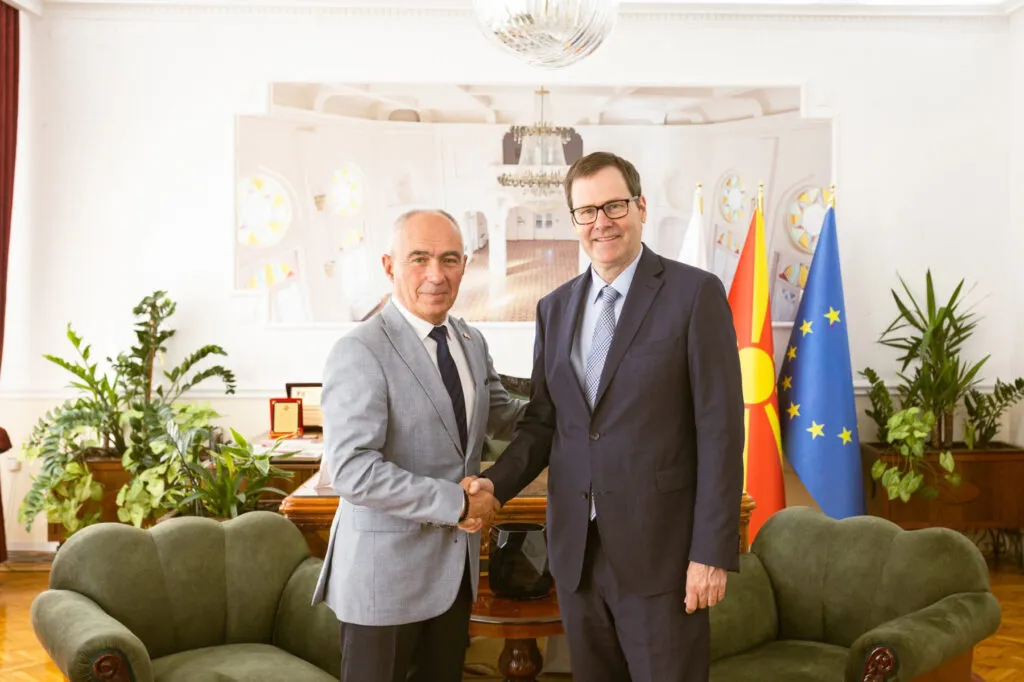
The mayors offered a "favourable business climate" and raw materials. The only concrete thing to come out of the meetings...
Home-address checks are being announced with the police as a partner, while the health minister admits that monitoring where sick...
The city has announced round-the-clock video surveillance against illegal dumps and vandals, and the cameras haven't even been bought yet....

Residents want the trucks serviced; the company wants better packaging. Meanwhile, 650 cubic metres of illegal dumps were cleared in...

According to the Crisis Management Center, a paint and varnish warehouse was on fire. That explains why the smoke was...
The union says staff have endured insults and threats from the court president for years. She says this is really...
The state audit found a system that responds well and plans badly. The reforms were demanded by the EU screening...
To fine a bar that is too loud, a citizen has to file a complaint at the municipal Registry. The...
In Montenegro the same offence costs up to 2,000 euros. But the fine is not the only problem: Skopje's municipal...
This site uses cookies - is that okay? Learn more
Be the first to know when Metla launches something new
Leave your email and we will write when there is a new guide or something new on Metla.