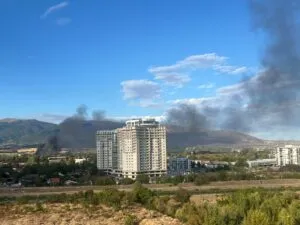
Black Smoke Over Skopje: A Paint and Varnish Warehouse Burned Inside the Old Steelworks
23.09.2026


23.09.2026
23.09.2026

23.09.2026

23.09.2026
23.09.2026

23.09.2026
23.09.2026

22.09.2026

21.09.2026

23.09.2026

23.09.2026

22.09.2026

23.09.2026

23.09.2026

23.09.2026

23.09.2026

22.09.2026

21.09.2026

23.09.2026

23.09.2026

23.09.2026

23.09.2026

23.09.2026

23.09.2026

09.03.2026

27.02.2026

19.02.2026

23.09.2026

22.09.2026

21.09.2026

23.04.2026

23.04.2026

12.04.2026

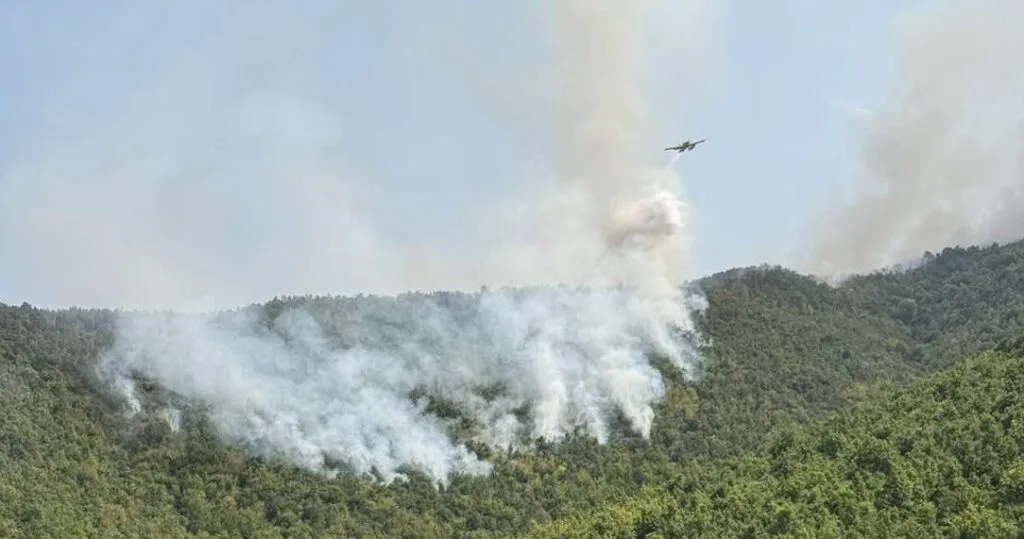
133,663,967 euros. That is the estimated material damage from fires in Macedonia between 2023 and 2025, according to data from the state forestry enterprise "Nacionalni sumi" contained in the State Audit Office's report.
Of that sum, 83,121,333 euros falls on 2024 alone. Almost two thirds of three years' damage - in a single season.
The numbers under that number
Over the same three years, 82,714 hectares of burned land and 914,657 cubic metres of destroyed timber were recorded. Data from the European Forest Fire Information System paints an even harsher picture: in 2024, Macedonia registered 97,660 hectares burned - the most in the past decade, and more than the total burned area of the previous six years combined.
The gap between the two burned-area figures comes from the different methodologies of the sources. But both lead to the same conclusion.
The financial estimate is only one part of the loss. When a forest burns, it is not only timber that disappears - ecosystems, habitats, fertile topsoil and natural barriers against erosion are destroyed. The risk of landslides and flooding rises, and recovery can take decades.
What the auditors found
The State Audit Office concluded that the protection and rescue system is not fully prepared to deal with disasters in a timely and effective way. It identified weaknesses in strategic planning, coordination between institutions and resource management, along with shortages of staff, equipment and investment in modernisation.
But one line in the report weighs more than all the rest. These weaknesses, and the need for reform, were identified back in the EU screening conducted in 2018. By the day of the audit, those reforms had not been carried out.
Eight years.
The documents waiting for a signature
A draft strategy for 2026-2030 has been drawn up - it has not been adopted. No annual protection and rescue programme has been adopted either. The protection and rescue plan has not been updated, and the audit was shown no evidence that the government ever adopted it.
The assessment of vulnerability to natural disasters and other emergencies was adopted in 2007 and has not been updated since.
Nineteen years. The climate changed over that period; the document used to assess the risk did not.
What the directorate's head says
Stojance Angelov, director of the Protection and Rescue Directorate, says he was flagging the system's weaknesses back when he ran the Crisis Management Centre. He believes some of them have been substantially reduced by last year's amendments to the Crisis Management Act and by the Protection and Rescue Act passed in June this year.
His strongest argument is operational: "This summer there was no need to request international assistance. On the contrary, for the first time in its existence, the directorate declared two air tractors to the European Civil Protection Mechanism to help other countries. Despite the existing weaknesses and shortcomings, this summer Macedonia handled open-area fires more successfully than ever before."
Angelov says the reforms continue towards creating a single institution merging the functions of the Crisis Management Centre and the directorate.
The two pictures do not cancel each other out - and that is the problem
The audit sees a system running on 2007 documents and unimplemented 2018 reforms. The director sees a summer in which no foreign help was needed. Both can be true at once, because they measure different things: one measures how the fire is put out, the other measures whether it is prevented at all.
Modern disaster management rests on one rule - the best intervention is the one that stops a crisis becoming a catastrophe. The Macedonian system has been built around response for years: local fire services go in first, then state resources, then police, the army and air capacity.
That is the last line of defence, and it is clearly working better than before. But early detection systems, cameras, cleared forest corridors, access roads, local water reservoirs - those are the things that decide whether you ever reach the last line.
The audit also established where the money goes: the bulk of funds went on current expenditure, mostly wages, and a far smaller share on capital investment. Without capital investment there are no new vehicles, no specialised equipment, no drones, sensors or communication systems.
One good season is good news. But one good season is not a system, and 133 million euros in ash is the price of the difference between the two.
The latest 10 news from this category
The union says staff have endured insults and threats from the court president for years. She says this is really...
To fine a bar that is too loud, a citizen has to file a complaint at the municipal Registry. The...
In Montenegro the same offence costs up to 2,000 euros. But the fine is not the only problem: Skopje's municipal...
A month and a half ago 4,900 first-graders were missing, now it is 1,500. Nothing decreased - the data simply...

The solution did not come out of a transport study, but out of residents' suggestions. What remains is the most...
Bunjakovec, Kapištec and Gradski zid are getting poison again. An overflowing bin is food, unsealed sewerage is shelter - and...
Every cubic metre from the illegal dumps is a bill sent to everyone. What the statement leaves out is the...

This year's European Mobility Week theme is intergenerational fairness - the decisions made about a city are paid for by...
The country's largest national park is run on boundaries from 1952 and zoning from 1988. Pelister and Galichica got new...
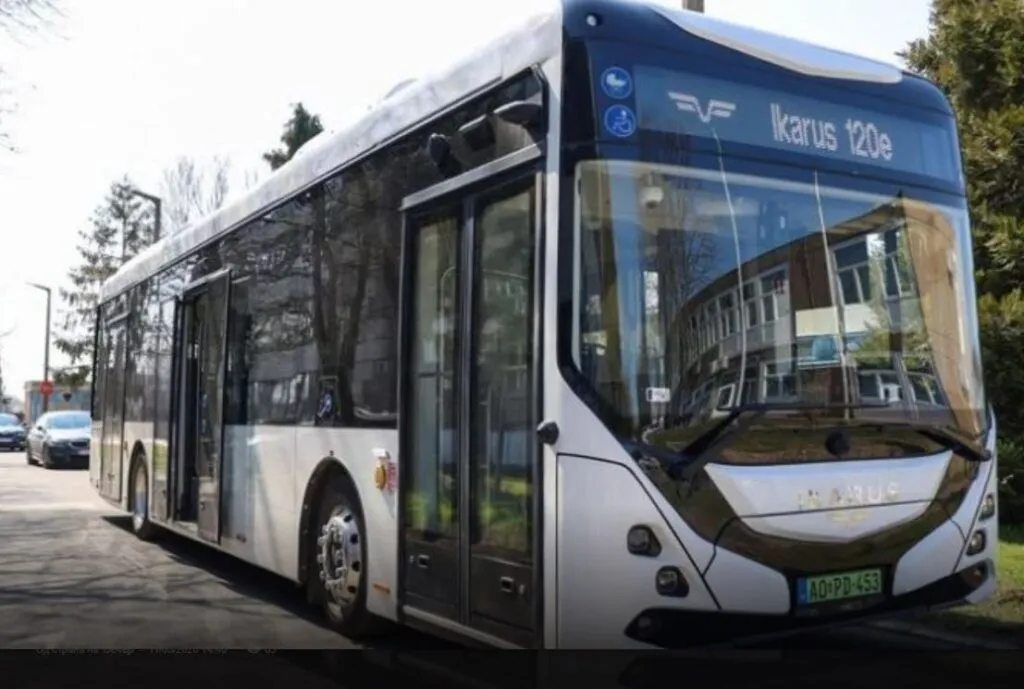
The tender collapsed in May, was repeated in July, and Ikarus and EVN came in lowest at 3.12 billion denars....
This site uses cookies - is that okay? Learn more
Be the first to know when Metla launches something new
Leave your email and we will write when there is a new guide or something new on Metla.