
The "Lottery" Trial: 231 Pieces of Evidence, and So Far Not a Single Message Between Grubi and Bajrami
24.09.2026


24.09.2026

24.09.2026

24.09.2026

24.09.2026

24.09.2026

24.09.2026

24.09.2026

23.09.2026

22.09.2026
24.09.2026

24.09.2026

23.09.2026

24.09.2026

24.09.2026

24.09.2026

24.09.2026

23.09.2026

22.09.2026

24.09.2026

24.09.2026

24.09.2026

24.09.2026

23.09.2026

23.09.2026

09.03.2026

27.02.2026

19.02.2026

24.09.2026

23.09.2026

22.09.2026

23.04.2026

23.04.2026

12.04.2026


Presley Gerber, son of supermodel Cindy Crawford, died on 20 September, aged 27, at a rehabilitation centre in California. Police are investigating the case as a possible overdose and cardiac arrest, and the final toxicology results are still pending. Months earlier, he had said publicly that he had tried ibogaine - an experimental psychedelic substance - in his fight against addiction.
It's easy to connect two dots that shouldn't be connected. Psychopharmacologist Antón Gómez-Escolar, a psychedelics expert at the Inawe foundation, is clear: "His death cannot be linked to ibogaine. He took that treatment several months ago." But the case has raised a question worth asking without sensationalism: what exactly is ibogaine, and why is it being researched at all?
What ibogaine is
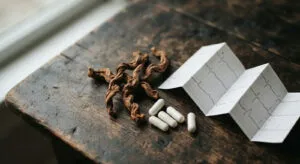
Ibogaine is a psychoactive substance from the root of the Tabernanthe iboga plant, which grows in Central Africa, particularly in Gabon. Scientific interest is growing because of its possible effect on addiction to opioids, cocaine and alcohol. It isn't taken like an ordinary daily medication: it's given as part of a treatment in which an intense psychedelic experience goes hand in hand with psychotherapy. The aim is for the patient to see their addiction differently and use that experience in the sessions that follow. In the US, where Gerber lived, it is not approved as a medical treatment.
What sets it apart is that, according to research so far, it may act both on psychological dependence and on some of the physical mechanisms - easing withdrawal and cravings for the substance. That matters for people who have spent years trying to quit, going through treatment after treatment and relapsing again. But preliminary results are not proof: broader studies are needed to know how long the effect lasts and who it really helps.
Gómez-Escolar links the effect to neuroplasticity - the brain's ability to rewire its connections. Psychedelics appear to stimulate it, creating a state in which deeply rooted patterns of thinking and behaviour can change more easily. The experience doesn't replace psychotherapy, but creates better conditions for it. In this approach, he says, the psychedelic "makes it possible to tackle the root of the disorder and speed up recovery, so that no medication is needed in the future".
The risk that can't be skipped
Ibogaine is usually taken orally, in a capsule, and the experience lasts several hours and requires specialised medical supervision. Unlike other psychedelics, it carries a serious cardiovascular risk: it can prolong the QT interval, meaning the heart takes longer than normal to recover electrically after each beat. That can disrupt the rhythm and trigger dangerous arrhythmias. That's why the heart is checked before treatment, blood tests are done and possible interactions with other medications are screened for, while heart activity is monitored continuously during treatment.
Other psychedelics are further along. Since 2023, Australia has allowed authorised psychiatrists to prescribe psilocybin for treatment-resistant depression and MDMA for post-traumatic stress disorder. Germany has opened compassionate-use access to psilocybin, and Canada, Switzerland and New Zealand have exemptions. In Spain, the Sant Joan de Reus hospital, together with the organisation ICEERS, ran a clinical study with 20 methadone-dependent patients. Psilocybin for severe depression already has positive results from two phase-three studies. Ibogaine is much further behind.
The question science still can't answer remains: who will respond, how long the effect lasts, and how to guarantee safety. And for the Balkans - are we ready for that conversation, or does the word "psychedelic" still shut it down before it even starts?
The latest 10 news from this category

The five dishes of Chuseok take days of work, and fewer and fewer people have the time. Why slowness is...

Sleep, hormones, metabolism and concentration all depend on a single signal that arrives through the eyes. No capsule, no subscription...

Five ingredients, fifteen minutes of cooking and the name of a nineteenth-century poet. Skip the soaking and you get a...

The sleep industry sells mattresses, lamps and trackers. The psychologist said for free what none of them will tell you.

Cream in carbonara is an invention that took hold outside Rome. If the pan is hot when the eggs go...

He is confident while being praised. When somebody else gets the credit, he goes defensive, gets angry, or belittles them....

Components separately, or full boxes ready to reheat. One gives you variety, the other speed, and blanching your vegetables before...

A Japanese study put participants on a treadmill at three to six kilometres an hour. After ten minutes they solved...

The cuttlefish goes in before the potatoes - the other way round and you get potato in water with pieces...
Three different compounds for three different purposes, and in the pharmacy all of them sit on the same shelf under...
This site uses cookies - is that okay? Learn more
Be the first to know when Metla launches something new
Leave your email and we will write when there is a new guide or something new on Metla.