

State Lottery: Two Arrests Over an 80-Million-Denar Embezzlement, While the Star Witness in Court Changed His Story
06.10.2026


06.10.2026

06.10.2026

06.10.2026

06.10.2026
06.10.2026
06.10.2026

06.10.2026

06.10.2026

05.10.2026

06.10.2026

06.10.2026

05.10.2026

06.10.2026

06.10.2026

06.10.2026

06.10.2026

05.10.2026
04.10.2026

06.10.2026

06.10.2026

06.10.2026

06.10.2026

06.10.2026

05.10.2026

09.03.2026

27.02.2026

19.02.2026

06.10.2026

05.10.2026

04.10.2026
06.10.2026
05.10.2026

04.10.2026

23.04.2026

23.04.2026

12.04.2026

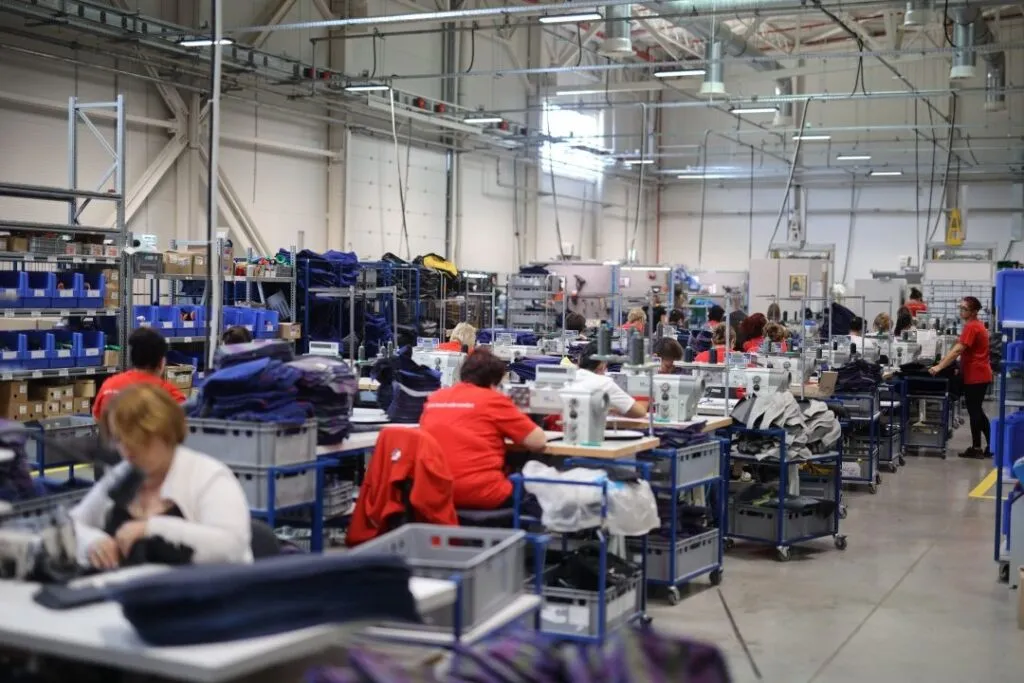
The Economic Chamber of Macedonia will submit draft amendments to the Law on Holidays to the Ministry of Economy and Labour, aimed, they say, at boosting productivity. The proposal has two parts. Instead of all religious holidays, workers would pick only some to celebrate and work through the rest. A state holiday that falls on a Sunday would no longer be moved to Monday.
Right now all citizens share 11 common days off. Orthodox believers get another five, Catholics three, Muslims one more, and members of the communities get one day each. The ministry's programme for 2026 lists 27 days off in total, though nobody uses all of them, since some apply only to particular groups. The proposal would indirectly bring the number of days off down to 13.
The chamber points to an analysis of 36 European economies with an average of 11 to 14 days off, and argues that once religious holidays are added, Macedonia ranks among the countries with the most holidays. Project manager Aneta Dimovska says the proposal does not abolish holidays but revises entitlements, and that workers often bridged the days together and headed off to neighbouring countries.
Two things are missing. Employers have done no analysis of how much companies lose while workers are home for the holidays, nor of how much they would earn if those workers were on the job. And the unions were not even consulted - Dimovska herself admitted the Federation of Trade Unions had not been informed.
The reply came straight away. "The Chamber of Commerce talks about cutting holidays, but you never hear them talk about paying!" wrote Slobodan Trendafilov, president of the Federation of Trade Unions of Macedonia. If Europe is the model for the number of holidays, will it also be the model for wages?
The latest 10 news from this category
Cheap fuel has a price, and now it is landing in the budget. Mickoski did not say where the cuts...
The budget already covers 41 percent of the Pension Fund, and by the mid-2040s there will be fewer contributors than...

Brussels forced OpenAI to release a watermark the company had ready back in 2024. Macedonia isn't in the EU, so...

Andreessen Horowitz is leading the round, and the box promises your data stays with you alone and that it will...

54 million Americans say they bought something after seeing a TikTok video. Now the platform wants zero pause for thought...

The prime minister says excise duties alone will leave around five billion denars missing, and with the reduced VAT on...

District heating prices from 1 August were calculated with gas at around 40 euros per megawatt-hour, and today it costs...
The Finance Ministry is celebrating the confirmed rating. The agency's report, however, also spells out what the highways driving that...

By executive order, artificial intelligence became "superintelligence", and the safety pledge tech companies signed at the White House binds no...

A nine-metre catamaran, a motor the company builds itself and off-the-shelf batteries. Hydrofoils have been around for more than a...
This site uses cookies - is that okay? Learn more
Be the first to know when Metla launches something new
Leave your email and we will write when there is a new guide or something new on Metla.