
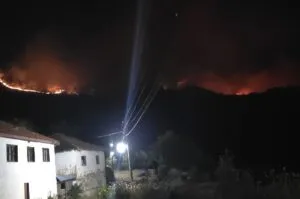
33 fires in 24 hours: a beech forest is burning in Kicevo, and near Kumanovo the flames reached the houses
24.08.2026


24.08.2026

24.08.2026
24.08.2026

24.08.2026
24.08.2026

24.08.2026
24.08.2026

23.08.2026
22.08.2026

24.08.2026

24.08.2026

23.08.2026

24.08.2026

24.08.2026

23.08.2026

24.08.2026

23.08.2026

22.08.2026

24.08.2026

24.08.2026

24.08.2026

24.08.2026

24.08.2026

23.08.2026

09.03.2026

27.02.2026

19.02.2026

24.08.2026
23.08.2026
23.08.2026

23.04.2026

23.04.2026

12.04.2026
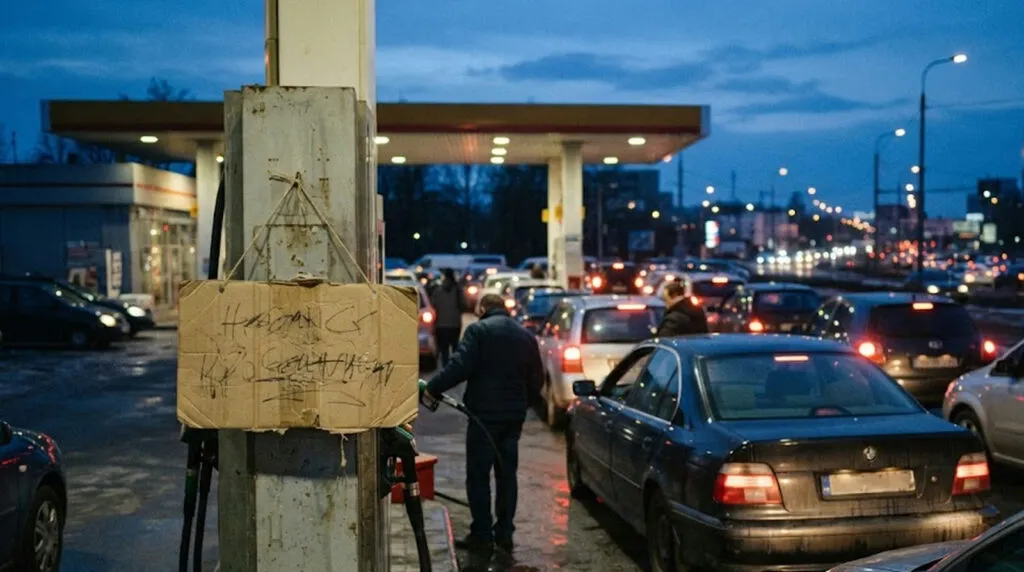
At least 30 Russian regions have run short of fuel. This is not the first crisis of its kind since Ukrainian drones began systematically hitting refineries, but it is the first to reach Moscow. Gazprom Neft and Tatneft have restricted sales in the capital itself - the place where until now the war was something you watched on television.
Queues in the south, waiting lists at the garages
In the Krasnodar region queues are forming at petrol stations. Igor Zakharchenko, an estate agent from Sochi, says the city looks like it did before the Olympics, with one difference - "there is no petrol in Sochi". Oleg Grigorenko, editor of the independent portal 7x, explains the problem has long stopped being personal uncertainty about whether you can get out of town: taxi firms, couriers and construction all report falling orders, because the entire supply chain hangs on fuel.
Nikolai Korshenevsky, an economist who left Russia over his opposition to the war, describes the second phase: "Cars will not start and need repairs. The waiting lists at garages are months long, even in Moscow." When fuel is bad or missing, the mechanics pay a bill that never shows up in the oil statistics.
The number that tells the story
Russian oil production has fallen from 11.5 million barrels a day in 2019 to under nine million now. Korshenevsky warns that if the trend continues it will drop to eight million - which in his view means a full economic crisis.
Vyacheslav Shiryaev, an economic analyst in exile, says imports are not a realistic option: you do not import 200,000 tonnes of fuel a day into a country under this level of isolation. And Igor Lipsits points out that the damaged refineries remain vulnerable to further strikes, so the authorities are already rationing - fuel goes first to the services that have to keep running.
Lipsits goes a step further with his comparison: fuel distribution is becoming a closed system, and the car a luxury. That is a sentence from the late 1980s, not from 2026.
What this forecast is worth
Shiryaev estimates that intensified Ukrainian strikes could end the war in a few weeks, by paralysing the railways and industry. With deadlines like that it is worth being cautious. This war has been running since 2022 and has seen plenty of predictions of a swift turn, from both sides, and the front line has stayed roughly where it was.
Something has changed, though. Until now Ukrainian strikes were a story about Russia's military industry; now they are a story about whether a Moscow commuter gets to work. The war that ran somewhere far away for years has finally started to be felt in people's own households - and that is the point at which any regime starts counting more seriously.
The latest 10 news from this category
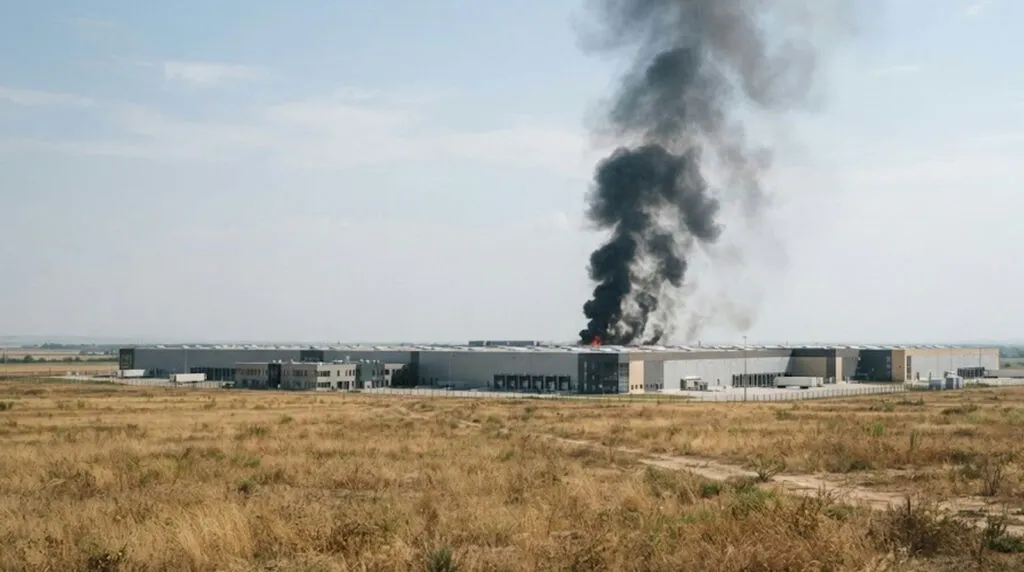
Five regions in three days, hundreds of workers evacuated and two burnt-out facilities of over 90,000 square metres each. Once...
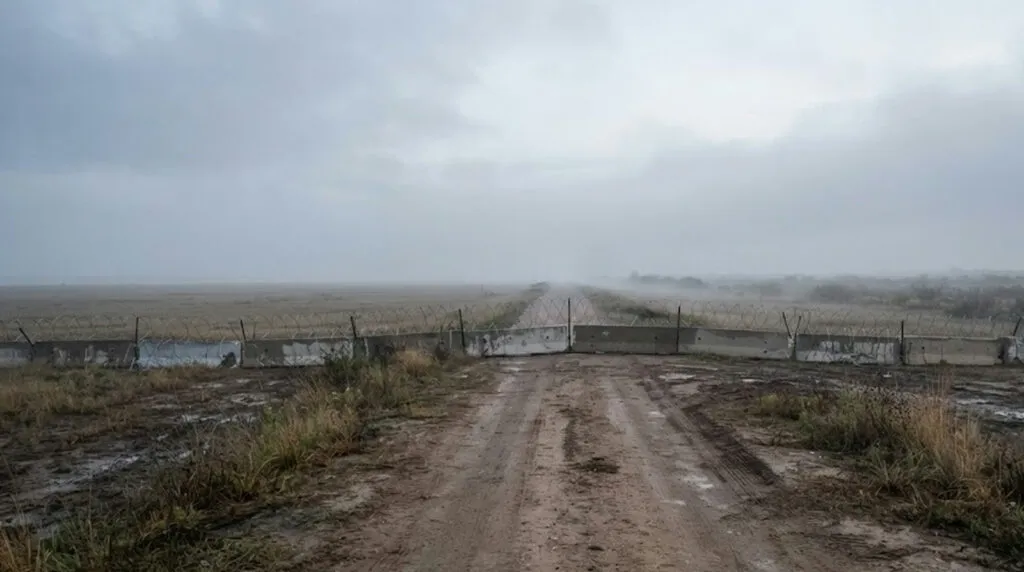
Mutual withdrawal, a buffer zone and a third party to run it. Everything is feasible except one thing - and...

Not an analysts' estimate but an admission from Kyiv itself. Funds earmarked for the second half of the year were...
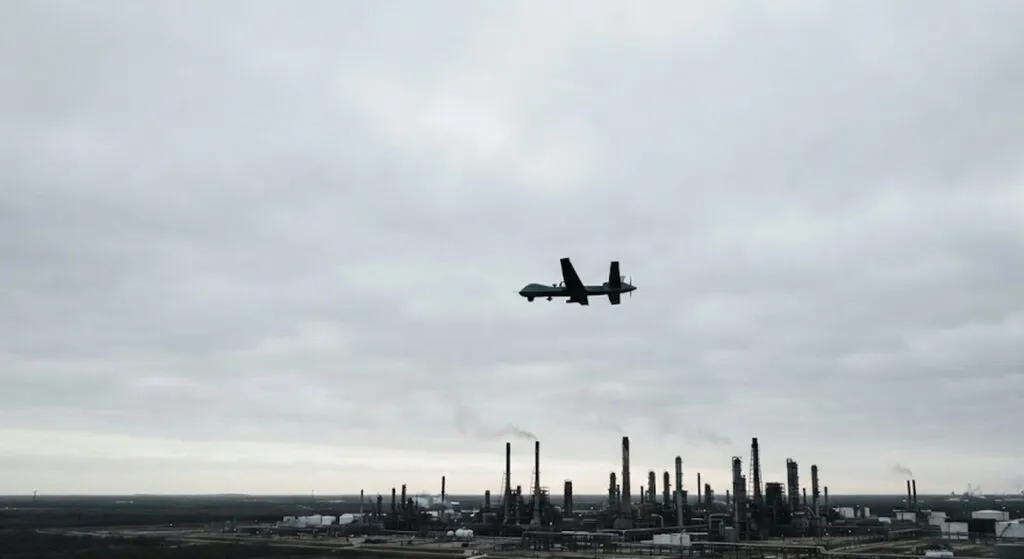
Moscow claims London is no longer just supplying weapons but taking part directly. And the Russian analyst who said it...

An old training aircraft chases a Russian drone, and the drone starts manoeuvring and gets away. The decoy has grown...
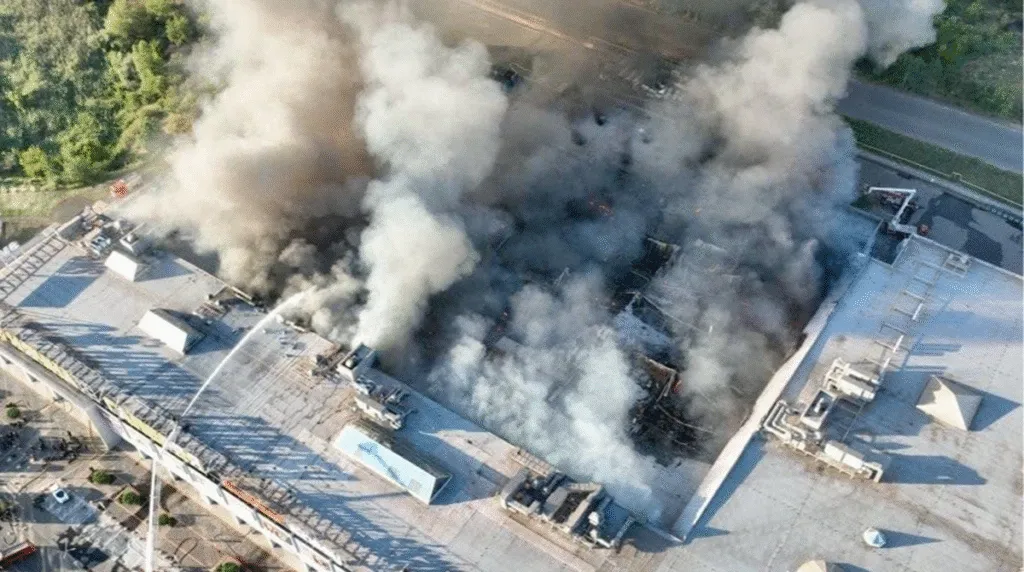
The first wave hit in the afternoon, when the centre was full. Half an hour later came the second -...
Ukraine asked for permission to strike up to 200 kilometres inside Russia. Behind the refusal sits a bigger number -...
Fighters, reconnaissance and electronic warfare aircraft over the Russian exclave - with Washington holding the controls, not Brussels. The question...
Zelensky said Russia attacked a crossing on the Moldovan border with drones. Three days earlier something had already exploded on...
A night missile strike on Kyiv and the surrounding region, warehouses and plants hit. The heaviest accusation did not come...
This site uses cookies - is that okay? Learn more
Be the first to know when Metla launches something new
Leave your email and we will write when there is a new guide or something new on Metla.
