Three of Four Sensors Were Dead: Skopje's Vodno Cable Car Ran Fifteen Years Without a Real Service
17.09.2026


17.09.2026

17.09.2026

17.09.2026

17.09.2026

17.09.2026

17.09.2026
17.09.2026
16.09.2026
15.09.2026
17.09.2026

17.09.2026
16.09.2026
17.09.2026

17.09.2026
17.09.2026
17.09.2026
16.09.2026
15.09.2026

17.09.2026

17.09.2026

17.09.2026
17.09.2026

17.09.2026

17.09.2026

09.03.2026

27.02.2026

19.02.2026

23.04.2026

23.04.2026

12.04.2026

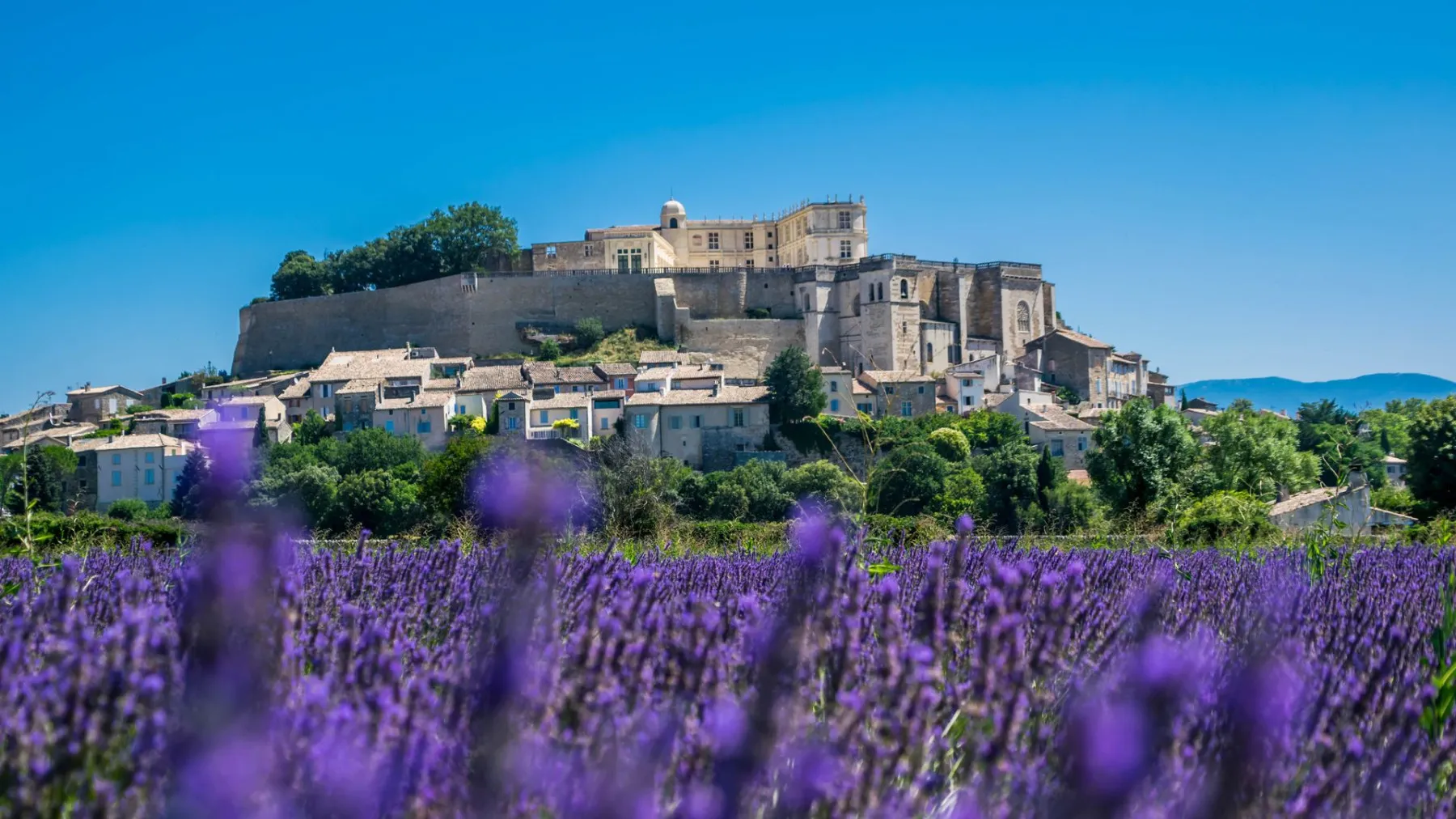
Everyone heading for Provence goes to Gordes, Roussillon or L'Isle-sur-la-Sorgue, and then wonders why a stranger's elbow made it into every photograph. Grignan is about 70 kilometres from Avignon, in the Drôme, and it is nearly empty. Not because there is nothing to see, but because nobody mentions it.
The village climbs a rocky hill, and at the top stands the largest Renaissance palace in south-east France. The powerful Adhémar family built it from the late 15th century onwards. There are three floors of fully furnished rooms, but the reason to make the climb is the terrace - a 360-degree panorama, the village below you, lavender fields all around and Mont Ventoux on the horizon. Advice from the regulars: save the terrace for late afternoon, when the light comes in sideways.
The woman who gave this village its place in literature
The Marquise de Sévigné entered Grignan's story when her daughter married Count François de Castellane Adhémar in 1669. The separation of mother and daughter produced one of the most famous correspondences in French literature - letters still read today. The Marquise died in that very palace, and her grave is in the family vault in the collegiate church of Saint-Sauveur. This year marks 400 years since her birth, and a new exhibition on the 17th century has opened in the palace.
Lavender has its own calendar and its own hierarchy
The fields bloom from mid-June to the end of July - so if you set off now, you are at the very end of the season. Locals distinguish two things a tourist sees as the same shade of purple: „lavande fine”, the noble variety that grows at altitude, and „lavandin”, the hybrid from the lower ground. There is a whole route connecting the surrounding villages - Valréas, Nyons, Sault - with distilleries where the essential oil is extracted. Domaine de Montine offers bicycle tours and picnics among the vines and the lavender.
Winter here smells of something else
From December to March it is black truffle season, the one they call the black diamond. Domaine de Cordis is a family estate dating to 1763, where visitors go out with the truffle dogs, Oulk and Oulis, through plantations of oak and cork oak. Owners Carole and Didier Chabert have a philosophy they call the „Truffle Concept” - the soil and the rhythm of nature first, the kitchen only after that. The estate has five rooms and one cottage, for sixteen people in total.
The things the village does not advertise
There is an avenue called the Paseo del Mail, built by Baron Louis Adhémar for a game that was a forerunner of croquet. And there is a „Temple of Water” - an elegant structure with sixteen Doric columns and a dome, inspired by the Petit Trianon at Versailles. What looks like an ancient shrine is in fact a washhouse. Somebody in the 19th century decided that the place where women did the laundry should look magnificent too.
The wine and the table
The AOC Grignan-les-Adhémar label covers the local wines, and the legendary Châteauneuf-du-Pape is less than an hour downstream along the Rhône. Maison Bouachon was founded in 1898 by a family that started out making barrels for local growers, and today offers sommelier-led tastings and workshops - from pairing with local cheeses to matching wine with Japanese teas. For food: Le Clair de la Plume has a Michelin star and a view of that same washhouse, while Le Bistro Chapouton is its more relaxed sibling with a Bib Gourmand.
Among the local produce, alongside the truffle, there is Picodon - a small goat's cheese from the Drôme - plus olive oil, aromatic herbs and lavender honey.
Getting there
Grignan sits halfway between Montélimar and Nyons. A car is close to mandatory. The nearest railway station is Montélimar, 25 kilometres away, while high-speed trains stop at Valence and Avignon, about an hour out. Marseille-Provence and Lyon-Saint-Exupéry airports are around two hours by car. From the Spanish border it is roughly a three-hour drive.
Provence without the crowds still exists. It just is not where everyone is looking.
The latest 10 news from this category

Of twenty-five new inscriptions, five are natural - and only one is in Europe. For the richest of them, the...
Fifty beaches, more than 120 villages and a trail France voted its favourite. Monet came for a few days and...
Restored carriages, a locomotive they call the Japanese Woman and a 28.95 euro return ticket. What it sells is not...
Two hundred and fifty tree species from every corner of the world, a monastery from 1628 and a palace that...
The same places cost more in August, look crowded and are experienced at half strength. The difference is made by...
The Beckhams have a place there, so do Kate Moss and Ellen DeGeneres. But the Cotswolds needs none of those...

Down on the coast the buses pass each other with centimetres to spare and all you see is people. Up...
Empty warehouses, low rents and one real estate developer. A model we know without flying to Florida.
Old tanners' and dyers' workshops, built directly over the river. From 10 to 13 September the town puts boats and...
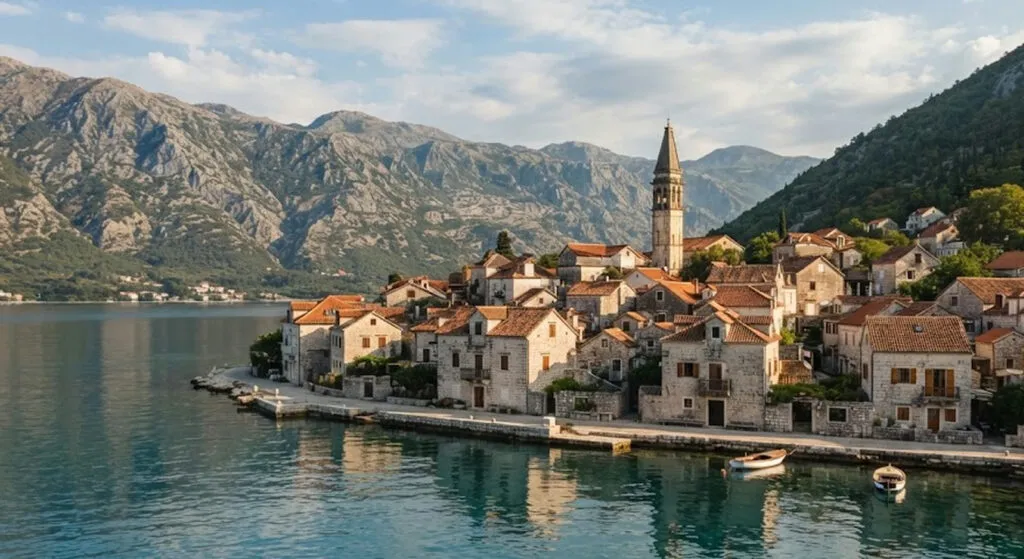
The Albanian Riviera, Montenegro, Sardinia, Lyon and the Algarve. The same weather as August, fewer people, and a bill that...
This site uses cookies - is that okay? Learn more
Be the first to know when Metla launches something new
Leave your email and we will write when there is a new guide or something new on Metla.