

Two Schoolyard Assaults Reported in a Single Day: the Police Promised Measures, the Education System Said Nothing
19.09.2026


19.09.2026

19.09.2026

19.09.2026

19.09.2026

19.09.2026

19.09.2026

19.09.2026

18.09.2026

17.09.2026
19.09.2026

19.09.2026

18.09.2026

19.09.2026

19.09.2026

19.09.2026

19.09.2026

18.09.2026

17.09.2026

19.09.2026

19.09.2026

19.09.2026

19.09.2026

19.09.2026
18.09.2026

09.03.2026

27.02.2026

19.02.2026

19.09.2026

18.09.2026

17.09.2026

23.04.2026

23.04.2026

12.04.2026

September is the month when pharmacy shelves empty of magnesium. Back to work, back to school, a schedule that suddenly has forty obligations - and somewhere along that road someone will tell you that you are short on magnesium. Dietitian and nutritionist Vanesa León says this is not merely a fad, but that there is one detail everybody skips: not every type of magnesium does the same job.
The logic behind the increased need is simple and has nothing to do with trends. During periods of heightened stress, the body uses more magnesium than standard dietary recommendations account for. On top of that, in a constant state of alertness and tension the body loses more magnesium through urine. So demand rises from two directions at once, while intake stays the same.
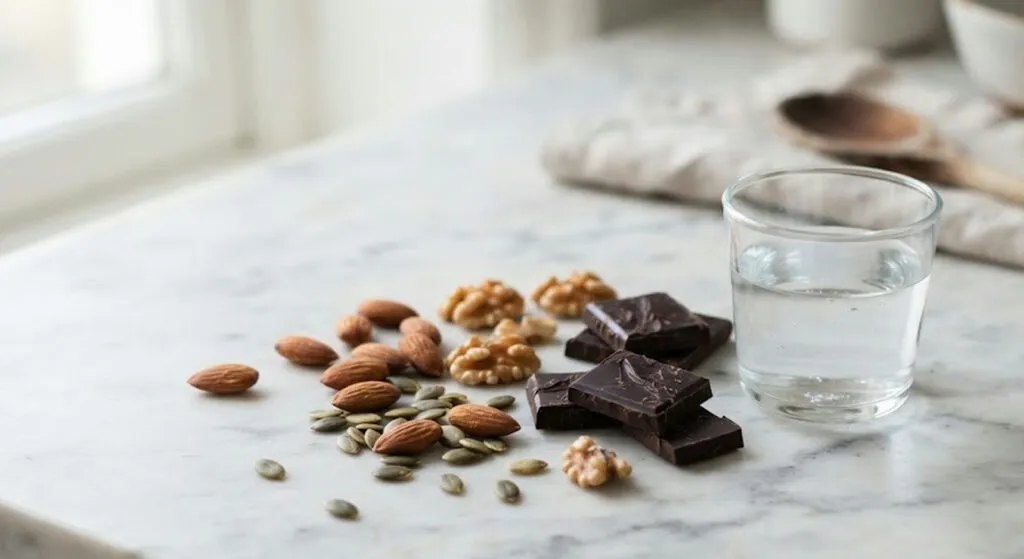
The first step, she says, is not a bottle but a plate. Seeds and nuts are among the richest sources, and this is where the old fear comes in - calories. Sprinkling seeds on food is not a problem, and turning down nuts because "they are fatty" means you have thrown away one of the most accessible sources. Dark chocolate with at least 85 per cent cocoa also carries this mineral. Not many people think of it as food, but it is.
If you do go for a supplement, the type is what decides. Bisglycinate is for coping with stress and regulating the nervous system, especially combined with B6. Malate or citrate is for people with high physical activity and regular training. Carbonate is for constipation and regulating bowel function. Three different purposes, three different compounds - and in the pharmacy all three sit on the same shelf under the same name.
The time frame is the part most often ignored. At least one month, at most three. Not permanently, not "until the box runs out", not for years. Constant supplementation without a reason is not caution, it is a habit nobody has questioned.
Before the question of a supplement even comes up, León recommends a wider look: how much and how well you sleep, how you eat, how much you move and how long the stressful period lasts. If the answer to any of those is bad, the supplement is a patch, not a solution. And when symptoms persist, when medication is involved or there is an existing condition - the conversation belongs with a doctor, not with a pharmacy shelf.
The latest 10 news from this category

An Italian guide, a gala in Naples, first place for a London restaurant. Spain gets six entries - but only...

When a muscle contracts, it releases molecules that directly feed brain plasticity. The industry sells you kilograms, while the strongest...

It is caught with hook and line, not with nets, and you can taste that on the plate. The three...

A couples therapist explains why your partner has not changed - the inhibition of critical judgement simply stopped. And why...

Home-made chicken curry fails at the same point for everyone. The difference is made by one step that has nothing...

The colour can come from malt or caramelised sugar, and the seeds are stuck on top. A nutritionist explained what...

Jose Andres has lived in America for over thirty years, and when asked for his favourite American dish he named...

Two in the morning, two around midday, two in the evening. Not one requires an up-front investment - which makes...

A kilo of courgettes, mint, garlic and eighty millilitres of vinegar. Not one expensive ingredient - and the water you...

It is not the message that drains you, but the blank it opens until you read it. Response time has...
This site uses cookies - is that okay? Learn more
Be the first to know when Metla launches something new
Leave your email and we will write when there is a new guide or something new on Metla.
