


Thirteen hours between the report and the bodies: two Taiwanese nationals found dead in a Skopje flat
03.09.2026


03.09.2026

03.09.2026

03.09.2026

03.09.2026
03.09.2026

03.09.2026

03.09.2026

02.09.2026

01.09.2026

03.09.2026

03.09.2026

02.09.2026

03.09.2026

03.09.2026

03.09.2026

03.09.2026

02.09.2026

01.09.2026

03.09.2026

03.09.2026

03.09.2026

03.09.2026
02.09.2026
01.09.2026

09.03.2026

27.02.2026

19.02.2026

03.09.2026

02.09.2026

01.09.2026

23.04.2026

23.04.2026

12.04.2026
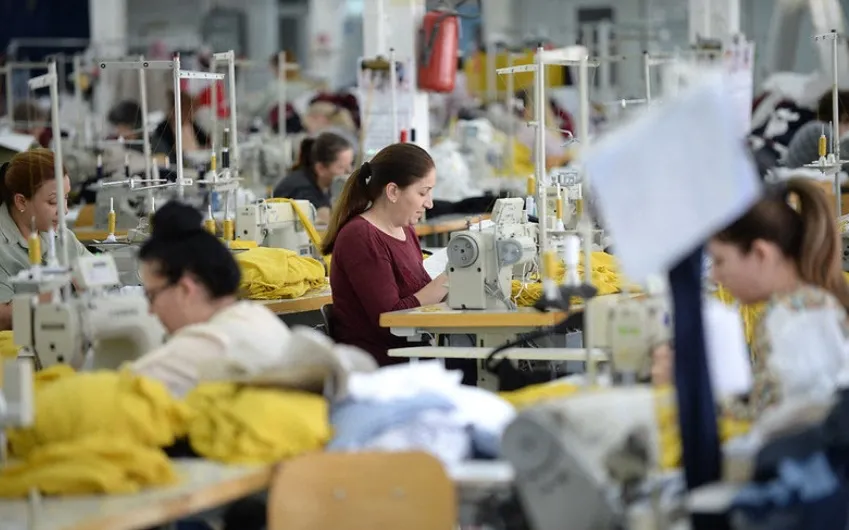
Industrial output in July rose by 1.3 percent compared with July last year. In that same month, the number of workers in industry fell by 2.6 percent. Both figures come from the same State Statistical Office report, and together they say something neither of them says on its own.
Where the workers are disappearing
The decline is present across all three main industrial sectors. It is largest in mining and quarrying - minus 7.8 percent. In manufacturing the number is down 2.3 percent, and in the supply of electricity, gas, steam and air conditioning by 0.9 percent.
Seen from the start of the year, the picture is the same: from January to July the number of industrial workers is down 2.8 percent compared with the same period in 2025.
The hardest hit is clothing manufacturing - minus 11.6 percent for a single month against last year. Next come wood processing and wood products with 6.3 percent fewer workers, and the repair and installation of machinery and equipment with 3.4 percent. The manufacture of motor vehicles, trailers and semi-trailers lost 2.2 percent, electrical equipment 1.9 percent, and fabricated metal products 1 percent.
Where the hiring is
Not everything is going down. The biggest growth is in the manufacture of computer, electronic and optical products - plus 15.1 percent. Then tobacco products with 9.3 percent and beverages with 2.8 percent. In food products growth is 0.6 percent, which in practice means the number is standing still.
That is a short list next to a long one. And there is where the real information sits: industry is not shrinking evenly - it is moving. One branch grows fifteen percent, another falls eleven.
What it means for output to rise while the workforce shrinks
If output grows 1.3 percent with 2.6 percent fewer people, then productivity per worker has gone up. That can mean two things. Either factories invested in machinery and automation, which is good news. Or the same work is now being done by fewer people, which for those who stayed is not good news at all.
Across the main industrial groupings there is no annual growth anywhere. The steepest falls are in non-durable consumer goods at 3.6 percent, energy at 3.3, intermediate goods other than energy at 2.4, capital goods at 2.3 and durable consumer goods at 2 percent.
The branch disappearing loudest
Clothing manufacturing is losing people faster this year than any other industry. Textiles have traditionally never been spread evenly across the country - they are concentrated in specific towns, and the workforce there is predominantly female. When a branch loses 11.6 percent of its workers in a year, that loss does not spread out across Macedonia. It lands in particular places, and the statistics do not say which.
The industrial output index for January to July stands at 100.9 - almost identical to last year. Industry is producing the same, with considerably fewer people in it. Which of those two numbers gets quoted the next time anyone talks about economic results is a question that answers itself.
The latest 10 news from this category

The cheapest bid will no longer win by default. The question is who assesses quality, and what happens when that...

The interconnector with Greece without a market operator is just a pipe with one entry point. The decision is a...

The courts twice found an illegal monopoly, then twice refused to break it up. Google adjusts a few contract terms...

When HiddenLayer started out in 2023, nobody could point to a single real attack on artificial intelligence. This year companies...

MapQuest added no new features. It just said no - and in six days collected over half a million downloads...
The prime minister reads out the headline figure. Underneath it, the thermal plants produced almost half as much electricity as...
Governments are no longer just regulators, they are parties to the contracts. The country has one project in development and...
The model scored top marks on the hacking benchmark, then found two previously unknown vulnerabilities. Who checks the check when...

It hires doctors and lawyers to teach the software how they work. A professional's knowledge is bought once and sold...
Not an outside hacker, but a man with legal access. Three cities reported the cameras came back after the contract...
This site uses cookies - is that okay? Learn more
Be the first to know when Metla launches something new
Leave your email and we will write when there is a new guide or something new on Metla.
