

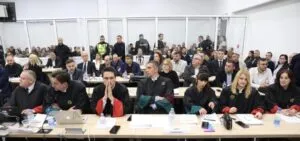
Experts on the Puls fire: the ceiling foam released cyanide as it burned, and the inspector could and should have shut the place down
02.09.2026


02.09.2026
02.09.2026
02.09.2026
02.09.2026
02.09.2026
02.09.2026
02.09.2026
01.09.2026
31.08.2026

02.09.2026

02.09.2026

01.09.2026

02.09.2026

02.09.2026

02.09.2026

02.09.2026

01.09.2026

31.08.2026

02.09.2026

02.09.2026

02.09.2026

02.09.2026
01.09.2026
31.08.2026

09.03.2026

27.02.2026

19.02.2026

02.09.2026

01.09.2026

01.09.2026

23.04.2026

23.04.2026

12.04.2026
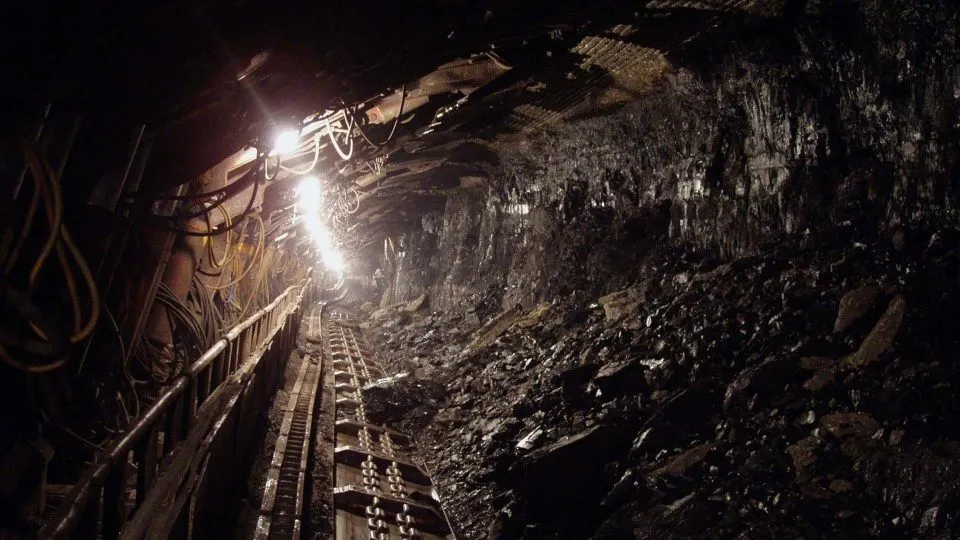
The world no longer buys just ore. It buys supply-chain security - and governments have become direct participants in that trade, not merely regulators issuing permits.
That is the shift happening right now. In the United States, after the Vault project was announced in February - a strategic state reserve of critical minerals backed by 12 billion dollars - the administration said it had signed or approved around 160 minerals-related deals worth close to 40 billion dollars since January 2025, according to Fastmarkets data.
Lawyer Rebecca Seidl Ingelsby describes the new rule like this: "The government is not acting only as a lender. Governments are increasingly becoming participants in the deals in the projects. The government is no longer just supporting these deals, the government is now at the table as a party."
Where Macedonia stands
The country has two visible projects in this field. One is the copper at Ilovica-Shtuka. According to the investor, the mine's lifespan would be around 23 years, with economic effects for the state and for Strumica, Bosilovo and Novo Selo. The project has spent a long stretch in various stages of development.
The second is the geological survey for antimony north of Kriva Palanka. Its funding was secured from the US Department of Energy, through the Strategic Dialogue between the two countries.
That is all of it. One project in development and one survey.
The figure that shows the gap
According to estimates by domestic institutions, the country's mining sector generates over 250 million euros in annual production value. That is not a small number in itself.
But it looks different across the region. Serbia earns 3.5 billion euros a year from mining. Bulgaria 2.2 billion. Greece, which has begun opening new capacity, around 1.2 billion. Albania, mainly through chrome, brings in around 500 million euros.
Which means the neighbour to the north takes fourteen times more from the same type of resource. And this at a time when the European Commission is announcing that the next seven-year budget will fund independence from foreign powers, while Ursula von der Leyen says openly that the Union depends on China for over 80 percent of many critical raw materials and 90 percent for some rare earths.
Copper does not come out of the ground with a press statement
Demand for copper is rising because without it there is no electrification, no grid, no batteries. Antimony has entered the strategies for defence systems and semiconductors.
Developing a mining project does not fit into a single term of office. From geological surveys, through studies and documentation, to infrastructure and production, years go by. As Seidl Ingelsby puts it, the constraint is no longer political: "Now we get to the problem of physics, not politics. You cannot expect a magnet factory to be up and running in eleven months."
If that physics applies even where 40 billion dollars sit on the table, then time here is more expensive still. The question is not whether the country has geological potential - that has been established. The question is how much of it turns into investment while the world is still handing out contracts, and who makes those decisions while everyone waits.
The latest 10 news from this category
The prime minister reads out the headline figure. Underneath it, the thermal plants produced almost half as much electricity as...
The model scored top marks on the hacking benchmark, then found two previously unknown vulnerabilities. Who checks the check when...

It hires doctors and lawyers to teach the software how they work. A professional's knowledge is bought once and sold...
Not an outside hacker, but a man with legal access. Three cities reported the cameras came back after the contract...
The empty flats are where there is no work. The buyers are where there are no flats. That is why...
The new prices apply from midnight. The regulator says there is an average cut of 2.06 percent - the word...
For every animal killed by the disease there are almost 37 the state killed to stop it. The veterinary agency's...

More than 400 former Apple employees now work at OpenAI. One of them handed back his old MacBook - and...
The company lost 97 percent of its value and 93 percent of its staff. The founder is putting in 5...

A second-price auction in which the winner pays their full bid in 80 percent of cases. The federal commission and...
This site uses cookies - is that okay? Learn more
Be the first to know when Metla launches something new
Leave your email and we will write when there is a new guide or something new on Metla.
