


Thirteen hours between the report and the bodies: two Taiwanese nationals found dead in a Skopje flat
03.09.2026


03.09.2026
03.09.2026

03.09.2026

03.09.2026

03.09.2026
03.09.2026

03.09.2026

02.09.2026

01.09.2026

03.09.2026

03.09.2026

02.09.2026

03.09.2026

03.09.2026

03.09.2026

03.09.2026

02.09.2026

01.09.2026

03.09.2026

03.09.2026

03.09.2026

03.09.2026
02.09.2026
01.09.2026

09.03.2026

27.02.2026

19.02.2026

03.09.2026

02.09.2026

01.09.2026

23.04.2026

23.04.2026

12.04.2026

The government has adopted the bill amending the Law on Public Procurement. Among its provisions is one that goes straight at the oldest ailment of Macedonian tendering: institutions will no longer automatically pick the lowest price.
The criterion of "best value for money" becomes mandatory when selecting the most favourable bid. That means the assessment must take in the value, the quality and the long-term justification of a bid - not just the figure at the bottom of the calculation.
Why this was a problem in the first place
The rule "the lowest price wins" sounds like protection against corruption. In practice it is a mechanism that produces two things: bids priced below what the work actually costs in order to win the tender, and then annexes, extended deadlines and add-ons that bring the price back up to where it was. The result is a building, a piece of software or a service that costs more than the most expensive initial bid would have - just spread across more documents.
Anyone who wants to see what that looks like in numbers need only check how many Macedonian infrastructure projects finished at the sum originally contracted.
The other changes
There are plans to upgrade the electronic marketplace for low-value procurement, with the aim of wider use and more competition between economic operators - a measure planned for 2026. The price-quality criterion is an activity under the Reform Agenda for 2027.
The remit of the Public Procurement Bureau is also being widened in the area of digital tools for monitoring procedures, identifying risks and preventing possible abuses and corrupt practices. A legal basis is being created for web services and automatic data exchange between institutions.
Instead of the current periodic recertification with a repeat exam, a system of continuous professional development is being introduced for procurement officers.
Where the difference between a law and a change lies
All these measures stem from the Reform Agenda and the EU Growth Plan for the Western Balkans, which means they are an obligation rather than an initiative. That does not make them bad - it makes them checkable, since the EU tracks the deadlines.
But there is a point at which the law stops. A digital tool that "identifies risks" produces a report; the report goes to somebody who decides whether to act on it. The State Commission for the Prevention of Corruption already has cases sitting open while contracts keep being signed. No new web service solves that.
"Best value for money" is likewise a criterion that somebody assesses. Who assesses quality, by what yardstick, and what happens when the assessment is disputed - those are the questions on which it will become clear whether the law works. Until then we have a better text. Whether we have better procurement will be known when the first tender is annulled because the cheapest bid was the worst one.
The latest 10 news from this category

Clothing manufacturing lost 11.6 percent of its workers in a year. The computer industry gained 15.1 percent.
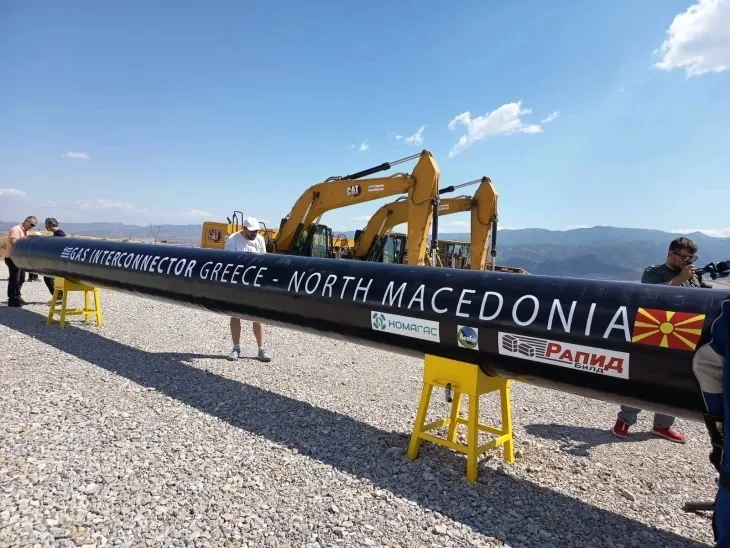
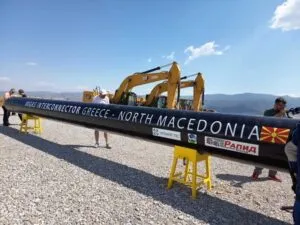
The interconnector with Greece without a market operator is just a pipe with one entry point. The decision is a...

The courts twice found an illegal monopoly, then twice refused to break it up. Google adjusts a few contract terms...

When HiddenLayer started out in 2023, nobody could point to a single real attack on artificial intelligence. This year companies...

MapQuest added no new features. It just said no - and in six days collected over half a million downloads...

The prime minister reads out the headline figure. Underneath it, the thermal plants produced almost half as much electricity as...
Governments are no longer just regulators, they are parties to the contracts. The country has one project in development and...
The model scored top marks on the hacking benchmark, then found two previously unknown vulnerabilities. Who checks the check when...

It hires doctors and lawyers to teach the software how they work. A professional's knowledge is bought once and sold...
Not an outside hacker, but a man with legal access. Three cities reported the cameras came back after the contract...
This site uses cookies - is that okay? Learn more
Be the first to know when Metla launches something new
Leave your email and we will write when there is a new guide or something new on Metla.
