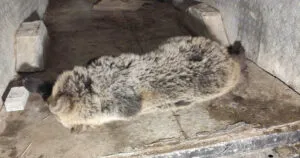
Bear cub killed on the Skopje-Tetovo motorway: the fence is a legal obligation, while the rescue team exists only in a Viber group
25.10.2026


25.10.2026
25.10.2026
25.10.2026
25.10.2026
25.10.2026
25.10.2026
25.10.2026
25.10.2026

25.10.2026

25.10.2026

25.10.2026
24.10.2026
25.10.2026

25.10.2026

25.10.2026
25.10.2026

24.10.2026

23.10.2026

25.10.2026

25.10.2026
25.10.2026
25.10.2026

25.10.2026

25.10.2026

25.10.2026
25.10.2026
24.10.2026
24.10.2026
22.10.2026
20.10.2026

23.04.2026

23.04.2026

12.04.2026

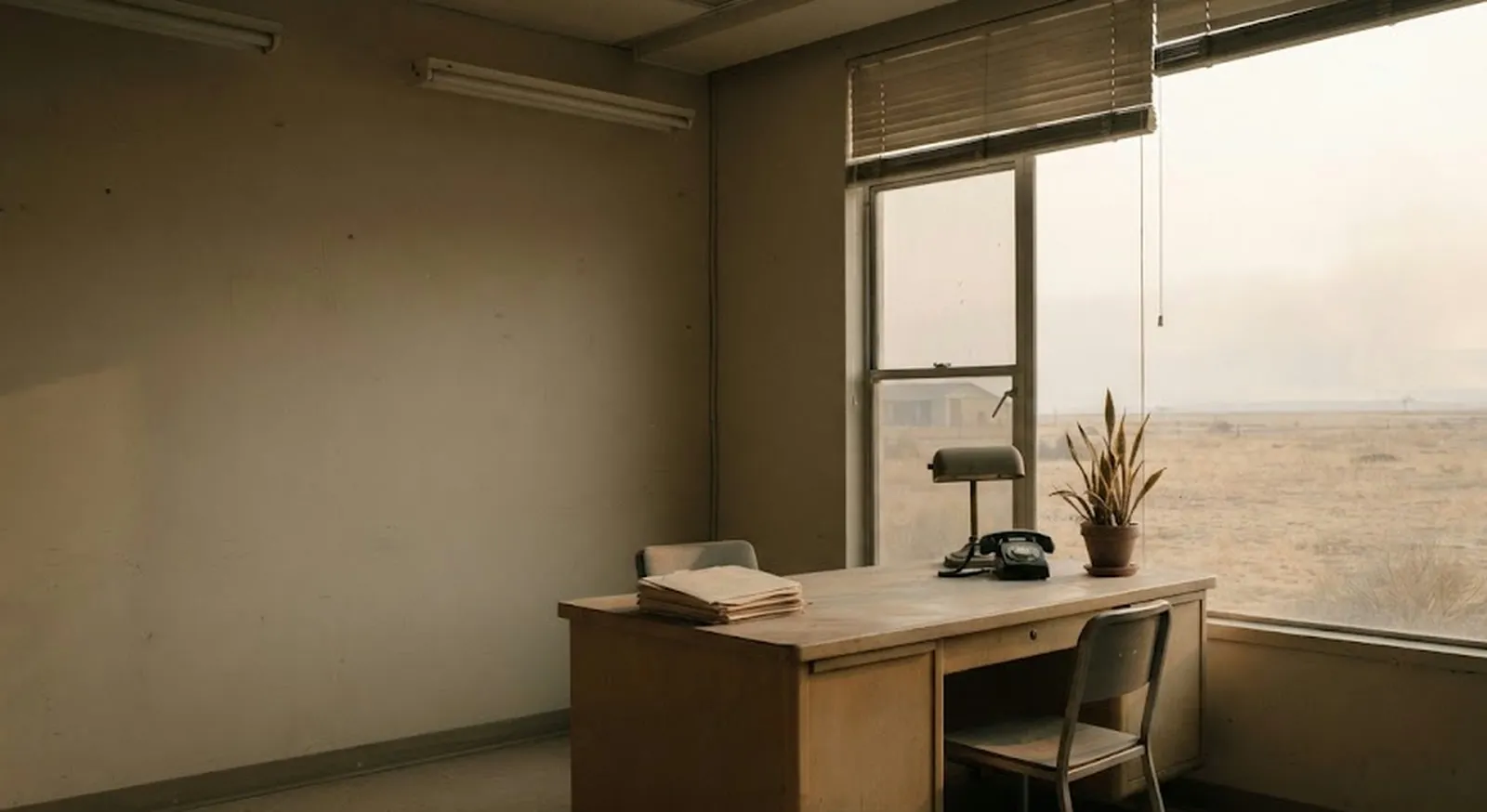
August closed out the summer with some sixty days in which fire was the main story. And almost every time somebody named the source, the answer was the same: someone lit it. Near Bitola, after thirty-three hours of firefighting in Makovo, Graešnica, Ivanjevci and Lozani, the firefighters were not talking about drought - they were talking about somebody's hand. On Kitka, the head of the Protection and Rescue Directorate said a group was reigniting the same fire daily, and someone waited for the crews to leave, then lit it again.
The rest of the month was arithmetic of exhaustion. Fifty-two fires in twenty-four hours, three air tractors for the entire country. Twenty kilometres of fire line in Mariovo, where the firefighting was also slowed by unexploded shells from the First World War. Only at Čanište did the Army deploy preventively for the first time this summer - before the disaster, not after it. And Kumanovo spent an entire weekend putting out other municipalities' fires, because its neighbours do not contribute a single denar toward the fire service. When the fire swallowed the Štip - Kočani road, rain put it out. Not the system.
West Nile fever entered August with thirteen cases and left it with fifty. Between those two numbers sits the week that brought twelve new cases, when until then we had been seeing fewer than one a week. Nearly four times Italy's rate per capita, and six dead in a single season against five in the previous fourteen years.
The spraying had been running since May. The coordination meeting was held on 19 August. In Resen, spraying began only after an infected raven died in the town park - not before. And when the debate finally started, it collapsed into a calendar dispute: the city counts treatments since 7 May, the opposition counts patients. Nobody counts what actually changed on the ground after each round. Aerodrom is under a declared epidemic and carried out no emergency spraying - and that now sits on an official map.
Gostivar's water crisis was already old when August began. Twenty-two days of faecal contamination in the water supply, over four thousand reported illnesses and three people detained. The crisis HQ worked flawlessly - precisely because routine monitoring had not worked at all. The bills, naturally, arrived on schedule: 7.2 million euros for a system that does not work, and the ombudsman had to request that residents be released from paying them.
The end of the crisis was announced with a gesture: the crisis HQ drank tap water in front of the cameras, but nobody ever saw a signed finding that somebody stands behind. And that was not the only tap with an open question. In Demir Kapija, two state laboratories tested the same water and returned opposite results - the Skopje institute says it fails the standard, the Veles centre says it passes. The ban was the right call. But if the problem lies in how samples are taken, then the question stopped being about Demir Kapija a long time ago. In Debar, meanwhile, the source is among the highest quality in Europe and the reservoir holds enough for four times the population, yet four neighbourhoods go without water for hours.
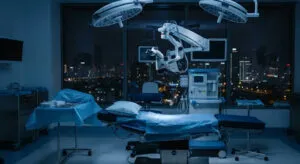
One machine for the whole country, out of service for months. An audit warned about it last year, and the institute admitted the pump oil had not been changed as required. Meanwhile cancer patients pay 1,300 euros privately. The clinic says continuity was never broken, the patients say the opposite - both cannot be true.
The same month, thousands of police employees administratively vanished from the health system over a single unrecorded payment. Officers were turned away from chemotherapy. The problem had already happened in June. And when the City of Skopje announced support for cancer patients, the statement omitted the three figures that exist in the payment order itself: how many were paid, how much each received, and the total.
The modular hospitals investigation, opened two days after the Tetovo fire, ended with a finding of insufficient evidence. A closed case is not an acquittal - but for fourteen families the difference is purely theoretical.
In the same month, the judiciary also showed it can move. The State Lottery trial opened with eight defendants and 231 pieces of evidence, while the lottery's director has been a fugitive for two years and the maximum sentence is five. At the Puls trial, four hours of cross-examination led to a single sentence from the Construction Law: the change-of-use application had to be filed by the owner, not the tenant. And to a second one - a building inspector's duty does not end once the building is up. And within the same system, Struga said no and Bitola said yes to the same request, for the same defendant, six weeks apart.
The quietest story of the month was also the heaviest. The children starting school this year were born when over nineteen thousand were still being born annually - so the birth-rate decline does not explain the full gap of 4,500. Three hundred fewer classes, twenty-six villages with no school. The minister says they "managed" to do it, but an empty desk is not policy - it is a consequence.
In Štip the maths is sharper still: a decade ago the town had over 10,000 pupils, this year it has 5,569. The first-grade desk is the most precise demographic instrument we own, and nobody wants to read it. Municipalities respond the way they know how - with backpacks and cash grants ranging from five to ten thousand denars depending on your postcode. A backpack is not a reason to stay.
August's two statistics are both accurate and never meet. The minimum wage grew faster than anywhere in Europe - 6.9 percent - and still comes to 624 euros, behind Serbia and Montenegro, while Luxembourg sits at 2,771. The growth is real, but it is growth on a low base. The basket and the wage describe different things and are never set side by side.
At the pump, the same global market produced a very different result: diesel here rose 42.8 percent, in Kosovo 21.3, in Albania 20.3, in Serbia 15. And inflation at 2.3 percent measures speed, not distance - what cost a thousand denars in 2022 now costs thirteen hundred. By the time bread reached 126 denars, it was no longer news.
One thing worked in August, and it deserves to be named. 33,722 fines nobody ever collected became the first test of whether Safe City applies to everyone - and the foreign plate stopped being an exit. Day one brought queues, arguments and a police intervention, but the problem was not the rule. Then a Dutchman in a Porsche doing 168 in an 80 zone was stopped on his way out of the country - not by an officer on the road, but by a system that reads plates and remembers.
The difference is that a camera does not wait for a complaint, does not require a crisis HQ, and is not maintained by holding a meeting. It works because it is switched on. That is a low bar for praise, and it still clears most of the other stories in this month.
Beyond the border, August again produced stories whose substance was the time that went missing. A drone carrying explosives struck a Ukrainian aircraft in Germany, and nobody noticed for four hours; the Semtex device was found by an airport van driver, not by a security service. Another drone came down in a sunflower field a kilometre from a compressor station in Bulgaria - and if it was not deliberate, that is the worse news, because it means such an aircraft can cross two airspaces unnoticed.
Out of the same drought that was squeezing us at home, electricity passed 700 euros per megawatt-hour: Paks cut output by ninety percent, Cernavodă by fifty, Đerdap 1 runs at a fifth of capacity. The same heat that makes electricity essential also makes it unavailable. And when Moderna's shares doubled in a day on a melanoma vaccine tailored to each patient, the question for this region was never whether the drug exists, but how many years late it will arrive.
For all of it, August was also a holiday. At Bogorodica everyone set off early to beat the queue, and that was exactly when the queue was longest - repeating every day of the week. The return leg measured forty minutes at Tabanovce and thirty at Bogorodica, while 28 new air routes from Skopje and Ohrid lengthened the list - without saying how many of them are subsidised.
The end of the month brought 39 degrees, tropical nights and sand out of Africa, with advice to avoid being outdoors. Advice that sounds rather different if you work on a building site. The whole summer, in fact, played out in the gap between a document and its execution. We knew where the landfills burn, we knew the mosquitoes were coming, we knew which water systems have nobody to disinfect them. Knowing was never the problem.
The latest 3 news from this category
A month in which inspection reports and driving licences both had a price, and the celebration cost "zero denars from...
Not one of July's stories happened outside the procedure. Every one had a document, a signature and a deadline -...
A month in which nearly every domestic story ended with the same sentence - "it's all by the book" -...
This site uses cookies - is that okay? Learn more
Be the first to know when Metla launches something new
Leave your email and we will write when there is a new guide or something new on Metla.