


Experts on the Puls fire: the ceiling foam released cyanide as it burned, and the inspector could and should have shut the place down
02.09.2026


02.09.2026

02.09.2026

02.09.2026
02.09.2026
02.09.2026

02.09.2026

02.09.2026

01.09.2026

31.08.2026

02.09.2026

02.09.2026

01.09.2026

02.09.2026

02.09.2026

02.09.2026

02.09.2026

01.09.2026

31.08.2026

02.09.2026

02.09.2026

02.09.2026

02.09.2026
01.09.2026
31.08.2026

09.03.2026

27.02.2026

19.02.2026

02.09.2026

01.09.2026

01.09.2026

23.04.2026

23.04.2026

12.04.2026
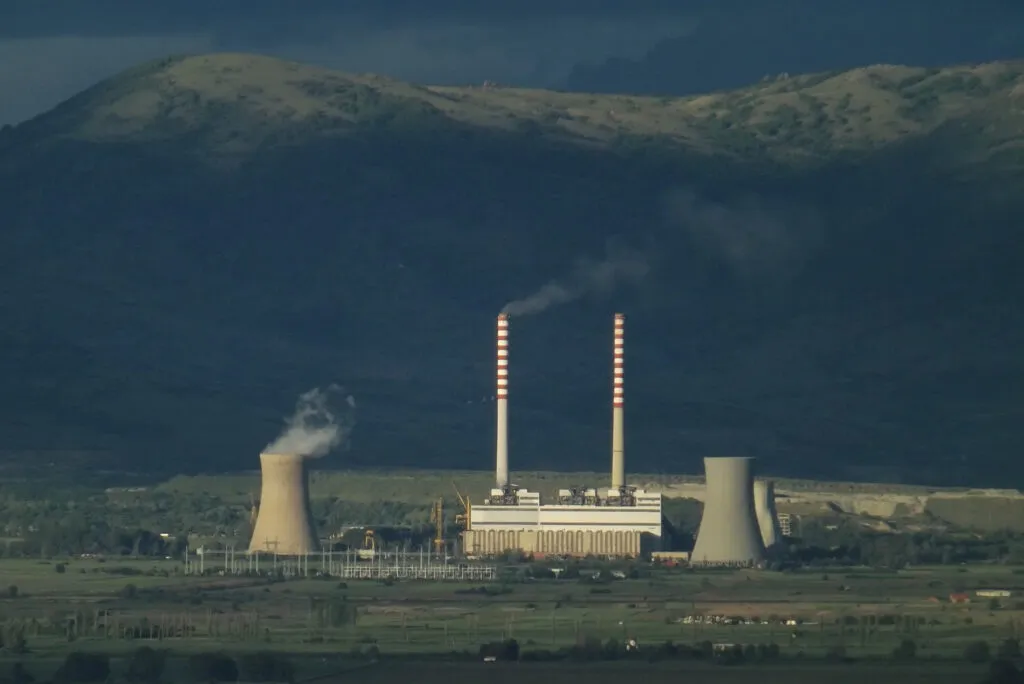
Industrial production in July 2026 was 1.3 percent higher than in the same month last year. Prime Minister Hristijan Mickoski took the news as confirmation: "Industrial production under these conditions is an exceptionally significant indicator, and its growth, particularly in the second quarter which is above 3%, I think somewhere around 3.4%, but what is even more encouraging is the fact that manufacturing is growing."
The sentence is accurate. The problem is that plus 1.3 percent is a sum, and underneath the sum sit figures pointing in completely opposite directions.
What is rising and what is sinking
According to the State Statistical Office, manufacturing did indeed grow - by 3.4 percent. But at the same time mining fell by 5.9 percent, and the supply of electricity, gas, steam and air conditioning by 19.5 percent.
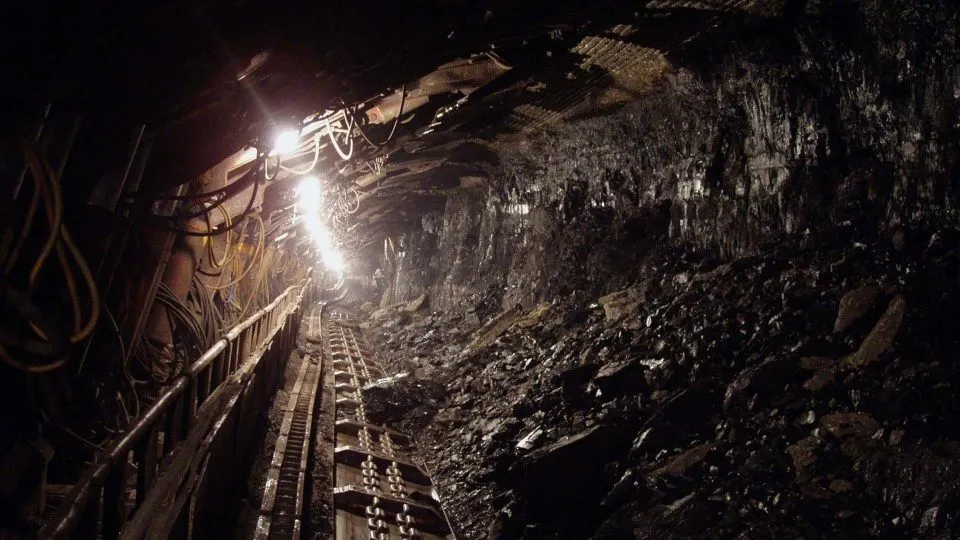
Across the main industrial groupings the gap is wider still. Intermediate goods excluding energy rose by 9.2 percent. Energy fell by 22.2 percent. Extraction of coal and lignite was down by 38.2 percent.
In other words, manufacturing is pulling upwards hard enough to cover the double-digit falls beneath it, and the index ends up in the black.
Where the real drop is
The MEPSO report gives a more concrete picture. In July, plants connected to the transmission grid produced 283.9 gigawatt-hours, against 409.9 gigawatt-hours in July 2025. That is a fall of around 31 percent.
The biggest gap comes from the thermal plants - from 281.3 down to 144.6 gigawatt-hours, roughly 49 percent less. Hydro plants, by contrast, increased their output by around 16 percent.
It matters to say what these figures do not prove. The available reports do not allow you to establish how much of the drop is due to scheduled overhauls, how much to lower demand, how much to the availability of the thermal units or to coal supply. Nor do they show the country ran short of electricity - according to MEMO, in July domestic production covered 100 percent of net consumption.
The year is not a line going up
What gets mentioned least is the trend. In January industrial production fell by 6.6 percent, in February by 4.2. In March it rose by 3, in April by 7.6. In May another drop of 2 percent, in June growth of 6.5, in July growth slowed to 1.3.
The overall result for January to July is growth of 0.9 percent. Less than one percent across seven months.
That is the figure that says the most, and it did not appear in a single statement. "The situation has finally stabilised" sounds stronger than "nought point nine."
Ahead of the heating season, the questions that ask themselves are narrow and concrete: which thermal units were running in July, which overhauls are finished, what the coal reserves and output are, and whether additional volumes of electricity have been contracted. The answers to those are worth more than any quarterly percentage.
The latest 10 news from this category
Governments are no longer just regulators, they are parties to the contracts. The country has one project in development and...
The model scored top marks on the hacking benchmark, then found two previously unknown vulnerabilities. Who checks the check when...

It hires doctors and lawyers to teach the software how they work. A professional's knowledge is bought once and sold...
Not an outside hacker, but a man with legal access. Three cities reported the cameras came back after the contract...

The empty flats are where there is no work. The buyers are where there are no flats. That is why...
The new prices apply from midnight. The regulator says there is an average cut of 2.06 percent - the word...
For every animal killed by the disease there are almost 37 the state killed to stop it. The veterinary agency's...

More than 400 former Apple employees now work at OpenAI. One of them handed back his old MacBook - and...

The company lost 97 percent of its value and 93 percent of its staff. The founder is putting in 5...

A second-price auction in which the winner pays their full bid in 80 percent of cases. The federal commission and...
This site uses cookies - is that okay? Learn more
Be the first to know when Metla launches something new
Leave your email and we will write when there is a new guide or something new on Metla.
