


State Lottery: Two Arrests Over an 80-Million-Denar Embezzlement, While the Star Witness in Court Changed His Story
06.10.2026


06.10.2026

06.10.2026

06.10.2026

06.10.2026
06.10.2026

06.10.2026

06.10.2026

06.10.2026

05.10.2026

06.10.2026

06.10.2026

05.10.2026

06.10.2026

06.10.2026

06.10.2026

06.10.2026

05.10.2026
04.10.2026

06.10.2026

06.10.2026

06.10.2026

06.10.2026

06.10.2026

05.10.2026

09.03.2026

27.02.2026

19.02.2026

06.10.2026

05.10.2026

04.10.2026
06.10.2026
05.10.2026
04.10.2026

23.04.2026

23.04.2026

12.04.2026

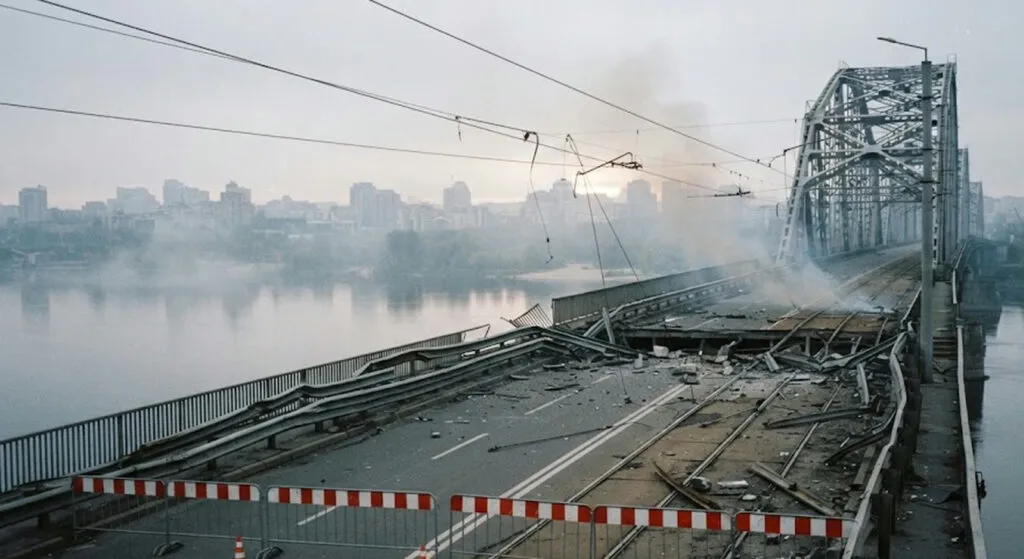
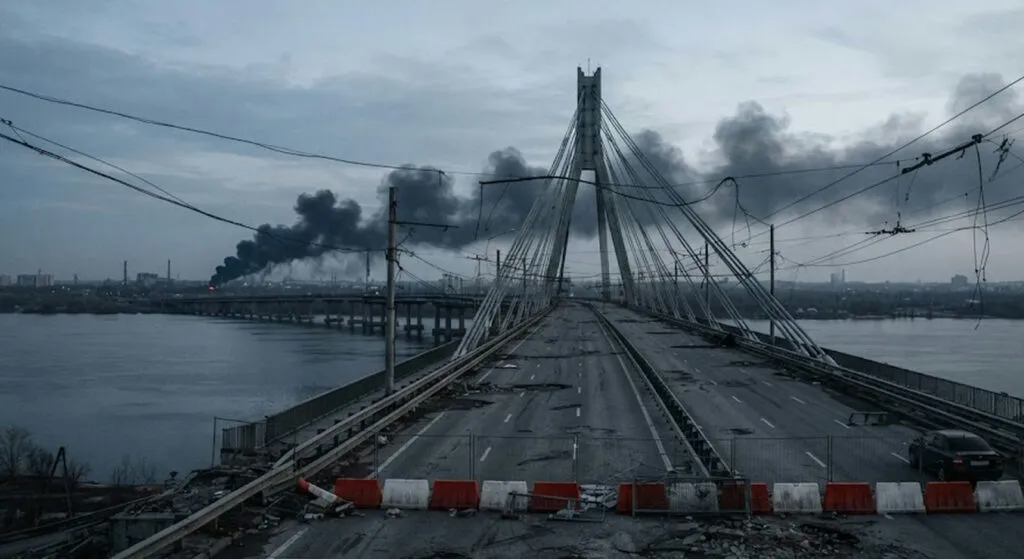
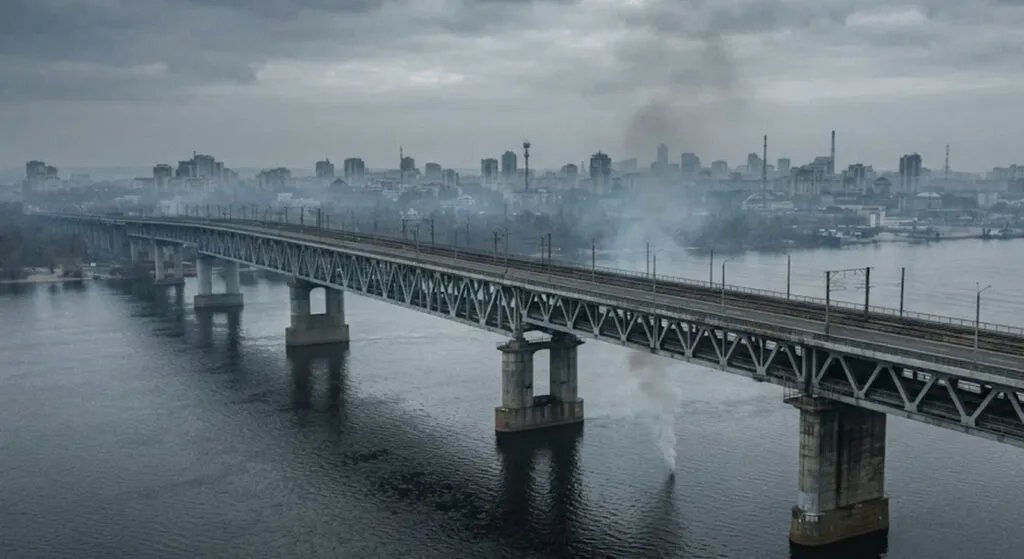
Six strikes on two bridges in just a few days. That is how many times, according to Ukrainian Foreign Minister Andrii Sybiha, Russian forces have hit the bridges over the Dnipro in Kyiv, a city the river literally splits in two. Sybiha called on Western allies for "decisive action" and warned that bridges are not just roads.
"Bridges are vital arteries that allow the country to function, connect communities and enable people to get to work and access basic services," he said. According to him, some strikes were carried out while cars and metro trains were crossing the bridges.
The Southern and Northern bridges, day by day
The attacks began on 1 October. First the Southern Bridge, which carries both road traffic and a metro line, was hit several times. During the first strike cars were driving across it and a metro train was on the bridge. After a repeat attack the bridge was closed completely. Over the following days it was the Northern Bridge's turn, where the roadway and the public transport overhead lines were damaged, and people were injured in the attacks. Traffic between Kyiv's left and right banks was effectively paralysed several times.
Moscow confirmed the attacks on the Northern Bridge but claims it targeted it not because of civilian traffic but because Ukrainian units and military cargo were being moved across it. The Russian Defence Ministry has already announced stepped-up strikes on military, military-industrial and related infrastructure across Ukraine, after Volodymyr Zelensky announced that Kyiv would intensify its attacks on Russian refineries.
The logic of the strikes is brutal and simple: the bridge doesn't have to collapse. It is enough to damage the roadway, the installations or the structure, and the crossing stays closed until engineers decide whether it is safe. A city of several million people is cut in half, and the bridge doesn't even have to fall.
Jet-powered "Gerans" and a favour from Pyongyang
The strikes are hard to defend against because of new jet-powered versions of the Geran drones. The older piston-engine models flew at around 180 kilometres an hour and could be tracked for a long time by sound and heading. The new ones reach roughly 500 to 600 kilometres an hour. Mobile teams with heavy machine guns, for years the main tool against slow drones, now struggle much more to hit their target, so Ukraine increasingly has to spend pricier air-defence missiles or fighter jets.
That very technology, according to Zelensky, Moscow has shared with North Korea. Asked whether he believes Russia gave Pyongyang the technology behind the new jet-powered drones, he answered without hesitation: "Yes, of course. They share all technologies with North Korea. I don't know exactly about ballistic and other systems, but I think they share that too, because North Korea helped them with missiles." The claim has not yet been independently confirmed.
Pyongyang has supplied Moscow with millions of artillery shells, ballistic missiles and troops. According to Ukrainian estimates, more than 8,000 North Korean soldiers are already in Russia, and around 10,000 more are preparing for possible deployment. South Korea has warned for years that Kim Jong Un doesn't send troops and ammunition without a serious favour in return. Zelensky now claims that favour has started coming back.
Sybiha wants the Western response to go beyond condemnation and deliver additional air defence, new sanctions against Russia's military-industrial complex and measures against the people and companies that, according to Kyiv, make the strikes possible. "The world cannot just stand and wait," he said. The Balkans know very well what it costs when the world does exactly that. The question is whether this time the response arrives before the next strike.
The latest 10 news from this category

The 2022 truce is dead, Taiz is surrounded, and Saudi Arabia is directly back in the war. When the news...
The ship left a Ukrainian port bound for Ravenna and ended up on the seabed 37 kilometres off the Romanian...
Kyiv confirms a fire but not a hit on the power plant. Strikes on electricity and heating before winter -...
Kyiv asked a UN agency to keep Russia's Rassvet network from covering Ukrainian skies. Medvedev read that as an attack...
Two key bridges over the Dnipro hit in three days, a full metro train saved at the last second. Moscow...
The South Bridge closed, the North Bridge hit, and residents commuting for up to three hours. When war reaches the...
The figures come from the Russian Defence Ministry and should be read with caution. But the shattered windows from Kaluga...
An intercepted document from August describes three phases of strikes: first the links to Europe, then the hydropower plants, finally...
The object is on Romanian soil and the fire is out, but there's no flight path showing how it got...
One of the strikes landed while a metro train was crossing the bridge. The Balkans know all too well what...
This site uses cookies - is that okay? Learn more
Be the first to know when Metla launches something new
Leave your email and we will write when there is a new guide or something new on Metla.