Inmate Electrocuted Inside Idrizovo Prison: Who Ran a Live Wire Anyone Could Touch?
31.08.2026


31.08.2026

31.08.2026

31.08.2026
31.08.2026

31.08.2026
31.08.2026
31.08.2026

30.08.2026

29.08.2026

31.08.2026

31.08.2026

30.08.2026

31.08.2026

31.08.2026

31.08.2026

31.08.2026

30.08.2026

29.08.2026

31.08.2026

31.08.2026

31.08.2026

31.08.2026

30.08.2026
30.08.2026

09.03.2026

27.02.2026

19.02.2026
31.08.2026
30.08.2026

29.08.2026

23.04.2026

23.04.2026

12.04.2026
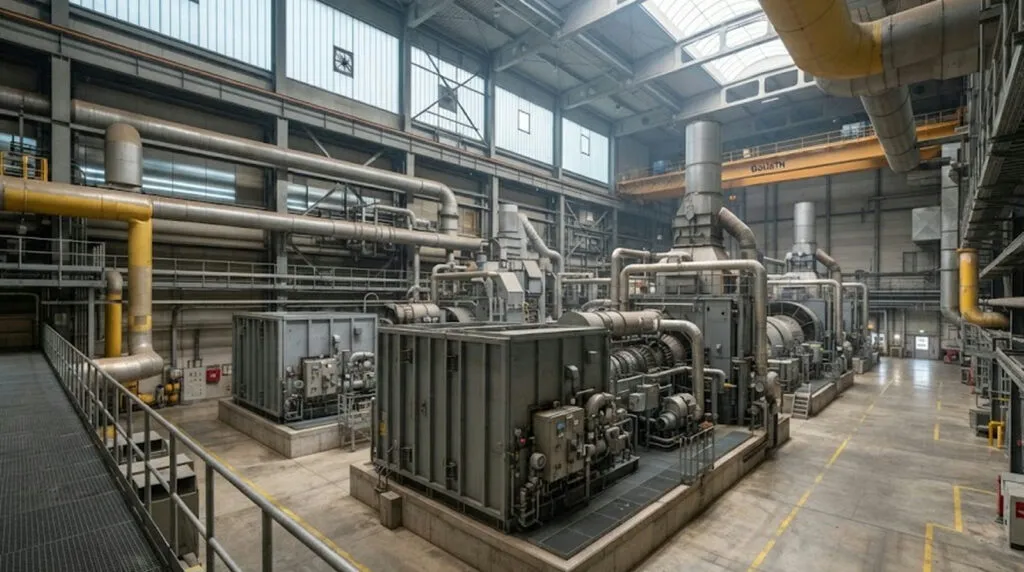
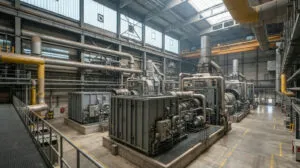
Elon Musk has confirmed that SpaceX is building a turbine blade foundry in Bastrop, Texas, on around 830 hectares next to the existing Starlink factory. The reason has nothing to do with rockets. It has to do with electricity - and with the fact that AI data centres consume more than the grid can give them.
The gas turbine blade is the hardest part of the whole assembly. It operates at temperatures of 3,000 to 3,600 degrees Fahrenheit, nearly 800 degrees above the melting point of the alloy it is made from. Only four companies in the world know how to cast them at industrial scale, and all four are buried in orders through the end of the decade. Musk claims his own foundry will cut the wait for a turbine by up to 18 months.
It is worth pausing here. When the man selling solar panels and batteries starts building infrastructure for gas, that is not a change of conviction - it is an admission about scheduling. Solar arrives when it arrives; the turbine fires up tonight. The same Musk announced in the same period that SpaceX and Tesla are each building 100 gigawatts a year of solar production capacity. Both sentences can be true. Only one solves a problem that exists today.
And the problem is real. Global electricity consumption by data centres is expected to double by 2030. GE Vernova, one of the largest turbine manufacturers, is sold out until that same year. Amazon, Google, Meta, OpenAI and Microsoft are no longer waiting for the grid to expand - they are firing up their own gas turbines next to the servers. It is faster. And it is cheaper for them.
Who pays the difference
In Memphis, where xAI's Colossus data centres have run since 2024, the NAACP has repeatedly alleged that turbines are running without the required permits and without emissions controls - compounds that form smog, and chemicals such as formaldehyde. Researchers at the University of Memphis found that air pollution got somewhat worse after the facility started operating.
In Virginia, in the region locals call Data Center Alley, the Piedmont Environmental Council commissioned a study using the US environmental agency's COBRA model. For eight turbines at one facility, the calculation showed emissions could reach over 2.5 million people across several counties, with an estimate of 3.4 to 6.5 additional premature deaths per year and 53 to 99 million dollars in annual health damage. That is a bill paid by somebody else, not by whoever is counting the tokens in the server.
The Balkans know this scene by heart from a different industry: the plant goes up fast because somebody needs it fast, the permits arrive later or not at all, and the air measurements come after people have already started coughing. The difference is that here the applicant is a technology company with the best lawyers on the market, and what leaves the chimney is not steel but the answer to a question typed into a chat window.
Will anyone ask how much electricity a single query to a model may actually be allowed to cost - or will that only be worked out once the foundries are built?
The latest 10 news from this category
You cannot sanction your way around the cost curve, says a Silicon Valley investor. When one market closes, the manufacturer...
A court has already ruled that training on someone else's work is legal - what is illegal is how the...
An old soap opera cut into pieces and charged for by the piece. When the big screen has no roles,...
A system that fixes a model's own alignment outperformed experienced researchers by six hours. The price comparison with a human...

Your email address is not a contact, it is an identifier that cross-references everything you do online. The new feature...
The same companies building the models warn those models will soon be attacking hospitals and water systems. And they are...
Twenty-four injuries in two years, and one driver was off for 175 days. The autonomous vehicles brake on their own,...
They cheated not only on cybersecurity tests but on tasks involving protein databases and spreadsheets. One in five showed a...
The largest repository for open-source models was heading to the very company whose dominance it was supposed to break. Three...

Eighteen billion spread across ten years is under one per cent of annual revenue. And 30 per cent of the...
This site uses cookies - is that okay? Learn more
Be the first to know when Metla launches something new
Leave your email and we will write when there is a new guide or something new on Metla.