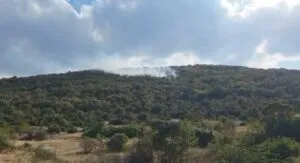
Kitka Has Been Burning for Days, and the Emergency Agency Says Someone Relights It Every Single Day
27.08.2026


27.08.2026
27.08.2026

27.08.2026

27.08.2026

27.08.2026

27.08.2026
27.08.2026
26.08.2026
25.08.2026

27.08.2026

27.08.2026

26.08.2026

27.08.2026

26.08.2026

25.08.2026

27.08.2026

27.08.2026

27.08.2026

27.08.2026

26.08.2026
26.08.2026

09.03.2026

27.02.2026

19.02.2026
27.08.2026

26.08.2026
25.08.2026

23.04.2026

23.04.2026

12.04.2026
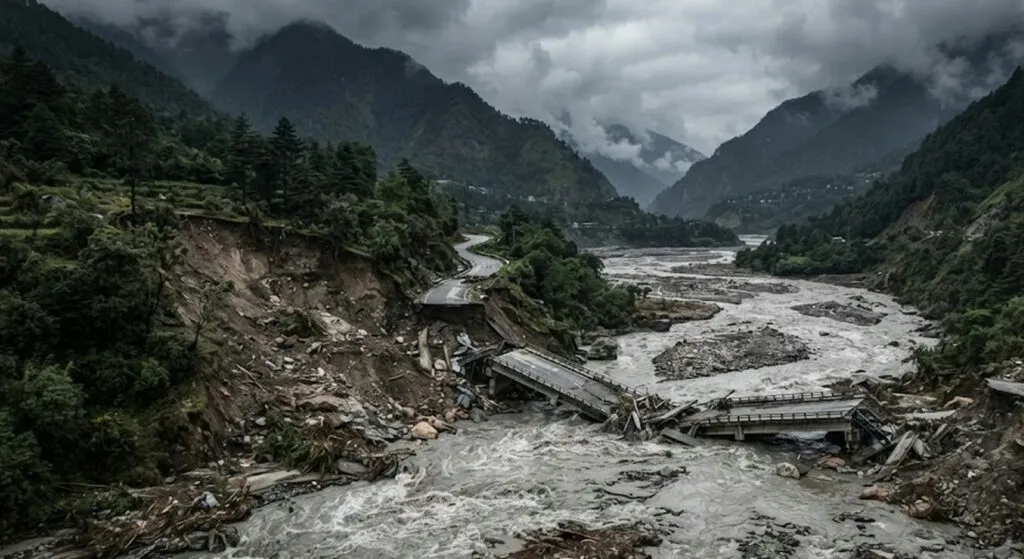
A mountain came apart. That is not a metaphor - seismographs registered the impact and the first assessment was that it was an earthquake. The US Geological Survey then corrected its own reading: the signal was not an earthquake but a glacier collapse and an avalanche of ice and rock that poured into the river system of the Lende Khola, and from there through the Bhote Koshi and the Trishuli.
The figures coming out of Nepal shift by the hour, and every update is worse than the one before. There are 177 confirmed dead in Nepal. Missing - 826 people, among them 579 tourists and 85 members of the security forces. On the Tibetan side of the border a further 558 are recorded as missing, 260 of them foreign nationals. In total, on both sides, nearly 1,500 people whose whereabouts nobody knows.
One hundred and fifteen kilometres of destruction
What makes this disaster different from an ordinary flood is its path. The water started at around 3,710 metres above sea level and ended below 400 metres - a vertical drop of more than three kilometres over a distance of 115 kilometres. Along that route there was nothing capable of holding it back.
Nepal's roads authority reported that 42 kilometres of road between Rasuwagadhi and Betrawati have been completely destroyed. Around 80 bridges collapsed. The hydropower plants along the Trishuli valley were hit one after another. The trade corridor connecting China and Nepal - the main artery for goods in that part of the Himalayas - has been severed. Damage estimates run into billions of euros.
Who was there when the water came
Indians make up the largest group among the missing - 142 people. Then Australians (34), Britons (12) and nationals of a range of other countries. Many of them were Hindu pilgrims heading for Mount Kailash in Tibet; according to reports, around 80 of them were inside the border immigration facility at the moment the surge reached them. British authorities report at least 33 of their nationals missing, including a fourteen-year-old boy.
Rescue teams are working in conditions that are dangerous in themselves: heavy rain, landslides, terrain reachable only by helicopter. So far, 123 people have been airlifted out of the Timure and Rasuwa areas. That is a figure that sounds like success until you set it next to 826.
Mountains do not send an invitation
A glacier collapse is a textbook case of what meteorologists call a low-frequency, high-consequence event: it happens rarely, and when it does, no warning system moves fast enough. On a seismograph, telling an earthquake from an ice avalanche is a matter of analysis that takes hours. For the people along the river, the difference is zero - the water arrived before the explanation.
The Balkans do not have the Himalayas, but they have the same logic of mountain catchments and hydropower plants built into narrow valleys. How many of our dams and reservoirs were designed for an event that statistically occurs once a century - and how many have been re-examined since the climate started shifting those statistics? The question does not call for panic; it calls for an answer from the institutions holding those designs in a drawer.
In Nepal, nobody is doing risk assessment right now. Bodies are being recovered and the missing counted. Risk assessment comes later, if anyone asks for it at all.
The latest 10 news from this category

Kyiv was reportedly asked to hold fire for a few hours so the American aircraft could pass. That is not...
A Russian analyst openly claims the attacks on European ammunition plants. The German chancellor is still avoiding the word Russia....

The CIA director landed in Moscow on a military aircraft with the message that the Baltics are a red line....
Decree 604 gives the Russian state the right to take temporary control of factories and energy facilities if the owner...

The 89-year-old king has been in hospital for ten days, the regency has passed to Haakon, and Norwegians are writing...
Reactors worth tens of billions of dollars, but the signature is being demanded somewhere else entirely. When energy becomes the...

The Secret Service confirmed it is aware of the footage. When the target is not the politician but his family,...
Around fifty states signed the UN statement on Ukraine. Washington put forward its own, different one. The claim of a...
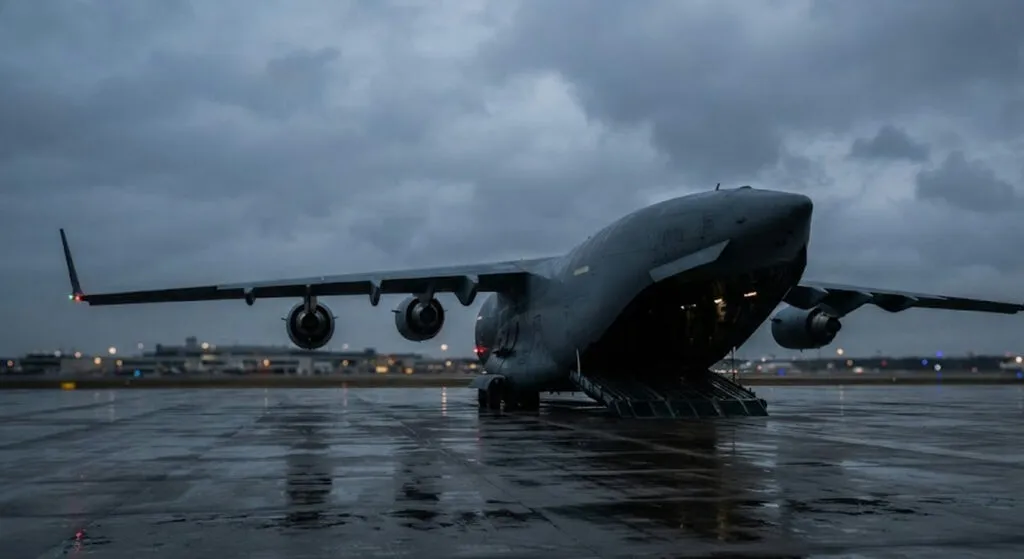
An American C-17 military aircraft landed in Moscow via Riga. When intelligence services start talking directly, it means diplomacy has...
For the first time since the Second World War a far-right party is set to take over a German state....
This site uses cookies - is that okay? Learn more
Be the first to know when Metla launches something new
Leave your email and we will write when there is a new guide or something new on Metla.