
Kitka Has Been Burning for Days, and the Emergency Agency Says Someone Relights It Every Single Day
27.08.2026


27.08.2026

27.08.2026

27.08.2026

27.08.2026

27.08.2026

27.08.2026

27.08.2026

26.08.2026

25.08.2026

27.08.2026

27.08.2026

26.08.2026

27.08.2026

26.08.2026

25.08.2026

27.08.2026

27.08.2026

27.08.2026

27.08.2026

26.08.2026
26.08.2026

09.03.2026

27.02.2026

19.02.2026

27.08.2026

26.08.2026

25.08.2026

23.04.2026

23.04.2026

12.04.2026

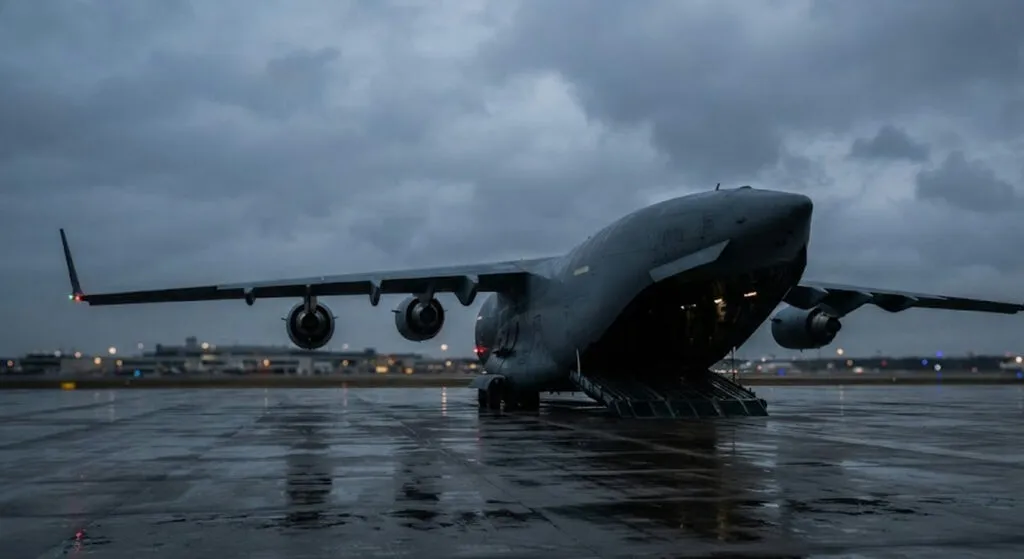
CIA director John Ratcliffe landed in Moscow aboard an American C-17 Globemaster III military transport aircraft. That alone is a message, because flights like that to Moscow are not routine. But the real reason for the visit, according to sources close to the talks, was not Ukraine. It was the Baltics.
A warning, not negotiations
Ratcliffe told his Russian interlocutors that any attempt at escalation against Lithuania, Latvia or Estonia would be treated as what it is: an attack on three NATO members. "The meeting served above all to warn Russia against any escalatory action towards the Baltic states," one informed source said. Ratcliffe did not meet Putin in person. He spoke with representatives of Russian intelligence, and the Kremlin later confirmed that Putin had been briefed on the outcome of the contact.
The scene has a precedent nobody in Washington has forgotten. In 2021, the then CIA chief William Burns went to Moscow to dissuade Putin from attacking Ukraine. We know how that ended. When the same institution carries the same warning down the same road, it is worth asking whether it is the message that is not getting through or the ears that are not listening.
Why the Baltics specifically
American assessments say Moscow could test NATO's readiness to defend its members through cyber attacks, hybrid operations or limited military incursions. The focus is on the three Baltic states. More significant still is the change in timing. Assessments from early August say Putin could attempt such a test as soon as this autumn - a shift from earlier thinking, when it was assumed Russia would not move against NATO while militarily tied down in Ukraine.
Ratcliffe also asked Russia to scale back military and economic support for Iran, specifically to stop deliveries of weapons and defence technology to Tehran, and warned Moscow against overreacting to expanded American sanctions. So: one flight, three subjects, and not one of them small.
The answer that did not come
According to Bloomberg, Moscow showed no willingness to make meaningful concessions after the visit. On the contrary, Kremlin circles discussed possible military escalation in Ukraine, including intensified strikes on Kyiv and on Ukrainian infrastructure. Sources state that individual Russian officials concluded Putin might consider using nuclear weapons against Ukraine as a last resort.
Precision is needed here, not panic. That is not a decision, nor a threat voiced by Putin. It is what sources claim individual officials are assessing. The difference between "some people in the system think he might" and "he is going to" is enormous, and that difference is the first thing to disappear in headlines.
One more detail reveals how carefully this game is played. Washington informed Kyiv in advance of the American delegation's arrival and asked Ukrainian forces to temporarily halt attacks while the American representatives were in Russia, so that no incident would disrupt the talks. That is not a trifle. It is a measure of how thin the thread holding these contacts together is.
The double message
The result is two contradictory signals in the same week. The CIA director is seeking channels for dialogue and de-escalation. Bloomberg's sources say Moscow is not ready for concessions and is weighing escalation. Both can be true at once, because talking and pressure have always worked in parallel.
President Trump played the mission down and described it as "semi-routine", denying it concerned possible Russian testing of NATO or pressure over Iran, and insisting it was about peace efforts in Ukraine. Whether that is calming the public or the truth is hard to judge from outside. But when the head of intelligence flies to Moscow on a military aircraft, "routine" is rarely the right word.
For this region this is not distant news. The Baltic states are NATO members exactly as Macedonia is. If the threshold of membership is tested once and proves soft, that is not a problem only for Vilnius, Riga and Tallinn. That assessment then applies to everyone carrying the same guarantee in their pocket.
The latest 10 news from this category

Seismographs read it as an earthquake. It was not. One hundred and fifteen kilometres later, 80 bridges are gone, and...

Kyiv was reportedly asked to hold fire for a few hours so the American aircraft could pass. That is not...

A Russian analyst openly claims the attacks on European ammunition plants. The German chancellor is still avoiding the word Russia....

Decree 604 gives the Russian state the right to take temporary control of factories and energy facilities if the owner...

The 89-year-old king has been in hospital for ten days, the regency has passed to Haakon, and Norwegians are writing...

Reactors worth tens of billions of dollars, but the signature is being demanded somewhere else entirely. When energy becomes the...

The Secret Service confirmed it is aware of the footage. When the target is not the politician but his family,...
Around fifty states signed the UN statement on Ukraine. Washington put forward its own, different one. The claim of a...
An American C-17 military aircraft landed in Moscow via Riga. When intelligence services start talking directly, it means diplomacy has...

For the first time since the Second World War a far-right party is set to take over a German state....
This site uses cookies - is that okay? Learn more
Be the first to know when Metla launches something new
Leave your email and we will write when there is a new guide or something new on Metla.