
Kitka Has Been Burning for Days, and the Emergency Agency Says Someone Relights It Every Single Day
27.08.2026


27.08.2026

27.08.2026

27.08.2026

27.08.2026

27.08.2026

27.08.2026

27.08.2026

26.08.2026

25.08.2026

27.08.2026

27.08.2026

26.08.2026

27.08.2026

26.08.2026

25.08.2026

27.08.2026

27.08.2026

27.08.2026

27.08.2026

26.08.2026
26.08.2026

09.03.2026

27.02.2026

19.02.2026

27.08.2026

26.08.2026

25.08.2026

23.04.2026

23.04.2026

12.04.2026

CIA directors do not fly to Moscow for a ceremonial coffee. When it happens, it usually means something else has already stopped working.
John Ratcliffe, director of the US Central Intelligence Agency, was in Moscow on Tuesday. The visit was not announced. According to American media citing unnamed sources, he warned Russia against attacking NATO allies and asked the Kremlin to scale back its military and financial support for Iran.
Secrecy that is itself the message
How the visit was organised says as much as what was said in it. Western media reported that a military aircraft took off from Riga. Kyiv was reportedly asked to temporarily halt drone strikes on Moscow and other Russian regions so the American delegation could pass safely.
Stop on that sentence. Ukraine, in the middle of a war, receives a request not to strike for a few hours so the head of the CIA can land in the enemy's capital. That is not a diplomatic detail; it is a picture of who defers to whom, and how much, in this war.
Kremlin spokesman Dmitry Peskov confirmed that Ratcliffe had come for talks "between the security services", and stressed that Vladimir Putin did not meet the American official. That "did not meet" is carefully placed - Moscow wants to show it was not the one asking.
The last time this happened, a war followed
This is almost certainly Ratcliffe's first trip to Moscow in this post. The previous time a CIA director went there was 2021, when William Burns met Putin. The then US president Joe Biden sent him with the task of preventing escalation over Ukraine. We know how that ended.
That does not mean history repeats automatically. It means the context in which such a man is dispatched is recognisable: when the regular diplomatic channels are blocked, you send the intelligence chief - because he can say things an ambassador cannot, and hear things a minister will never admit.
The Baltic, Iran and the hybrid front
According to Politico, the warning concerned possible escalation involving NATO's Baltic member states. The Wall Street Journal, meanwhile, published intelligence assessments that Russia is preparing new waves of mobilisation and testing NATO's boundaries through hybrid operations across Europe.
On the same day, Paul Richard Gallagher, the Vatican's Secretary for Relations with States, also arrived in Moscow for talks with Russian Foreign Minister Sergei Lavrov. The Vatican offered the Holy See's readiness to mediate for peace in Ukraine. When Washington sends a spy chief and the Vatican sends a diplomat, in the same week, to the same city, that is not a scheduling coincidence.
Macedonia is a NATO member. Testing the Alliance's boundaries through hybrid operations is not an abstraction from a report; it is a category that includes cyber attacks, disinformation and pressure on energy infrastructure. Do our institutions follow these assessments with the same seriousness as the allies who produce them - or are we waiting for someone to translate them for us once it is already late?
The latest 10 news from this category

Seismographs read it as an earthquake. It was not. One hundred and fifteen kilometres later, 80 bridges are gone, and...

A Russian analyst openly claims the attacks on European ammunition plants. The German chancellor is still avoiding the word Russia....

The CIA director landed in Moscow on a military aircraft with the message that the Baltics are a red line....

Decree 604 gives the Russian state the right to take temporary control of factories and energy facilities if the owner...

The 89-year-old king has been in hospital for ten days, the regency has passed to Haakon, and Norwegians are writing...

Reactors worth tens of billions of dollars, but the signature is being demanded somewhere else entirely. When energy becomes the...

The Secret Service confirmed it is aware of the footage. When the target is not the politician but his family,...
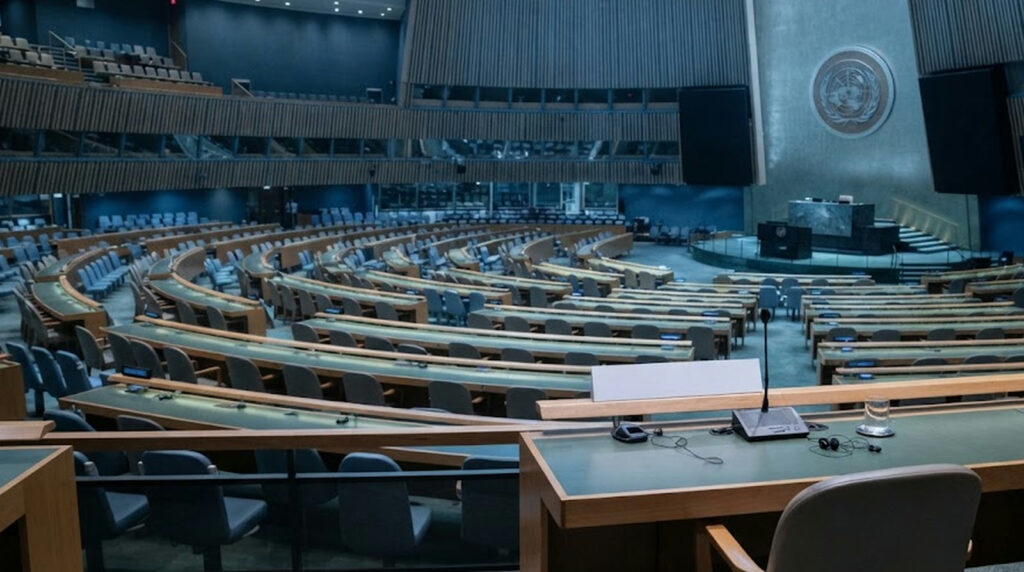
Around fifty states signed the UN statement on Ukraine. Washington put forward its own, different one. The claim of a...

An American C-17 military aircraft landed in Moscow via Riga. When intelligence services start talking directly, it means diplomacy has...

For the first time since the Second World War a far-right party is set to take over a German state....
This site uses cookies - is that okay? Learn more
Be the first to know when Metla launches something new
Leave your email and we will write when there is a new guide or something new on Metla.