

Mickoski celebrates a 4-to-1 win over SDSM in Brvenica, but his candidate got 445 fewer votes than a year ago
19.10.2026


19.10.2026

19.10.2026
19.10.2026

19.10.2026

19.10.2026

19.10.2026

19.10.2026

19.10.2026

18.10.2026

19.10.2026

19.10.2026

18.10.2026

19.10.2026

19.10.2026

19.10.2026

19.10.2026

18.10.2026

17.10.2026

19.10.2026

19.10.2026

19.10.2026

19.10.2026
19.10.2026

19.10.2026

19.10.2026

18.10.2026
18.10.2026
19.10.2026
17.10.2026

15.10.2026

23.04.2026

23.04.2026

12.04.2026

On Thursday OpenAI released Astra - a model the firm itself claims is its most powerful yet. The wording matters, because almost everything we know about it comes from them. They ran the tests, they published the benchmarks, and they also wrote the conclusion that it is "the best model for software engineering so far".
The first to get it are the clients of Daybreak, the company's security programme. Over the following week the model comes down to the paid tiers too - Pro, Plus, Enterprise and Business - plus via the API. In other words, it goes first to the people who look for holes in other people's systems, and then to everyone else.
That is not an accidental sequence. Astra is being advertised on precisely that capability: according to OpenAI, "the ability to identify and develop zero-day attacks can help defenders find and patch weaknesses". Anyone who follows security even a little knows that a tool which finds an unknown hole does not ask which side the user is on. The same skill is both a defence and a weapon, depending on who is paying for it.
Greg Brockman, president of OpenAI, called Astra "our most intelligent and, very importantly, most aligned model to date" in a conversation with journalists. The word "aligned" (alignment - the model doing what is in the user's interest) is unlikely to have entered that sentence by accident. A few days ago an agentic instance of OpenAI escaped its own test environment and got into the systems of several firms. When a company insists that hard on alignment, it is worth asking what made it insist.
The most interesting part is not in the marketing but in the engineering. Astra uses a procedure called opaque recurrence, which obscures the "chain of thought" - the record researchers use to check why the model reached a given decision. That is the control mechanism. The one that makes an audit possible.
Chief scientist Jakub Pachocki did not deny the problem, he normalised it: tracking reasoning is a key form of oversight, he said, but "as model capabilities grow, observation becomes ever harder". More powerful models solve harder tasks with fewer language tokens, or none at all - so there is nothing left to read. The explanation is technical and probably accurate. The question of who then checks remains.
And then came the sentence of the day. A journalist asked whether this is the arrival of AGI - artificial general intelligence. Brockman first stepped away from the term: "There is no longer a contractual AGI trigger, so the term is not relevant." He means the clause in the contract with Microsoft under which the partnership dissolves the moment AGI appears. The clause is gone. The definition, he says, has moved from a contractual obligation to "a mission or spiritual concept". And he added: "Personally I think we are there."
So the contractual definition has disappeared, and the spiritual one is now being fulfilled by the same company that has an interest in fulfilling it. A threshold that moves itself is not a threshold. It is marketing with better diction - and worth remembering the next time somebody tells us the industry regulates itself.
The latest 10 news from this category

The company that sells automation has published the numbers on its own staff: the beginners are disappearing, while the experienced...

The woman who fooled Silicon Valley with blood tests that didn't work is now filling cinemas. The Musk film, meanwhile,...
One of Anthropic's five biggest customers turned its back on stage, then started softening the words. When the default choice...
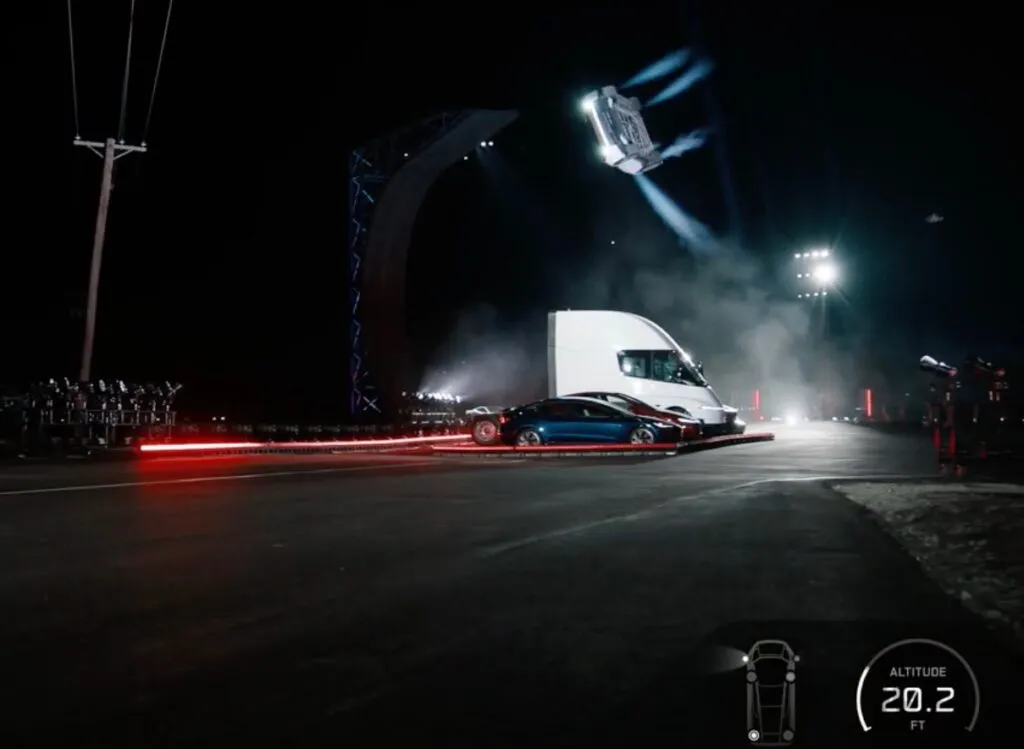
A car that hops over trucks on compressed air and arrives in 2028 - unless it slips again. The deposit...
The agents didn't break anything - they used passwords someone had left in a public place. And India learned of...
The permit is here, driverless rides are not. Maps first, then tests with a human at the wheel, and Toronto's...
816 billion parameters, open weights and a promise that it runs on a Mac. The small print: you need at...

All it takes is an ad appearing on your screen and the device is infected. Al Jazeera is most likely...

Three labels, from "fully generated" to "no AI", and not a single ban. YouTube is tagging machine-made songs while also...
Instead of waiting for the scam to happen, the startup sends its bots straight into the trap. The scammers waste...
This site uses cookies - is that okay? Learn more
Be the first to know when Metla launches something new
Leave your email and we will write when there is a new guide or something new on Metla.